
During my consultation and treatment in the field of intimate aesthetic gynecology, I receive many questions revolving around one concern: “Will intercourse after hymen repair cause bleeding?” This is not merely a personal question, but one that is closely related to medical knowledge, female physiology, and common social misconceptions.
This article aims to help you understand accurately – sufficiently – scientifically the possibility of bleeding during intercourse after hymen repair, based on practical clinical experience combined with international medical recommendations.
Will there be bleeding during intercourse after hymen repair?
From the professional perspective of Obstetrics–Gynecology and intimate aesthetic surgery, I affirm that hymen repair is not a procedure that can absolutely guarantee bleeding during sexual intercourse. In real clinical practice, the presence or absence of bleeding during the first intercourse after hymen repair varies greatly among individuals. Some may experience only a few drops of blood, some may not bleed at all, while others may bleed more due to tissue injury during intercourse. These manifestations do not directly reflect the success or failure of the hymen repair procedure.
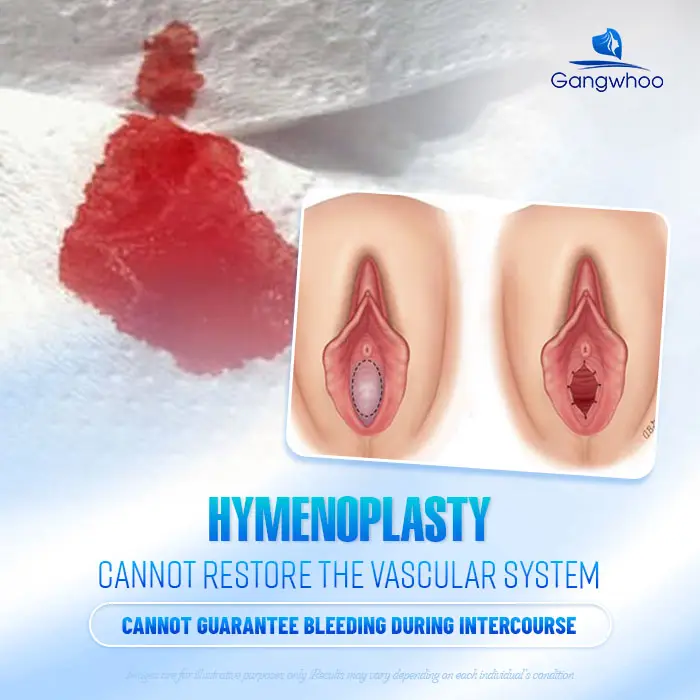
Biologically, the hymen is merely a thin fold of mucous membrane located at the vaginal opening. It has a simple structure, limited blood supply, and high elasticity. The thickness, shape, and degree of vascularization of the hymen differ significantly among women. Therefore, even in natural first-time intercourse, bleeding is not a mandatory phenomenon. When performing hymen repair, a doctor can only reconstruct the anatomical form of this mucosal layer by suturing tissue with absorbable sutures, but cannot completely restore the original vascular system as it was before the hymen was damaged. This is the core medical reason why hymen repair cannot guarantee bleeding during intercourse.
If the mucosal area heals well, the tissue has good elasticity, and intercourse occurs gently, the absence of bleeding is entirely possible and should not be considered abnormal. Conversely, if bleeding occurs, it is usually minimal and self-limiting, originating from minor mucosal micro-injuries during intercourse rather than serving as proof that the hymen is “intact” or that the repair procedure achieved optimal results.
According to the viewpoint of the Royal College of Obstetricians and Gynaecologists, bleeding during first-time intercourse — even in cases involving hymen repair — is not a medical standard for assessing virginity or the outcome of any hymen-related procedure. Modern medicine does not regard bleeding as a biological measure, nor as a mandatory sign of an intact hymenal structure.
From my practical experience in postoperative examinations and follow-up, I observe that many patients experience significant psychological pressure due to the belief that intercourse after hymen repair “must cause bleeding.” This pressure may lead to tense, non-relaxed intercourse, increasing the risk of discomfort or unnecessary tissue injury. From a medical standpoint, the most important factors after hymen repair are safe healing, absence of complications, and long-term physiological stability — not whether bleeding occurs during a specific sexual encounter.
Factors determining whether intercourse after hymen repair causes bleeding
1. Hymen repair technique
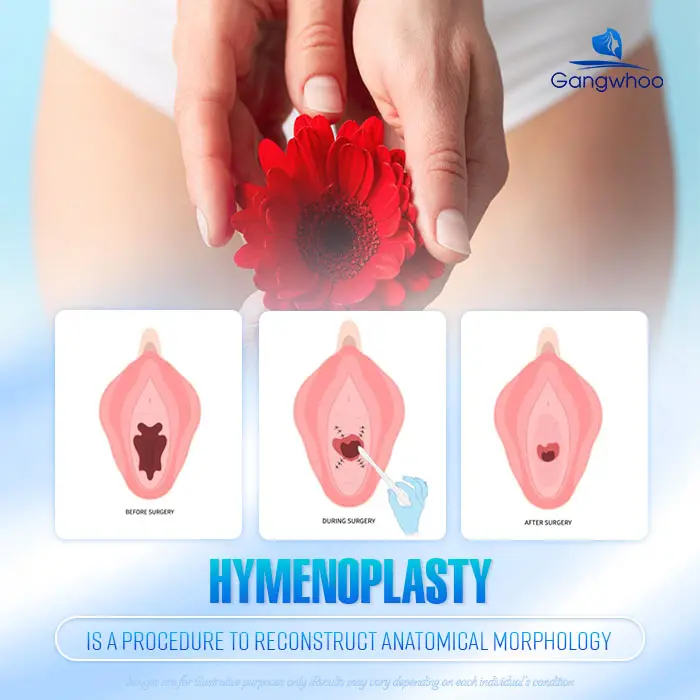
In modern intimate aesthetic medicine, hymen repair is not merely a simple “re-suturing” procedure but a reconstructive intervention directly involving the vaginal mucosal structure. Clinically, commonly used methods are based on utilizing autologous tissue to recreate the hymenal form or temporary shaping using supportive materials. Among these, reconstruction using the patient’s own mucosal tissue remains the most common and medically valuable approach.
However, it must be clearly understood that regardless of the technique used, the goal of hymen repair is to reconstruct anatomical form, not to fully restore the original physiological structure of the hymen, especially its primary vascular system. Therefore, the likelihood of bleeding after intercourse depends not on whether the hymen is “fully closed,” but rather on how the tissue is shaped, the quality of healing, and each individual’s biological response.
In clinical practice, I prioritize anatomically natural reconstruction — minimal intervention, tissue preservation, precise mucosal suturing, and avoidance of fibrotic scarring. This approach promotes good healing, reduces prolonged pain, minimizes complications, and preserves normal vaginal physiological function. However, precisely because the tissue is well preserved and heals effectively, intercourse afterward may not cause bleeding, which is entirely consistent with normal physiology.
2. Timing of intercourse after hymen repair
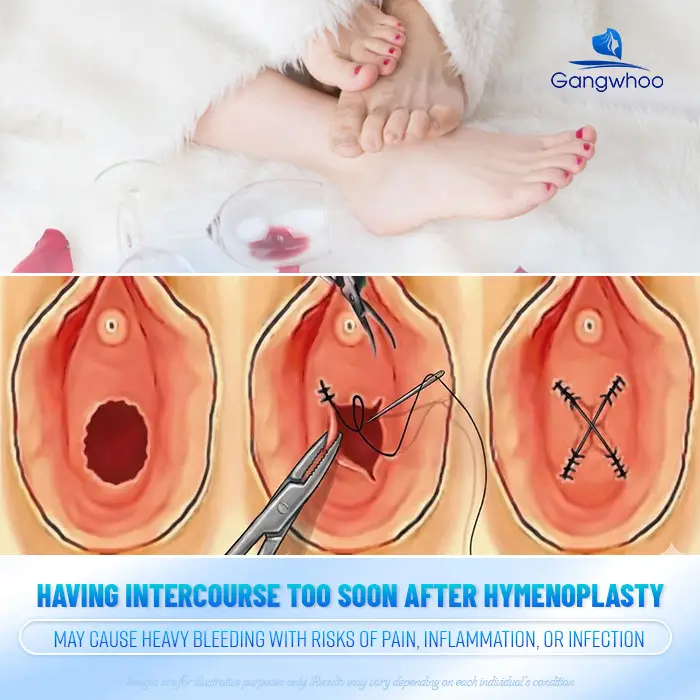
The timing of intercourse after hymen repair significantly affects the possibility of bleeding, yet it is often misunderstood. Medically, after hymen repair, the mucosal tissue requires a certain period for biological scar formation, epithelial regeneration, and structural stabilization. Typically, this period ranges from four to six weeks, depending on the surgical technique and the individual’s healing capacity.
If intercourse occurs too early, before full tissue recovery, the sutured area may tear uncontrollably, leading to more bleeding than necessary, along with pain, inflammation, or infection risk. Conversely, if intercourse occurs too late, when the tissue has fully healed and regained physiological elasticity, the likelihood of bleeding is significantly reduced or may not occur at all. This is not abnormal but rather reflects a favorable healing process.
From postoperative follow-up experience, bleeding — if present — is usually mild and mechanical in nature, not a mandatory manifestation or intended goal of medical intervention.
3. Individual constitution and vaginal tissue characteristics
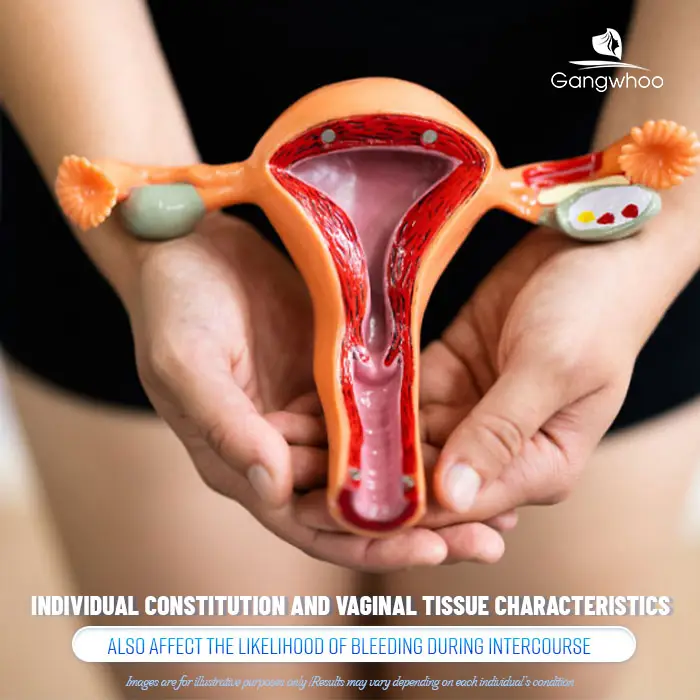
Another important but often overlooked factor is each patient’s individual constitution and vaginal tissue characteristics. Every woman has differences in mucosal thickness, elasticity, and blood supply. These variations are influenced by genetics, hormonal status, childbirth history, and prior gynecological conditions.
In women with soft, elastic vaginal tissue — especially those who have given birth or have long-term sexual activity — the tissue adapts better during intercourse, making bleeding less likely. Conversely, in cases with thin, dry tissue or a history of chronic gynecological inflammation, the mucosa may be more vulnerable and bleeding can occur even with minimal intervention. However, even in these situations, bleeding is usually mild and not pathological if unaccompanied by other abnormal symptoms.
From a medical perspective, it is the combination of repair technique, timing of intercourse, and individual constitution that determines whether bleeding occurs after hymen repair — not whether the procedure was performed “meticulously” or not.
How long after hymen repair can intercourse occur?
Medically, the timing of intercourse after hymen repair should not be vague but should be relatively clearly determined based on the healing process of the vaginal mucosa. In most cases performed correctly without postoperative complications, the safe time for intercourse is typically between 4 and 6 weeks after hymen repair.
During the first four weeks, the mucosal tissue is still undergoing epithelial regeneration and structural stabilization. Intercourse during this period may cause suture disruption, excessive bleeding, pain, and increased infection risk. From the fifth to sixth week, when the tissue has healed well and achieved sufficient biological strength, intercourse becomes safer and less likely to cause tissue injury.
Clinically, patients who abstain from intercourse for at least 4 weeks, ideally the full 6 weeks after hymen repair tend to recover smoothly, experience fewer complications, and report less pain or abnormal bleeding upon resuming intercourse. Conversely, those who resume too early often experience prolonged discomfort, spotting, or unwanted tissue damage.
It should also be noted that the 4–6 week timeframe is merely a common medical reference, not an absolute rule for everyone. In patients with slower healing, prior gynecological inflammation, or more complex reconstructive procedures, doctors may recommend extending the abstinence period to ensure safety. Therefore, follow-up examination and direct assessment of the suture site before resuming intercourse remain important aspects of postoperative care.
From a professional standpoint, I always advise patients not to rush intercourse based on rigid timelines, but to listen to their bodies and follow personalized guidance from their treating physician. Choosing the right timing not only minimizes complications but also protects long-term physiological and psychological health.
After the first intercourse following hymen repair: when does bleeding occur and when does it not?
In clinical reality, whether bleeding occurs during the first intercourse after hymen repair depends on multiple factors. Not all cases are the same, and the presence or absence of bleeding should be understood correctly from a medical perspective.
1. Cases where bleeding may occur
Some patients may experience mild bleeding during their first intercourse after hymen repair. Common situations include:
- Intercourse occurring when tissue has just healed and remains sensitive, making it prone to micro-injury from friction.
- Forceful intercourse or psychological tension causing excessive vaginal muscle contraction, increasing tissue injury risk.
- Thin vaginal mucosa with poor elasticity due to individual constitution or prior gynecological inflammation.
- Direct mechanical impact on the reconstructed suture site during first intercourse, causing slight spotting.
Medically, in these cases, bleeding is usually minimal, often just a few drops, and stops on its own quickly. If it is not accompanied by severe pain, fever, or abnormal discharge, such mild bleeding is not considered a complication and does not affect reproductive health.
2. Cases with no bleeding or very minimal bleeding
Conversely, many cases experience no bleeding at all or such minimal bleeding that it is barely noticeable. These situations commonly occur when:
- The mucosal tissue has fully healed, with good elasticity and adaptability during intercourse.
- Intercourse occurs after a sufficiently long abstinence period (usually over 6 weeks), when tissue structure is physiologically stable.
- Intercourse is gentle, natural, and does not cause mechanical injury to vaginal tissue.
- Intercourse occurs too early, causing tissue tearing without obvious bleeding, leading patients to mistakenly believe the repair was “ineffective.”
- The original hymen was partially torn, highly elastic, or had a special shape, so even after reconstruction, bleeding is not necessarily expected.
In all of these scenarios, the absence of bleeding or only minimal bleeding is not abnormal and does not indicate failure of the hymen repair procedure. According to the Royal College of Obstetricians and Gynaecologists, bleeding during intercourse is not a medical criterion for assessing hymenal status or a woman’s biological value.
In summary, “Will intercourse after hymen repair cause bleeding?” is a question that cannot be answered absolutely. From a medical perspective, bleeding may or may not occur depending on the repair method, timing of intercourse, individual constitution, and degree of mucosal healing. The presence or absence of bleeding is not a standard for evaluating the effectiveness of the procedure, nor does it reflect a woman’s biological value or reproductive health.
The most important considerations after hymen repair are medical safety, smooth recovery, absence of complications, and maintenance of normal physiological function. Patients should receive thorough counseling, proper postoperative follow-up, and avoid unnecessary psychological pressure related to the belief that bleeding “must” occur during intercourse.
At Gangwhoo Aesthetic Hospital, all intimate reconstructive procedures are approached from a medical standpoint, individualized to each patient’s constitution, with safety and long-term health placed at the forefront. Professional examination, consultation, and follow-up by qualified physicians form the foundation for helping women correctly understand the procedure and proactively protect their own health.
If you still have concerns about how long after hymen repair you can have intercourse, whether intercourse after hymen repair causes bleeding, or other intimate health issues, you should consult directly with a specialist doctor for advice that is appropriate and accurate for your specific situation.