
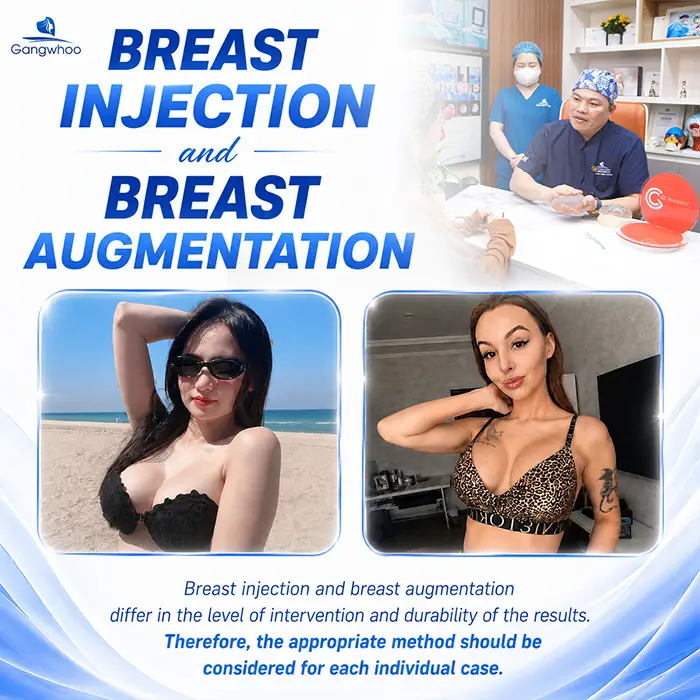
During consultations at the Department of Aesthetic and Reconstructive Surgery, one of the most frequent questions I receive from clients is: “What is the difference between breast injection and breast augmentation, and which method should I choose?” This is a very common misconception because both procedures aim to improve the size and shape of the breasts, yet their medical nature, surgical techniques, and level of intervention are entirely different.
With over many years of experience directly performing breast enhancement procedures at Gangwhoo Cosmetic Hospital, I will help you understand the essence of each method, providing you with a solid foundation to make a decision that suits your physical condition and aesthetic needs.
What is Breast Injection?
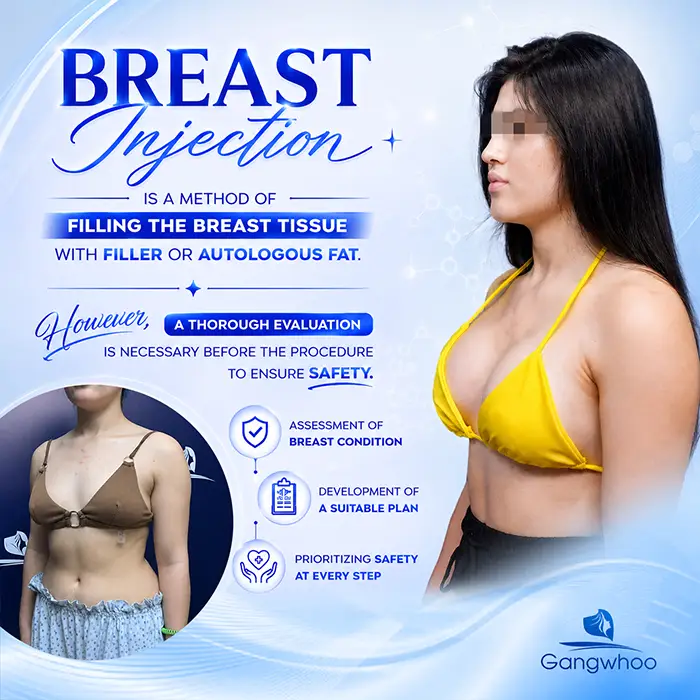
Breast injection is a method of augmenting breast tissue by directly injecting a type of filler material into the subcutaneous layer or mammary gland tissue, without the need for incisions. The two most common materials currently used are Hyaluronic Acid-based fillers (HA filler) and autologous fat extracted and purified from the client’s own body.
From a technical standpoint, breast injection is classified as a minimally invasive aesthetic procedure. The surgeon uses specialized injection needles to deliver the material into tissue layers using a multi-point, multi-layer technique to create a natural fullness while minimizing damage to surrounding tissues. The entire procedure typically takes about 30-45 minutes, requires only local anesthesia rather than general anesthesia, and clients can go home the same day.
However, it should be noted that breast injection with fillers is not recommended by the Ministry of Health for mammary tissue due to risks of complications such as lumps, inflammation, filler migration, and potential interference with future breast cancer screening capabilities. Meanwhile, autologous fat transfer is considered biologically safer because it uses the body’s own fat tissue, but it requires standardized fat extraction and processing techniques to ensure a high fat survival rate after transplantation.
What is Breast Augmentation?
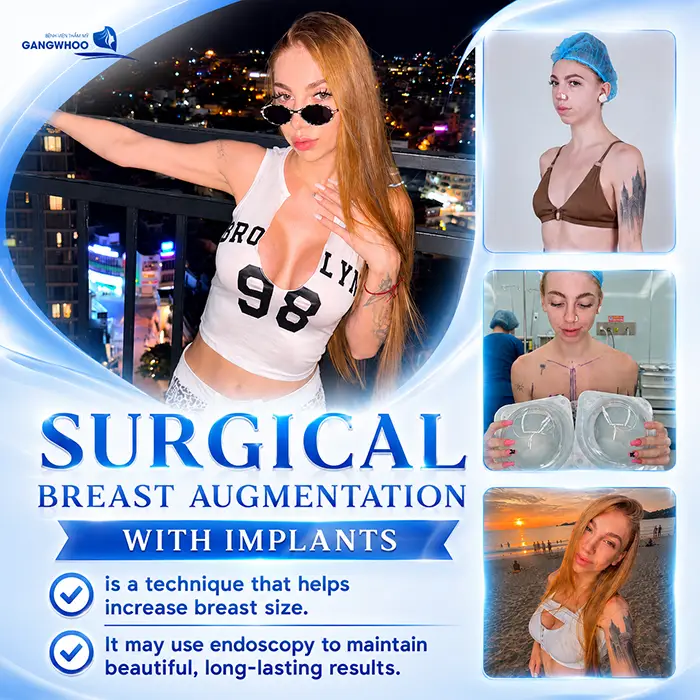
Unlike breast injection, breast augmentation (also known as breast implant surgery or endoscopic breast augmentation) is a true surgical procedure performed in a sterile operating room with the support of modern endoscopic systems. The surgeon creates a small incision in discreet locations such as the inframammary fold, areola, or armpit, then creates a pocket to place a medical-grade silicone implant either under the mammary gland or under the pectoralis major muscle.
Regarding medical indications, breast augmentation is suitable for cases desiring a significant increase in breast size, correcting sagging breasts, asymmetry, or underdeveloped breasts after pregnancy and breastfeeding. The surgery typically lasts 60-90 minutes under general anesthesia, requiring a hospital stay of 24-48 hours for monitoring, with complete recovery time ranging from 4-6 weeks depending on individual physiology.
Modern breast implants primarily use cohesive silicone gel, which offers high durability, has been biologically safety-certified, and can maintain aesthetic results long-term, typically 10 years or more with proper care and regular follow-up examinations.
Comparison of Breast Injection vs. Breast Augmentation on Professional Criteria
To accurately answer the question of what differentiates breast injection from breast augmentation, we need to examine several specific medical aspects. The table below summarizes the most important criteria to help you easily visualize the differences between the two methods:
| Criteria | Breast Injection | Breast Augmentation |
|---|---|---|
| Nature of intervention | Filler injection procedure, non-invasive to deep tissue structures | Invasive surgery with incisions and implant placement |
| Materials used | HA filler or autologous fat | Cohesive silicone gel implants |
| Size increase level | Approximately half to one cup size | One to three cup sizes depending on implant volume |
| Long-term safety & stability | Autologous fat gradually resorbs over time; fillers carry risks of lumps and inflammation | Long-term safety profile supported by extensive research; results are sustainable when FDA/CE certified |
| Anesthesia | Local anesthesia | General anesthesia |
| Procedure time | 30-45 minutes | 60-90 minutes |
| Recovery time | 1-2 days; near-normal daily activities | 4-6 weeks; requires strict adherence to post-operative care protocol |
| Result durability | May require repeat procedure after 1-2 years (autologous fat) | Long-lasting, typically 10+ years with proper care |
| Initial cost | Lower | Higher |
| Long-term cumulative cost | May be equal to or higher if repeated multiple times | One-time investment, long-term results |
Looking at the comparison table above, it’s evident that the biggest difference between breast injection and breast augmentation lies not only in the level of intervention but also in the sustainability of results and long-term safety. These are factors that the specialist surgeon carefully considers when advising the appropriate method for each client.
Should You Choose Breast Injection or Breast Augmentation with Implants?
This question has no universal answer for everyone, as each client has a different body foundation, aesthetic desires, and readiness for intervention. During consultations, I typically categorize clients’ needs into the following specific groups to provide the most suitable guidance.
1. Cases Seeking Gentle Breast Enhancement
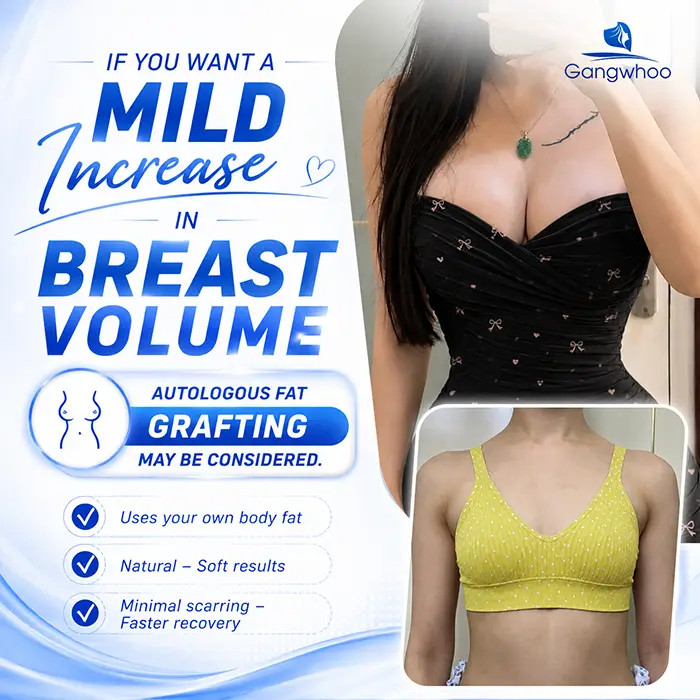
For clients who only desire moderate fullness improvement, do not need significant size change, and are hesitant about surgery, I usually evaluate the feasibility of autologous fat transfer. This method is only suitable when the client has sufficient fat reserves in donor areas (abdomen, thighs, hips) and the mammary glands show no structural abnormalities. This solution provides natural improvement without incisions; however, results are typically modest and require careful evaluation before proceeding.
2. Cases Seeking Significant Size Increase
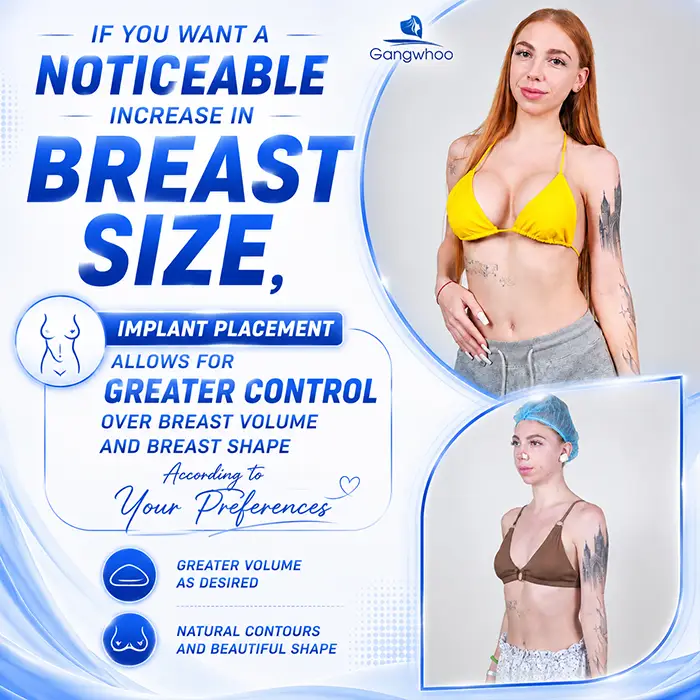
When clients desire a clear increase in breast size—for example, increasing by one to two cup sizes or more—fat or filler injection methods typically cannot provide sufficient volume. In these cases, I recommend silicone implant placement, as this is the only solution that allows proactive selection of volume, shape (round or teardrop), and implant surface texture appropriate to the client’s skeletal frame, body proportions, and specific aesthetic goals.
3. Cases of Sagging or Post-Pregnancy Breast Deformity
This group requires special attention and should not focus solely on increasing breast volume. When mammary tissue has already descended due to pregnancy, breastfeeding, or rapid weight loss, simply injecting fillers or placing implants without addressing lax skin and tissue can result in unsatisfactory aesthetic outcomes, sometimes making the breasts appear more disproportionate. The surgeon must specifically assess the degree of ptosis according to clinical grades to determine whether additional mastopexy (breast lift) techniques are needed, including removing excess skin and repositioning the nipple-areola complex alongside implant placement.
4. Cases of Minimal Body Fat
For clients with slender body types and low body fat percentages, autologous fat transfer options are significantly limited due to insufficient fat sources for extraction and processing to achieve high survival rates after transplantation. In these cases, implant placement is typically the more feasible and effective choice, as it does not depend on the client’s baseline fat reserves.
Overall, the final decision should be based on direct clinical examination, assessment of mammary tissue structure, skin condition, chest wall anatomy, and the individual’s overall health status. This is why consultation with a board-certified plastic surgeon is always a mandatory step before making any decisions.
How Much Does Breast Injection Cost? How Much Does Breast Augmentation Cost?
| Service | Price (USD) |
|---|---|
| Endoscopic Breast Augmentation – Nano Implant (Non-Chip) | $3,300 |
| Endoscopic Breast Augmentation – Nano Chip Implant | $3,740 |
| Endoscopic Breast Augmentation – Mentor Implant | $3,960 |
| Endoscopic Breast Augmentation – Mentor Xtra Implant | $5,280 |
| Endoscopic Breast Augmentation – Mentor Boost Implant (<400cc) | $5,680 |
| Endoscopic Breast Augmentation – Mentor Boost Implant (>400cc) | $6,400 |
| Endoscopic Breast Augmentation – Ergonomix Implant | $4,840 |
| Endoscopic Breast Augmentation – Ergonomix 2 Implant | $5,200 |
| Endoscopic Breast Augmentation – GCA Perle Implant | $6,600 |
| Endoscopic Breast Augmentation – Cereform Classic Implant (Smooth/Textured) <500cc | $3,200 |
| Endoscopic Breast Augmentation – Cereform Aptima Implant (Smooth/Textured) <500cc | $3,800 |
| Endoscopic Breast Augmentation – Cereform Ellipse Implant (Smooth/Textured) <500cc | $4,400 |
| Nipple Whitening | $660 |
| Bilateral Nipple Reduction | $880 |
| Bilateral Areola Reduction (1–3 cm) | $1,100 |
| Bilateral Areola Reduction (3–10 cm) | $1,540 |
| Accessory Breast Removal (1–2) | $1,540 |
| Gynecomastia Surgery | $2,200 |
| Breast Reduction | $1,980 – $2,860 |
| Breast Lift (Mastopexy) | $1,760 – $3,740 |
| Endoscopic Buttock Augmentation – Ergonomix Implant | $5,280 |
| Sebbin Buttock Implant | $5,720 |
| Sebbin Textured Breast Implant | $4,840 |
| Autologous Fat Transfer Breast Augmentation | $3,080 |
| Autologous Fat Transfer Buttock Augmentation (BBL) | $3,080 – $4,400 |
| 4K Endoscopic Breast Surgery Upgrade | +$1,320 |
| 4K Endoscopic Buttock Surgery Upgrade | +$1,320 |
Breast Injection and Augmentation Services at Gangwhoo Cosmetic Hospital
As a surgeon directly performing numerous breast enhancement procedures here, I can share that Gangwhoo Cosmetic Hospital currently offers all the aforementioned breast aesthetic methods, from autologous fat transfer, endoscopic implant placement, to mastopexy combined with implant placement for sagging or post-pregnancy breast deformities.
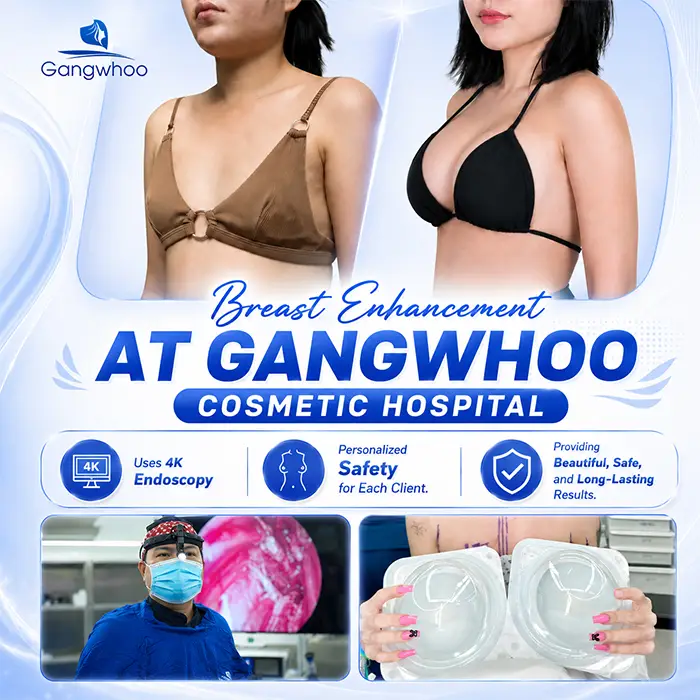
Regarding facilities and technology, the hospital is equipped with Ministry of Health-certified sterile operating rooms, featuring a high-definition 4K endoscopic system combined with Harmonic ultrasonic scalpel for micro-precise dissection. This advanced technology maximally supports the Dual Plane technique—a method of placing implants partially under the pectoralis major muscle and partially under the mammary gland. This enables surgeons to perform pocket dissection with absolute precision, minimizing bleeding, reducing tissue trauma, alleviating pain, and shortening recovery time for clients.
Implants used at the hospital are sourced from world-leading brands such as Nano, Mentor, Ergonomix, Cereform, etc., all with full biosafety certifications and clear origin. The diversity in styles, gel consistency, and volumes allows surgeons to easily recommend the most suitable materials for each individual’s skeletal frame and unique breast shape.
The pre-procedure consultation process at Gangwhoo is thoroughly conducted, including general health examinations, breast ultrasound, ptosis assessment when applicable, pre-operative laboratory tests, and detailed consultation on appropriate methods and materials. The entire process is directly supervised by specialist surgeons from consultation, surgery, to post-operative follow-up, ensuring both safety and long-term aesthetic results for clients.
Before & After Photos of Clients Undergoing Breast Augmentation at Gangwhoo
Breast injection and breast augmentation are two completely different aesthetic methods in terms of technique, level of intervention, effectiveness, and durability. Breast injection is suitable for those seeking gentle improvement with minimal invasiveness but yields less sustainable results; breast augmentation is a surgical solution providing significant, long-lasting results but requires more recovery time and thorough preparation.
There is no single “best” method for everyone—only the method most suitable for each individual’s physical condition and desires. Therefore, before making a decision, you should visit reputable medical facilities for direct consultation and examination by specialist surgeons.