
In aesthetic plastic surgery practice, the temple area is one of the regions that significantly influences perceptions of age and facial fullness. Many clients come in for consultation with the same concern: what material is used for temple augmentation to ensure both safety and long-term aesthetic results. In reality, each material has its own indications, and understanding the nature of each option will help you make a more informed decision.
What Is Temple Augmentation? Why Does the Choice of Material Matter?
Sunken temples can make the face look gaunt, tired, and aged, even when other facial features still appear youthful. This condition may result from natural aging, fat loss, muscle atrophy, or genetic factors.
In temple augmentation procedures, the choice of temple augmentation material plays a crucial role because this is an anatomically sensitive area containing many superficial blood vessels and nerves. A suitable material helps create natural contours, long-term stability, and minimizes complications. Conversely, selecting the wrong material or indication can reduce effectiveness or compromise safety. Therefore, safe temple augmentation is not only a matter of surgical technique but also of choosing the right material for each individual.
What Materials Are Used for Temple Augmentation? Common Options Today
1. Temple Augmentation with Autologous Fat
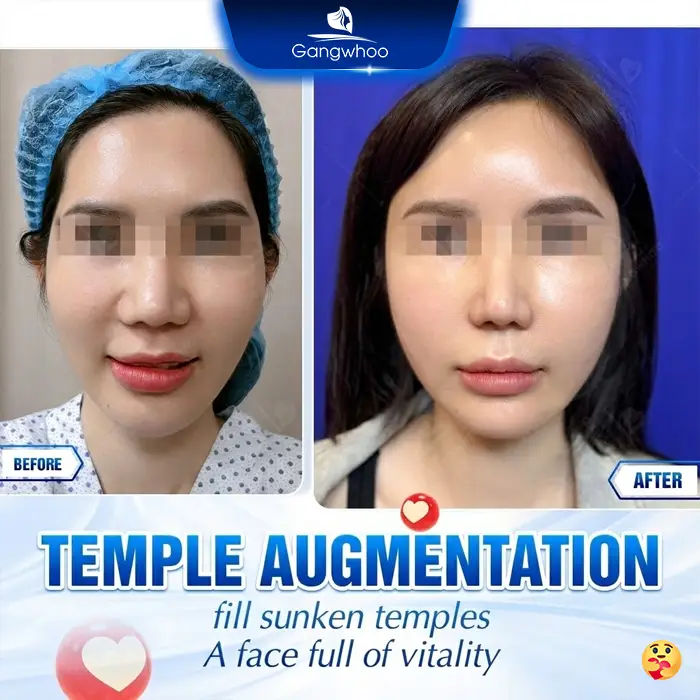
Autologous fat is harvested from the patient’s own body—typically from the abdomen or thighs—then processed and injected into the temple area. This method is suitable for mild to moderate temple hollowing and for clients who prefer natural-looking results.
The greatest advantage of autologous fat temple augmentation is its high biocompatibility, soft texture, and natural feel. However, a portion of the fat may be reabsorbed over time, so some cases require additional sessions to achieve the desired volume.
2. Temple Augmentation with Filler

Temple fillers, most commonly hyaluronic acid, are a popular non-surgical temple augmentation solution due to their quick procedure time and near-immediate recovery. This option is ideal for clients seeking temporary improvement or those not ready for surgery.
The advantages of temple filler injections include minimal invasiveness and flexible adjustments. However, fillers are not permanent and require periodic maintenance. Additionally, the temple area demands a thorough understanding of anatomy to ensure injection safety.
3. Temple Augmentation with Silicone or Synthetic Implants
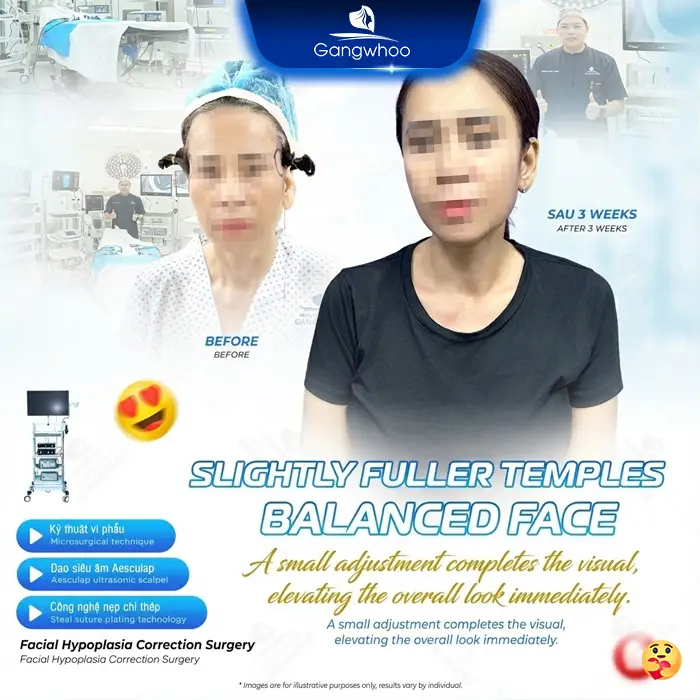
For patients with deep temple hollowing or those seeking long-lasting results, surgical placement of medical-grade silicone or synthetic implants is an appropriate option. Silicone temple augmentation or synthetic implant temple augmentation helps create well-defined contours and maintains stable results over time.
The main advantage of this method is durability. However, as it is a surgical procedure, it requires an experienced surgeon and a certified medical facility to minimize risks.
Comparing Temple Augmentation Materials – Which One Should You Choose?
| Criteria | Autologous Fat | Filler | Silicone / Synthetic Implant |
|---|---|---|---|
| Safety Level | High, due to excellent biocompatibility | High when performed correctly and appropriately | High when surgery is done at a qualified medical facility |
| Longevity | Moderate, partial absorption may occur | Short-term, requires maintenance injections | Long-lasting, stable for many years |
| Invasiveness | Minimally invasive (fat harvesting and grafting) | Very minimally invasive, non-surgical | Invasive due to surgical intervention |
| Aesthetic Outcome | Soft, natural appearance | Natural if injected in proper layers and volume | Well-defined, stable contours |
| Relative Cost | Moderate | Low to moderate (increases with repeat injections) | Higher due to surgery and implant material |
| Suitable For | Mild to moderate hollowing, preference for natural look | Temporary improvement, avoiding surgery | Deep hollowing, desire for long-term results |
Which Temple Augmentation Material Is the Safest?
From a professional perspective, there is no single temple augmentation material that is universally the safest for everyone. Safety depends on multiple factors, including the current temple condition, age, medical history, and most importantly, the surgeon’s expertise. When properly indicated, autologous fat, fillers, and synthetic implants can all deliver safe and aesthetically pleasing results.
What Criteria Do Doctors Use to Recommend Temple Augmentation Materials?
During temple augmentation consultations, material selection is not based on trends or personal preference but is carefully individualized based on clinical factors, including:
- Degree of temple hollowing
- Soft tissue quality in the temple area
- Patient’s aesthetic goals
- Desire for temporary vs. long-term results
- Willingness to undergo surgery
- Age and medical history
- Surgeon’s clinical experience and professional judgment
Why Do Many Clients Choose Gangwhoo Aesthetic Hospital for Temple Augmentation?
In plastic surgery—especially procedures involving the temple area with its complex anatomy—long-term safety and effectiveness depend not on choosing the most expensive material, but on the surgeon’s expertise, advanced technology, and standardized medical protocols. These are the key reasons many clients trust Gangwhoo Hospital for temple augmentation.
Each procedure is directly examined and planned by board-certified plastic surgeons who carefully assess facial structure, soft tissue quality, and overall health to recommend the most suitable material—whether autologous fat, filler, or synthetic implants—ensuring personalized and safe outcomes.
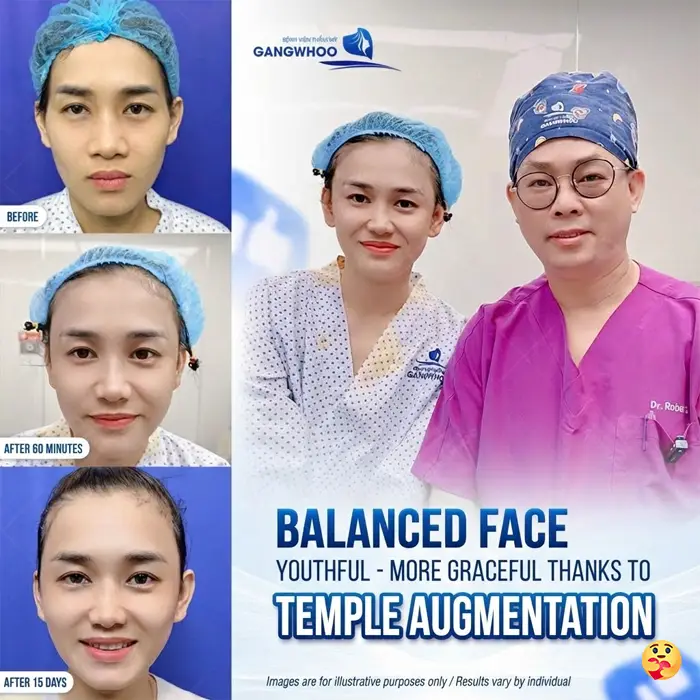
In addition, Gangwhoo invests heavily in modern medical technology and sterile operating environments, ensuring precise placement, controlled depth, and optimal volume for natural-looking results while minimizing complications.
All materials used at Gangwhoo have clear origins, medical certification, and strict quality control. Post-procedure, clients receive comprehensive follow-up care, including recovery guidance and scheduled check-ups, to ensure stable and long-lasting results.

From a professional standpoint, safe and beautiful temple augmentation depends on the harmony of surgeon skill, technology, and medical protocol—not merely on material selection. This is the core value Gangwhoo Aesthetic Hospital upholds in every treatment.
Ultimately, the question of which material is best for temple augmentation has no universal answer. A direct consultation with a qualified specialist is essential to evaluate facial structure and recommend the most appropriate, safe, and sustainable solution.