
Postpartum abdominoplasty has become a more considered solution because pregnancy changes a woman’s body at multiple structural layers: the skin stretches, subcutaneous fat proliferates unevenly, the abdominal muscles separate, and skin elasticity significantly decreases.
Despite efforts through exercise, dieting, or non-invasive technologies, many women still experience loose, sagging, bulging, or stretched abdominal skin that is difficult to manage. In these cases, abdominoplasty — another name for postpartum tummy tuck surgery — is considered the most definitive method recognized by medical professionals to restore the abdominal wall structure and achieve long-lasting aesthetic improvement.
As a plastic surgeon, I frequently meet postpartum patients who wish to regain a slimmer waistline. The following explanation will help you understand the procedure and make an informed decision.
What is postpartum abdominoplasty and why is it widely recommended today?
Postpartum abdominoplasty is a surgical technique that removes excess sagging skin, addresses loose fat tissue, and sutures the separated rectus abdominis muscles that were stretched during pregnancy. In cases with significant skin excess, the navel is reshaped to ensure natural harmony. Some patients may also be recommended combined liposuction of the waist and hips to achieve better body contouring.
Unlike methods such as abdominal binders, RF waves, HIFU, or muscle-tightening treatments, abdominoplasty is more effective because it directly targets the muscle–fat–skin layers that were altered after childbirth. This explains why many postpartum women cannot improve their abdominal shape through exercise alone.
What changes after pregnancy make abdominoplasty necessary?
During pregnancy, the abdominal skin stretches significantly, causing collagen and elastin fibers to break, resulting in stretch marks and skin laxity. Subcutaneous fat increases unevenly and may form persistent fat deposits. Importantly, the abdominal muscles may separate — a condition known as diastasis recti — leading to a protruding abdomen even when the body weight has returned to pre-pregnancy levels.
Many women also have a low C-section scar that causes the upper skin to droop downward, creating folds that are difficult to correct through non-surgical methods. The combination of these factors creates an abdominal wall structure that cannot fully recover naturally and therefore requires surgical intervention.
Who is a suitable candidate, and who should avoid postpartum abdominoplasty?
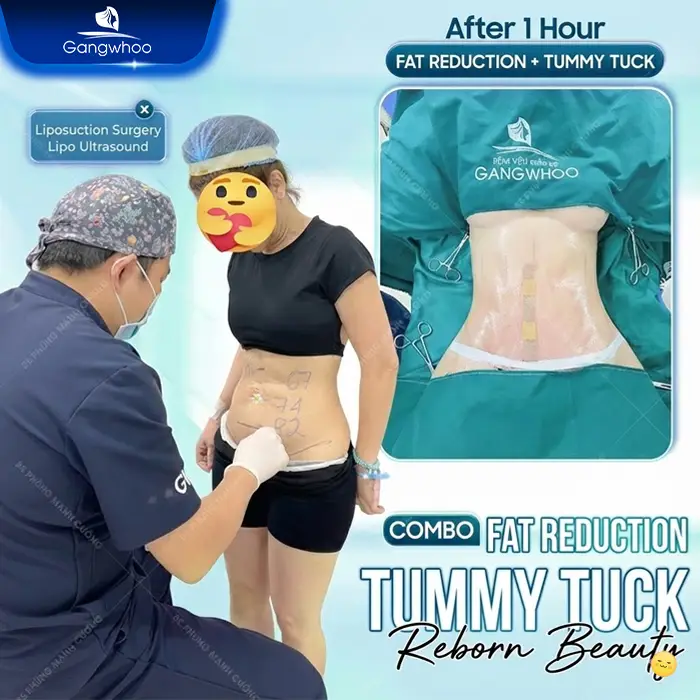
This procedure is most suitable for women who have given birth at least six months to one year prior, are no longer breastfeeding, and maintain a stable weight. Those with significant skin laxity, loose fat tissue, clear muscle separation, and no serious underlying medical conditions usually achieve excellent results.
Conversely, the procedure is not recommended for women planning to become pregnant within the next few years, patients with very high BMI, those with uncontrolled cardiovascular conditions or bleeding disorders, or active smokers. These cases require thorough medical evaluation and pre-operative optimization before proceeding.
How long after childbirth should abdominoplasty be performed?
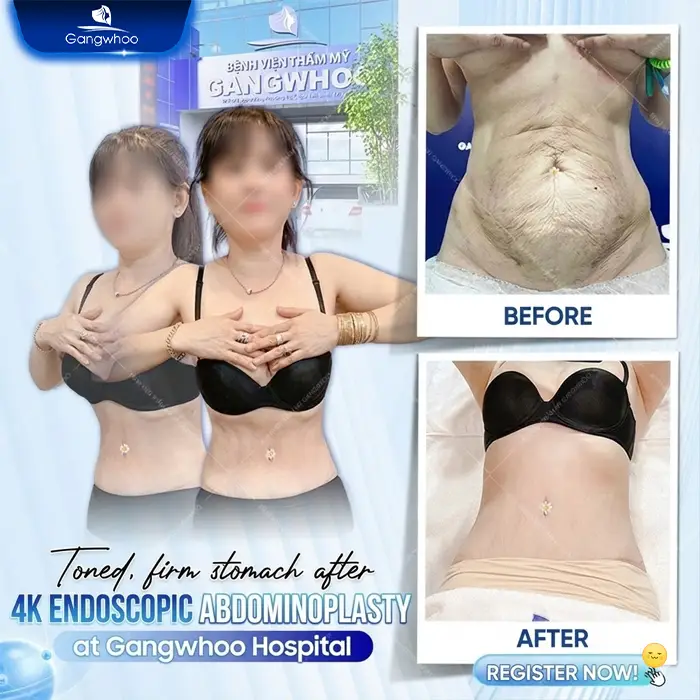
The ideal time is after the body has fully recovered from childbirth. Generally, the period between six and twelve months postpartum is considered optimal because the skin tissues have stabilized, body weight fluctuates less, and lactation has ceased. Waiting until this stage ensures a safer surgery and more durable results.
Gangwhoo Aesthetic Hospital – A pioneer in postpartum abdominoplasty
In plastic surgery, technology plays a key role in improving safety, precision, and shortening recovery time. In Vietnam, Gangwhoo Hospital is one of the few units that invest comprehensively in specialized equipment to support postpartum abdominoplasty, particularly in patients with large excess skin, complex muscle separation, or multiple previous cesareans.
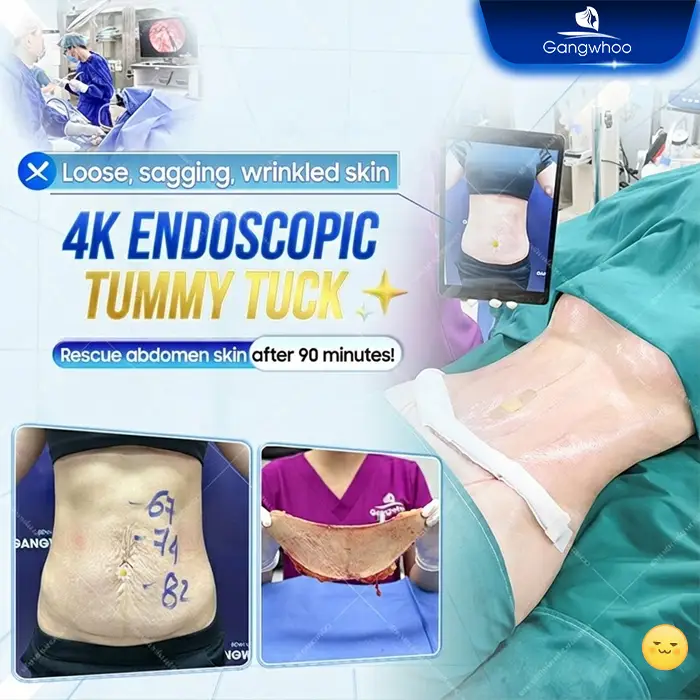
Gangwhoo applies the Harmonic scalpel and Plasma scalpel during dissection and tissue handling. The Harmonic scalpel uses ultrasonic energy to cut, coagulate, and seal tissues simultaneously, reducing thermal injury to soft tissues and significantly limiting intraoperative bleeding. The Plasma scalpel allows more delicate dissection in thin tissue areas, increasing precision and reducing the risk of tissue burns, suitable for extensive reconstructive cases while maintaining high safety.
For muscle repair in cases of separated abdominal muscles, Gangwhoo uses a 4K endoscopic system that magnifies deep tissue structures and helps surgeons visualize the muscle, fat, and fascial layers clearly. High-resolution imaging supports more precise maneuvers, which is especially important in patients with wide muscle separation or adhesions from prior surgeries. The 4K endoscopic technology also limits unnecessary dissection, thereby reducing pain and shortening recovery time.
Regarding anesthesia and resuscitation, the hospital is equipped with the GE Healthcare Carestation 620 Anesthesia System, one of the advanced anesthesia machines available today. The system allows optimal airway, inhalational agent, and hemodynamic control throughout surgery. Additionally, SEVOrane (sevoflurane) is commonly used for its rapid induction, smooth emergence, and lower incidence of nausea, which is suitable for procedures lasting two to three hours like abdominoplasty.
Besides technology, another strength of Gangwhoo is its team of surgeons who regularly receive advanced training in Korea, the USA, and Thailand. Access to new techniques and international training helps surgeons stay updated on modern abdominoplasty trends such as lipoabdominoplasty, enhanced muscle repair, and proportionate contouring techniques. While applying advanced techniques, surgeons still adhere to medical safety principles to ensure each postpartum abdominoplasty is performed with correct indications and medical standards.
Thanks to the combination of advanced technology, modern anesthesia control, and mature surgical expertise, many complex abdominoplasty cases at Gangwhoo have achieved good outcomes with reduced swelling, faster recovery, and a flat abdomen early in the postoperative period. This is an important advantage that makes the hospital a trusted choice for many postpartum women seeking scientific and lasting abdominal reconstruction.
Costs of postpartum abdominoplasty at Gangwhoo Aesthetic Hospital
| Service | Price (USD) |
|---|---|
| Abdominal Liposuction (BMI 22–22.9, 60–70 cm) | 3,200 |
| Abdominal Liposuction (BMI 23–26, 72–80 cm) | 3,600 |
| Abdominal Liposuction (BMI 23–26, 82–90 cm) | 4,400 |
| Abdominal Liposuction (BMI 23–26, 92–100 cm) | 5,600 |
| Abdominal Liposuction (BMI 26–30, 100–105 cm) | 6,400 |
| Abdominal Liposuction (BMI >30, 105–110 cm) | 7,600 |
| Abdominal Liposuction (BMI >30, 110–120 cm) | 8,800 |
| Abdominal Liposuction (BMI >30, >125 cm) | 12,000 + 220/cm |
| Waist Liposuction | 1,600 |
| Hip Liposuction | 1,600 – 2,800 |
| Arm Liposuction (25–35 cm) | 2,000 – 2,400 |
| Arm Liposuction (>35 cm) | 2,800 + 200/3cm |
| Accessory Breast / Anterior Axilla / Posterior Axilla Liposuction | 2,000 – 2,400 |
| Upper Back Liposuction | 2,800 |
| Upper Back Fat (Bra Fat) Removal | 2,400 |
| Lower Back Liposuction | 2,000 |
| Thigh Liposuction (Inner / Outer / Front / Back) | 2,400 – 3,200 |
| Full Thigh Liposuction (50–65 cm) | 5,280 – 5,720 |
| Full Thigh Liposuction (65–70 cm) | 6,160 – 6,600 |
| Full Thigh Liposuction (>75 cm) | 7,480 + 220/cm |
| Mini Tummy Tuck (Loose Skin) | 2,400 |
| Full Tummy Tuck | 3,600 |
| Fat Grafting (Nasolabial Folds, with Liposuction) | 1,200 |
| Fat Grafting (Forehead, promo with Liposuction) | 2,000 |
| 4K Endoscopic Tummy Tuck (Add-on) | +1,200 |
| Hand Rejuvenation Fat Grafting (No Liposuction) | 3,200 |
| Hand Rejuvenation Fat Grafting (With Liposuction) | 3,400 |
| Double Chin Liposuction | 1,200 |
Postoperative care for optimal results
Postoperative care is as important as the surgical technique. Patients should ambulate early but avoid strenuous activities for the first few weeks. The incision should be kept clean and dry and monitored at each follow-up visit. Scar-silencing products such as silicone gels or sheets should be used consistently for many weeks. Additionally, a protein-rich diet with vegetables and reduced salt helps the body recover faster and reduces swelling.
Does postpartum abdominoplasty affect breastfeeding or future pregnancies?
One advantage of this method is that it does not affect the mammary glands, since the surgery only targets the skin, fat, and muscle of the lower abdomen and does not involve the milk production system. After surgery, women can still become pregnant but the aesthetic result may be affected. Therefore, the ideal timing for surgery is when you have completed your childbearing plans.
Postpartum abdominoplasty is a medically grounded solution that provides clear and lasting results for cases of abdominal wall deformation after pregnancy. It is a major operation that requires highly skilled surgeons and accredited medical facilities to ensure absolute safety. Choosing the right timing, the right provider, and following recovery guidelines will help you achieve a firm waist and greater confidence in daily life.