
Is chin augmentation permanent? This is a question I frequently encounter from people looking into chin reshaping surgery, especially those with a receding chin, a short chin, or a lower jaw contour that isn’t well balanced with the overall face.
From a professional standpoint, I want to clarify one point right away: chin augmentation can deliver stable, long-lasting results, but “permanent” should not be understood to mean the chin shape will remain completely unchanged for life. How long the results last depends on the material used, the surgical technique, how the material is fixed in place, the patient’s anatomy, the healing process, individual body characteristics, and the natural changes the face undergoes with age.
At Gangwhoo Cosmetic Hospital, consultations for chin reshaping need to be based on an in-person examination and an assessment of how the chin, lips, lower jaw, and the whole face relate to one another. The goal isn’t simply to make the chin longer — it’s to create facial harmony while ensuring the patient’s safety.
Is Chin Augmentation Permanent?
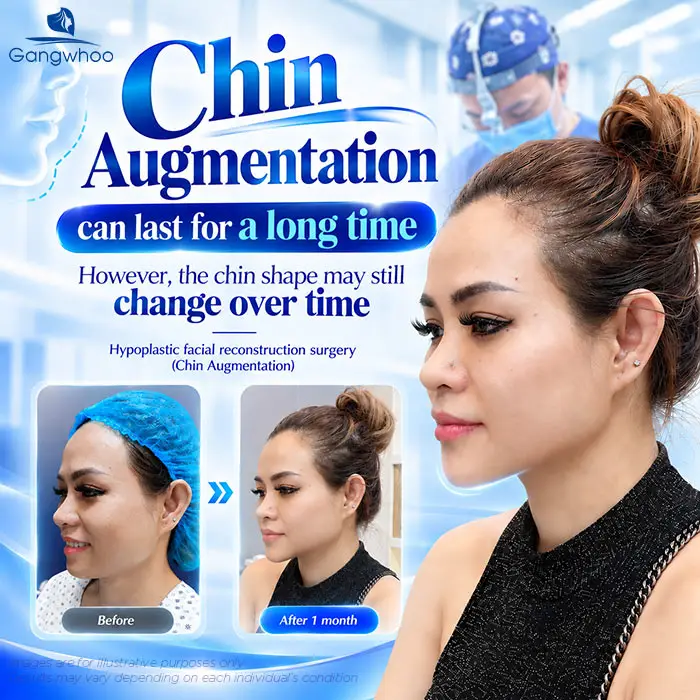
The results can last a long time, but the durability of the material shouldn’t be equated with the chin shape being “unchangeable” for life.
Chin augmentation using artificial implant material is a surgical procedure to reshape the chin, in which the surgeon creates an appropriately sized pocket and places the implant material in a predetermined position to increase chin projection, length, or improve its proportion relative to the face.
If the material is biocompatible, correctly positioned, stably fixed, and the patient recovers well, the results can last for a long time. However, the body continues to age after surgery. The skin, fat tissue, ligaments, and other soft-tissue structures of the face can all change over time.
So when patients ask, “Is chin augmentation permanent?”, I usually explain it from two angles.
First, the implant material itself can remain in the body for a long time if no complications arise and there’s no medical indication requiring removal.
Second, the shape of the face is not a fixed structure for life. Aging, weight changes, injury, or issues arising in the chin area can alter one’s appearance even while the implant material remains in place.
Therefore, a more accurate way to put it is that chin augmentation can produce long-lasting results, rather than guaranteeing results that are “absolutely permanent.”
How Long Does Chin Augmentation Last?
How long the results last depends on the method used:
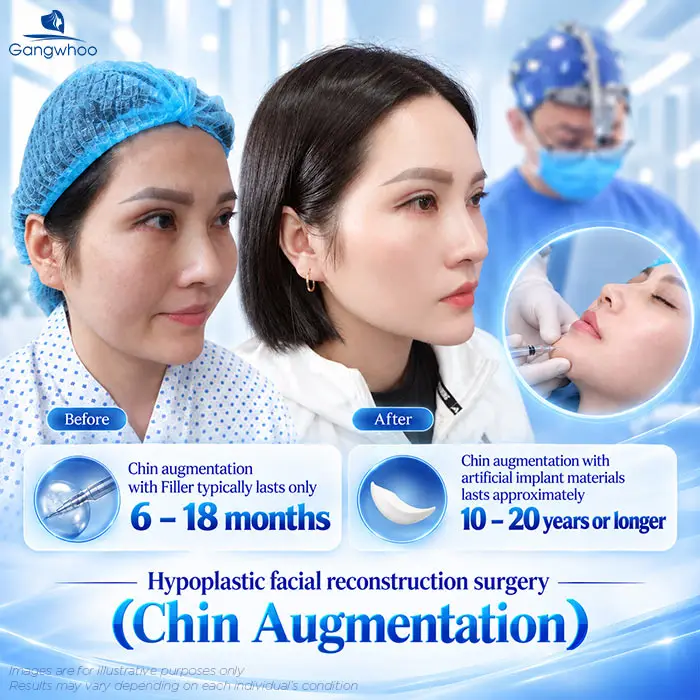
- Chin filler: typically lasts about 6–18 months. Some fillers may last longer, around 18–24 months, depending on the composition, dosage, injection site, and each individual’s metabolic rate. As the body absorbs the filler, the chin gradually loses fullness and may need a touch-up injection if the doctor determines it’s appropriate.
- Chin implant augmentation: results can typically last around 10–20 years, or even longer if the material is biocompatible, correctly positioned, stably fixed, and free of complications. However, this isn’t a mandatory timeframe for replacing the material. If the implant remains stable and doesn’t cause pain, inflammation, exposure, or displacement, the patient may not need any further intervention.
- Chin sliding genioplasty (using the patient’s own bone): once the bone has healed, it can remain stable for a long time, but the shape of the chin area can still change due to aging, weight changes, or soft-tissue changes over time.
So if you need a specific figure, it’s fair to say that chin filler generally lasts about 6–18 months, while implant-based chin augmentation generally lasts about 10–20 years or longer. That said, actual results vary from person to person.
One important point to note is that how long the material lasts is not the same as the chin shape staying completely unchanged. Even if the implant remains stable, the face is still affected by aging, weight changes, and soft-tissue changes.
Factors That Determine How Long Chin Augmentation Results Last
1. Implant Material
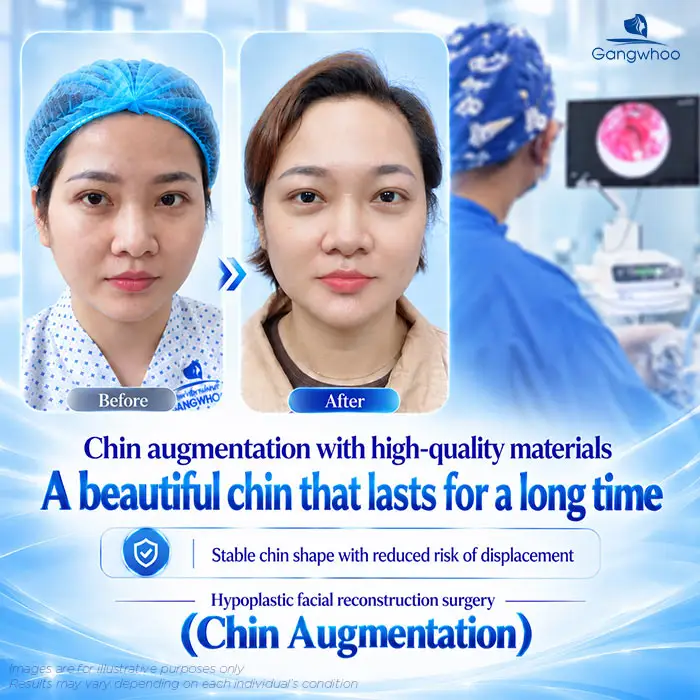
The material used in chin reshaping surgery must have a clear origin, be suited to the treatment goal, and be used according to proper medical indications.
You shouldn’t choose a material based solely on “which one is more permanent.” The surgeon needs to consider the chin’s shape, the overlying soft tissue, bone structure, the degree of volume deficiency, and each person’s aesthetic goals all together.
An otherwise suitable material that is placed in the wrong position or not stably fixed can still lead to unsatisfactory results.
2. Surgical Technique and Anatomical Assessment
Chin reshaping isn’t simply a matter of placing a piece of material in front of the chin bone.
Before surgery, the surgeon needs to assess the shape of the lower face, chin projection, chin height, the lip-to-chin relationship, the lower jawline, and the characteristics of the soft tissue. In cases where necessary, diagnostic imaging can help the surgeon evaluate the bone structure and plan accordingly.
During surgery, creating the pocket in the correct position and choosing a material of the right size and shape play an important role. Material that isn’t well matched to the patient’s anatomy, or that’s placed too superficially or off to one side, can increase the risk of deformity or a visible edge.
3. Fixation of the Material
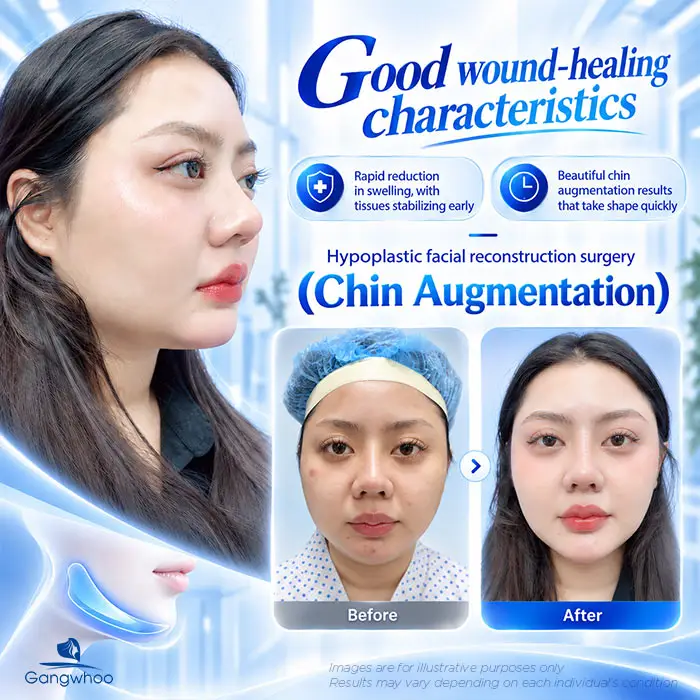
How stable the material is after surgery is also worth paying attention to.
If the material shifts out of its intended position, the patient may notice the chin becoming asymmetrical, unbalanced, or the contour changing. Therefore, the fixation method needs to be carefully chosen by the surgeon based on the patient’s anatomy and the specific surgical technique.
4. Healing Process and Individual Body Characteristics
After surgery, the soft tissue needs time to reduce swelling and adapt to the change in shape.
Everyone recovers at a different pace. So the results shouldn’t be judged too early, while the chin area is still swollen or the tissue hasn’t settled yet.
5. Facial Aging
This is a factor that’s often overlooked when discussing whether chin augmentation is permanent.
Even if the implant material remains stable, the face continues to age. Skin loses elasticity, soft tissue changes, fat volume can redistribute, and the supporting structures of the face also change with age.
So, the material may last a long time, but the shape of the face doesn’t necessarily stay the same as it was right after surgery.
When Might Chin Implants Need to Be Removed or Revised?
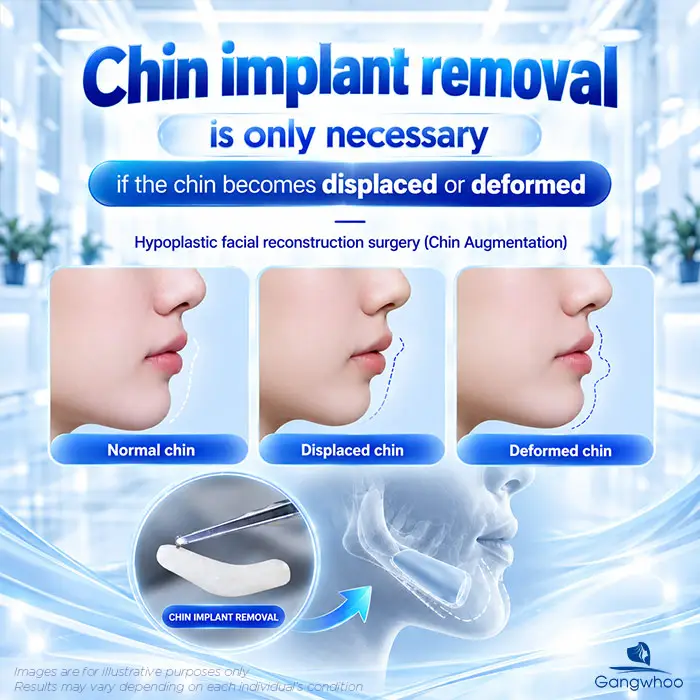
Not every chin augmentation case requires the material to be replaced or removed on a fixed schedule.
If the results are stable, there are no complications, and the patient is satisfied, whether further intervention is needed should be assessed based on the actual condition.
On the other hand, a surgeon may consider removal or revision if issues arise such as infection, displacement of the material, deformity, irritation, prolonged pain, or an unsatisfactory cosmetic result.
In addition, some people’s aesthetic preferences change over the years, and they may want to adjust their chin shape again. In that case, revision surgery should be assessed on its own merits, rather than assuming the cause is the implant material having “expired.”
How to Help Maintain a Stable Chin Shape Long-Term
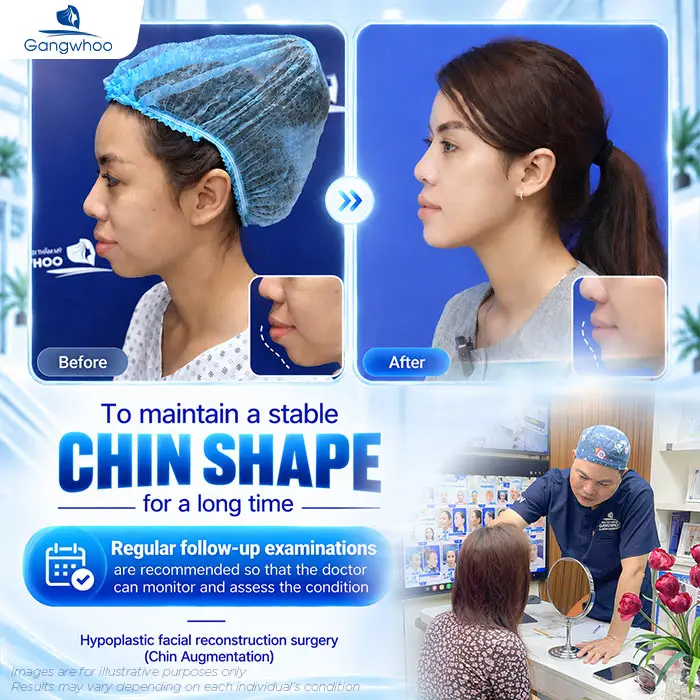
After surgery, patients should follow their surgeon’s aftercare instructions rather than relying on word-of-mouth methods.
In the early stages, strong mechanical impact to the chin area should be avoided, and patients shouldn’t massage, manipulate, or apply pressure to the surgical site on their own without their doctor’s approval.
Follow-up visits are also very important. The doctor can assess the healing process, the position of the material, and the recovery progress in order to catch any abnormal signs early.
If a patient experiences increasing pain, unusual redness and swelling, discharge, fever, warmth/redness at the surgical site, or a noticeable change in chin shape, they should contact a medical facility or their treating physician for evaluation.
Patients should not buy medication or attempt to treat the issue at home without first determining the cause.
How Does Gangwhoo Cosmetic Hospital Approach Chin Augmentation Consultations?
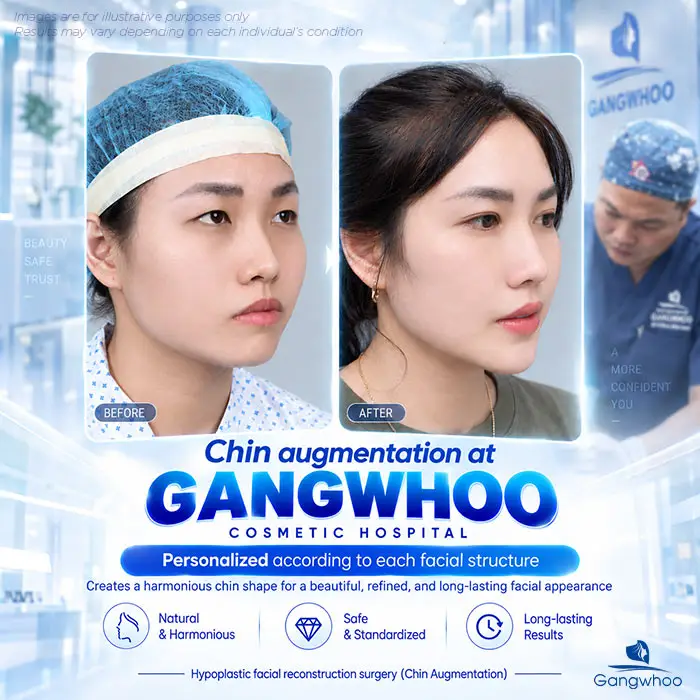
At Gangwhoo Cosmetic Hospital, the consultation approach should prioritize assessing facial structure and the suitability of the method over marketing considerations.
For patients who want to improve their chin, the Oral and Maxillofacial surgeon needs to evaluate the lower jaw overall, the degree of chin recession or lack of projection, the lip-to-chin relationship, the soft tissue, and related anatomical factors before making a recommendation.
This is especially important because not every case of a short or receding chin can be well resolved with just one type of implant. Depending on the cause and degree of deficiency, the surgeon may need to distinguish between chin reshaping with implant material, filler, or bone-structure procedures such as sliding genioplasty.
The ultimate goal isn’t to create the longest or most projected chin possible, but to achieve balance between the chin, lips, lower jaw, and the face as a whole, while ensuring the patient’s safety.
According to information from Gangwhoo Cosmetic Hospital’s records, Nguyen Minh Hien is an Oral and Maxillofacial cosmetic surgeon currently working at the hospital.
Chin augmentation can produce stable, long-lasting results, but “permanent” doesn’t mean the chin shape will never change. The material can last a long time if it remains stable and doesn’t require removal, but the face is still subject to the aging process and physiological changes over time.
If you’re considering chin augmentation, rather than just asking “Is chin augmentation permanent?”, you should pay more attention to three things: whether the method suits your chin structure, whether the technique ensures safety, and whether the aesthetic goal is in harmony with your face as a whole.
At Gangwhoo Cosmetic Hospital, anyone interested can be examined and assessed by an Oral and Maxillofacial specialist before choosing a method. The actual results and how long they last still depend on each person’s anatomy, individual body characteristics, and recovery process.