
In reality, wearing a facial compression band or garment after facelift surgery is a mandatory step in the recovery process. If you are preparing for or have recently undergone a facelift, this article will help you understand why you need to wear a compression band, How Long Should You Wear a Facial Compression Band After a Facelift, how to wear it properly under medical guidance, and when it’s safe to remove it.
Why You Need to Wear a Compression Band After a Facelift
After a facelift, the facial skin and muscle layers (SMAS and subcutaneous tissues) are repositioned to create a firmer, more youthful contour. During the early healing phase, these tissues are still unstable and can easily shift without proper external support.
A facial compression band (or garment) acts as a protective frame that:
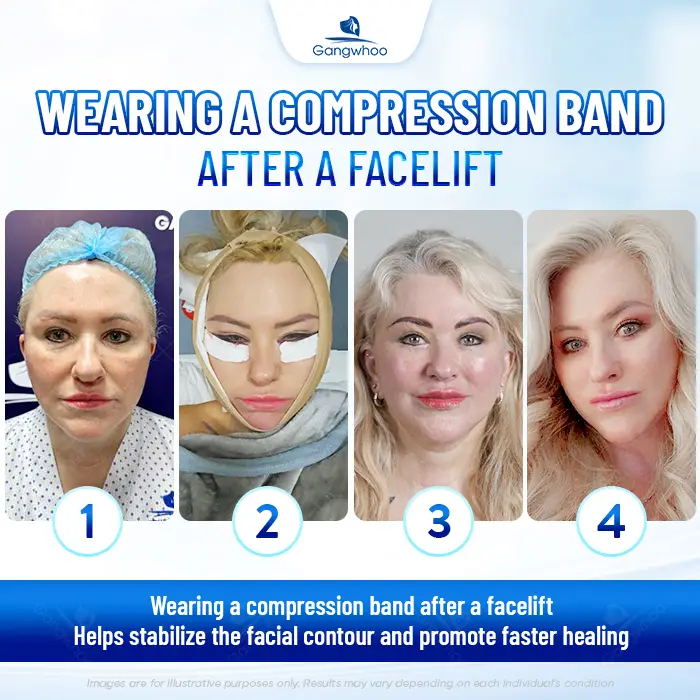
Stabilizes the repositioned tissues and prevents displacement.
Reduces swelling and fluid accumulation, promoting adhesion between skin and deeper structures.
Helps the face “set” into its new contour more quickly and symmetrically.
According to the American Society for Aesthetic Plastic Surgery (ASAPS), wearing a compression band for the first 7–14 days after a facelift is medically recommended to ensure a stable and aesthetic outcome.
How Long Should You Wear a Facial Compression Band After a Facelift?
The duration of wearing a compression garment varies depending on each patient’s healing response and surgical technique. Based on clinical experience, the recommended guideline is as follows:
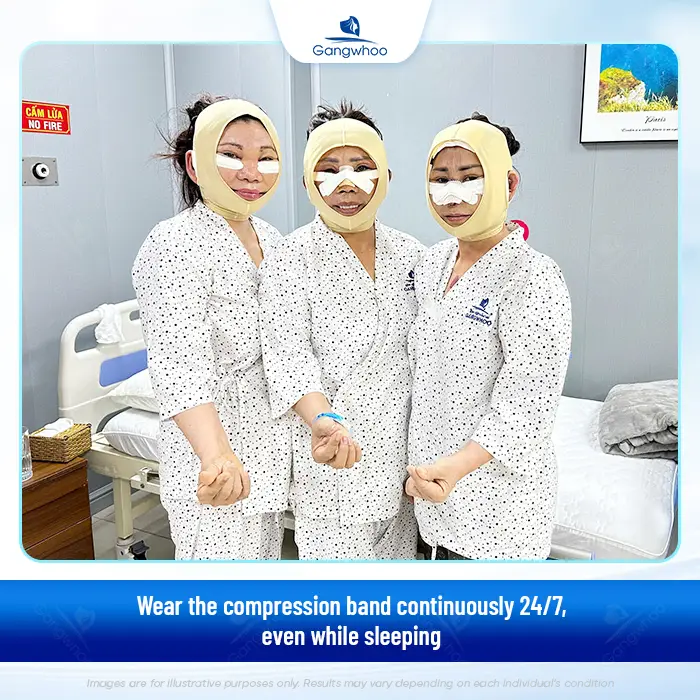
Week 1: Wear continuously (24/7), removing only for hygiene purposes.
Weeks 2–3: Gradually reduce wearing time to 12–16 hours per day.
After 1 month: You may discontinue wearing it once your facial contour has stabilized and your surgeon confirms it is safe.
For deep SMAS facelifts or endoscopic full-face lifts, the compression period may extend to 3–4 weeks for optimal tissue stabilization.
Factors That Affect the Duration of Compression Band Use
There is no universal timeline for all patients. The appropriate duration depends on multiple individual factors.
According to Dr. Lê Ngọc Tuấn Anh, Head of the Facelift Department at Gangwhoo Plastic Surgery Hospital, four major factors influence how long a patient should wear the compression band:
1. Surgical Technique
Each facelift technique has a different level of invasiveness and healing profile:
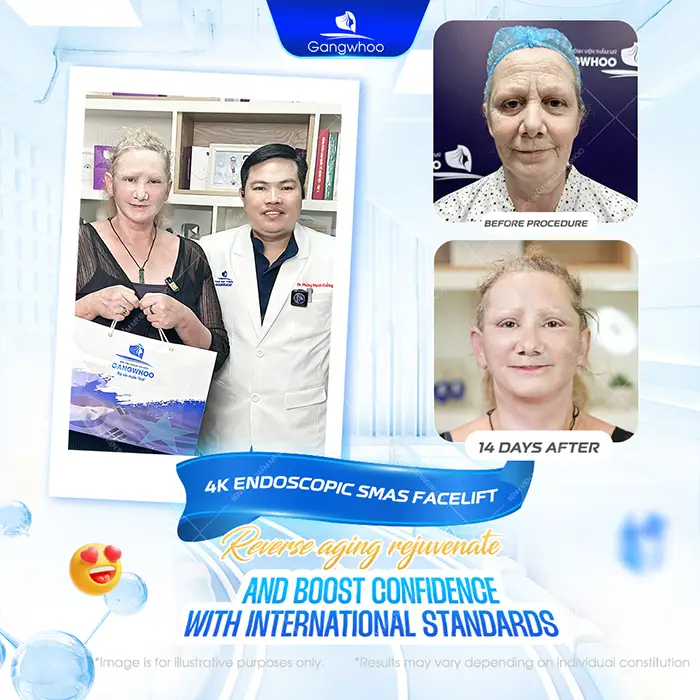
SMAS Facelift: Involves deep tissue manipulation; compression should be maintained for 3–4 weeks to stabilize tissue adhesion and reduce swelling.
Endoscopic Facelift: Minimally invasive, with quicker recovery — usually 2–3 weeks of compression is sufficient.
Thread Lift: Non-surgical with minimal trauma — compression is needed only 5–7 days, mainly for swelling control.
2. Surgeon’s Experience and Technique
An experienced surgeon with precise dissection and suturing techniques minimizes tissue trauma and accelerates recovery.
Incorrect or overly tight suturing, however, can cause prolonged swelling or fluid retention, requiring longer compression time.
“If the SMAS layer is placed correctly along the anatomical plane and sutured properly, the face will stabilize quickly, with minimal swelling, allowing compression time to be reduced after 2–3 weeks,”
— Dr. Lê Ngọc Tuấn Anh
3. Patient’s Age and Healing Capacity
Younger patients (<40 years): Stronger collagen and circulation → faster recovery → shorter compression period (2–3 weeks).
Older patients (>50 years): Thinner skin, weaker connective tissue → longer compression period (4–6 weeks).
Patients with chronic conditions (e.g., diabetes, hypertension, smoking habits) often require longer and more careful compression to avoid delayed healing.
4. Postoperative Care and Lifestyle
Proper postoperative care directly affects recovery speed:
Wearing the band correctly, sleeping face-up with head elevated 30°, and following follow-up schedules → smooth healing, possibly shorter compression time.
Premature removal, side sleeping, or touching the surgical area → tissue displacement or swelling → prolonged compression or revision needed.
“Never follow unverified online tips such as applying ice for too long or replacing the medical band with generic wraps. Only use medical-grade compression garments prescribed by your surgeon,”
— Dr. Lê Ngọc Tuấn Anh
How to Wear a Facial Compression Band Properly (Medically Approved)
1. Correct, Safe, and Effective Wearing Method
The compression band is designed to fit snugly around the chin, cheeks, and temples. Improper use can lead to asymmetry, vascular compression, or fluid buildup.
Guidelines:

Do not overtighten: Excess pressure can cause ischemia, hematoma, or delayed healing.
Do not wear too loosely: Insufficient compression allows tissue movement and potential sagging.
Avoid folds or wrinkles: Uneven pressure can irritate sutures or leave marks.
Adjust to your facial contour: At Gangwhoo hospital, each patient’s band is customized to ensure balanced compression on both sides.
2. When to Remove and Re-examine
Only remove the compression band upon your surgeon’s instruction.
Signs that it may be safe to remove include:
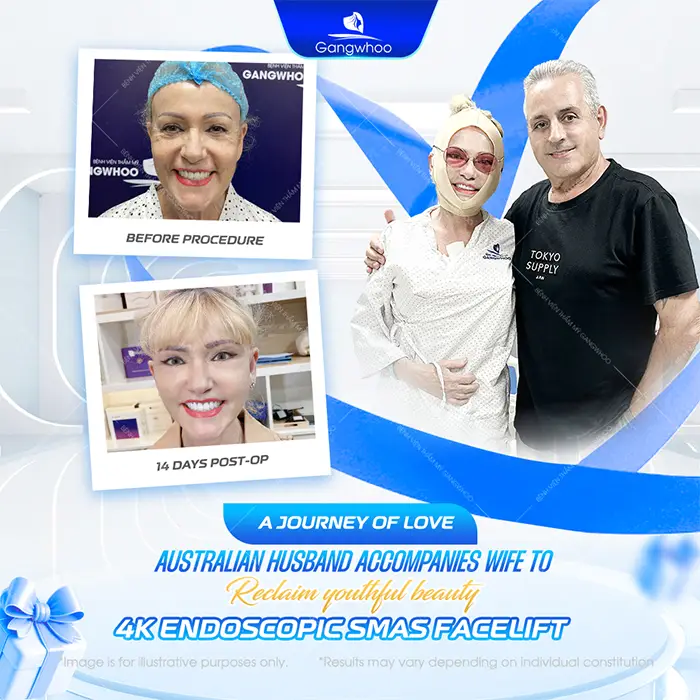
Over 90% reduction in swelling
Skin feels smooth, even, and tension-free
Incision fully healed and dry
Facial contour stable and symmetrical
3. Medical Safety Notes
Avoid hot water or sunlight when washing the band (may alter elasticity).
Clean your face before wearing to prevent infection or irritation.
Stop wearing and visit your surgeon if you notice persistent pain, redness, or uneven swelling.
Always use medical-grade compression bands (Compression Level 1–2) — never replace them with regular wraps.
Complications of Not Wearing or Wearing the Band Incorrectly
At Gangwhoo Plastic Surgery Hospital, many revision cases result from patients removing or misusing compression bands prematurely.
1. Tissue Displacement and Asymmetry
Within the first week, subcutaneous tissues (SMAS, fat, and dermis) are still fragile.
Without adequate compression:
One cheek may appear more swollen or sagging.
The chin contour may become uneven.
Localized fat bulges or dimples may occur.
2. Fluid Collection and Prolonged Swelling
Compression maintains gentle, consistent pressure that supports lymphatic drainage and blood flow.
Without it:
Seroma (fluid pockets) or hematoma may form.
Persistent swelling or discoloration may occur, delaying healing for weeks.
📊 According to the American Society of Plastic Surgeons (ASPS, 2023):
Proper compression reduces the risk of seroma formation by up to 70% during the first 3 postoperative weeks.
3. Early Skin Laxity and Reduced Surgical Effect
Removing the band too soon (before 2 weeks) can cause:
Partial loss of lift effect within months.
Recurrence of nasolabial folds and jowl sagging.
4. Circulatory Issues from Overtight Compression
Overtight or misaligned compression can obstruct blood flow, leading to:
Localized ischemia or rare fat necrosis.
Prolonged numbness or bruising near incision lines.
Skin depression or visible scarring.
At Gangwhoo, compression pressure is measured using a medical pressure meter (10–20 mmHg) — aligned with standards by the Korean Society of Plastic & Aesthetic Surgery (KSPAS).
5. Skin Inflammation or Secondary Infection
Poor hygiene or improper handling can cause:
Contact dermatitis or redness around incision sites.
Local infection with discharge or odor.
Prolonged wound healing (6–8 weeks).
Post-Removal Care to Maintain Long-Lasting Results
After removing the compression band, your skin continues to remodel. Proper care helps prolong facelift results:
Avoid vigorous activity or facial massage.
Keep skin clean, moisturized, and protected from UV exposure.
Maintain a balanced diet rich in antioxidants (fruits, fish, vegetables).
Sleep on your back; avoid side pressure.
Attend scheduled follow-ups every 1–3 months.
Consult with a Specialist
If you wish to learn how long to wear a compression band after a facelift or need a personalized recovery plan, visit Gangwhoo Plastic Surgery Hospital.
Our expert team, led by Dr. Lê Ngọc Tuấn Anh – Head of the Facelift Department, will provide a detailed assessment and customized post-facelift care plan tailored to your healing profile.
Gangwhoo Plastic Surgery Hospital – Where surgical precision meets aesthetic harmony, delivering natural, youthful results with medical excellence.