
Sunken temples are one of the signs that make the face look gaunt, tired, and older than its actual age. For this reason, temple augmentation has become a popular solution to create a fuller, more youthful, and harmonious facial appearance. However, the questions I receive most often from patients are: how long does temple augmentation last, does it need to be redone, and which method is the most durable?
In this article, I will provide a detailed analysis of the longevity of each temple augmentation method, based on medical expertise and real clinical experience.
How Long Does Temple Augmentation Last? An Overview
The duration of temple augmentation results varies depending on the method. This depends on the materials used, the surgical or injection technique, and each individual’s physiology.
With temple filler injections, results typically last from about 6 to 18 months. Autologous fat grafting to the temples can last for many years, and in some cases, even long-term when the fat survival rate is high. Meanwhile, temple augmentation with implants is considered a long-lasting solution, as the material itself can remain for many years if removal is not required.
Because of these differences, choosing a method should not be based solely on how long it lasts, but rather on a comprehensive evaluation of the temple condition and each individual’s aesthetic goals.
How Long Do Temple Fillers Last?
Filler injections are favored by many patients because they are non-surgical, quick to perform, and allow almost immediate recovery. However, temple fillers are not a permanent solution.
1. Why Don’t Temple Fillers Last Permanently?
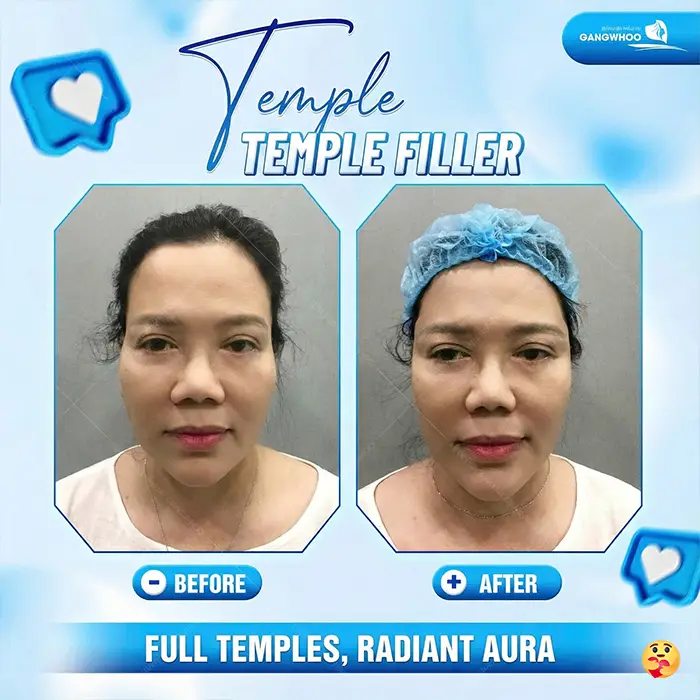
The filler commonly used in the temple area is hyaluronic acid (HA), a substance that naturally biodegrades over time. After injection, the filler restores volume to hollow areas but is gradually metabolized and absorbed by the body.
Clinically, the average duration of temple fillers ranges from 6 to 18 months. Some premium fillers may last up to around 24 months in individuals with slower metabolism.
2. Factors Affecting the Longevity of Temple Fillers
Not everyone retains filler results for the same duration. Longevity depends on the filler type, injection technique, volume used, and especially individual metabolism. People who are physically active, have fast metabolism, or have deeply sunken temples often require earlier touch-ups.
3. When Should Temple Fillers Be Re-injected?
When the temples begin to appear hollow again and the face loses its initial fullness, it may be time to consider a touch-up. Re-injection must be performed at the right time and in the correct anatomical plane to ensure safety, especially since the temple area contains complex vascular structures.
How Long Does Autologous Fat Grafting to the Temples Last?

Autologous fat grafting uses the patient’s own fat to restore volume to the temples. This method is often chosen by patients seeking more natural and longer-lasting results than fillers.
1. Does the Transferred Fat Get Absorbed?
The answer is yes, but not entirely. After fat grafting, a portion of the fat is naturally absorbed within the first few months. The surviving fat cells that establish blood supply can remain stable long-term.
In practice, the results of temple fat grafting can last for many years and may be considered long-lasting when fat survival is optimal.
2. Why Does Longevity Differ Between Individuals?
The differences depend on fat processing techniques, the surgeon’s expertise, and the recipient’s physiology. Proper harvesting, purification, and injection techniques improve fat survival. Additionally, patients with stable body weight tend to maintain better long-term results.
In cases of severe temple hollowing, a second fat grafting session may be needed to achieve optimal volume and durability.
How Long Does Temple Augmentation with Implants Last?
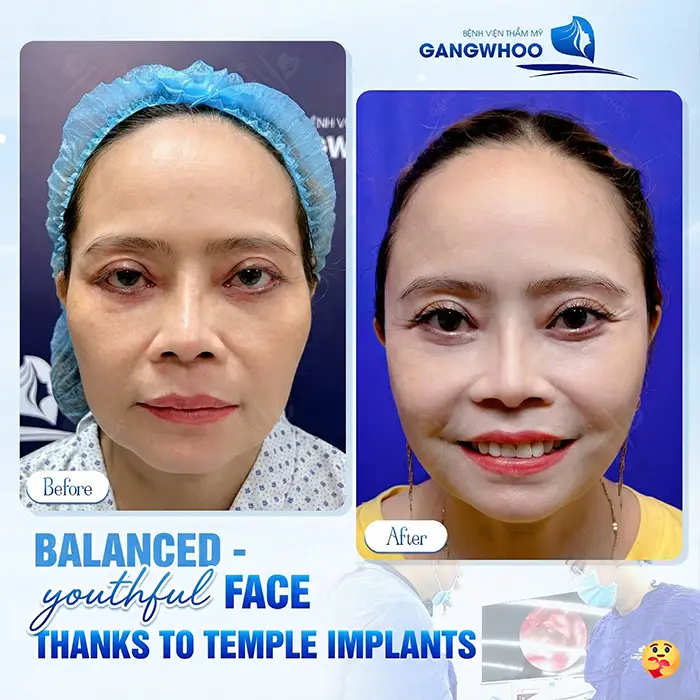
Temple augmentation with implants (such as silicone, Surgiform, or specialized materials) is a surgical procedure typically indicated for patients with significant temple hollowing and skeletal volume deficiency.
1. Are Temple Implants Permanent?
From a material standpoint, implants do not degrade over time like fillers or fat grafts. When placed correctly and without complications, implants can last for many years, even decades, without replacement.
However, in medicine, we do not use the term “absolutely permanent.” Implants can still be removed or adjusted if the patient desires aesthetic changes or if medically indicated.
2. Who Should Choose Temple Implants?
This method is suitable for patients with severe temple hollowing, thin soft tissue, and those seeking long-term stability who are willing to undergo surgery. Proper candidacy must be assessed directly by a qualified plastic surgeon.
Factors Affecting the Longevity of Temple Augmentation
Regardless of the method chosen, the durability of temple augmentation results is influenced by many factors. Individual physiology is beyond full control, while materials used, surgical skill, technique, and postoperative care all play critical roles.
Clinically, cases performed with proper indication, correct technique, and thorough postoperative follow-up tend to maintain more stable and longer-lasting results.
Aftercare Guidelines to Prolong Temple Augmentation Results
In addition to choosing the appropriate method, proper postoperative care plays a vital role in extending results and minimizing complications. Clinically, many cases of rapid filler absorption or low fat survival are directly related to inadequate early-stage care.
During the first 24–72 hours after treatment, the temple area should be protected from mechanical pressure. Patients should avoid touching, massaging, or sleeping directly on the temples, as pressure can cause filler displacement or interfere with fat revascularization. Gentle cold compresses, as instructed by the physician, can help reduce swelling.
Within the first week, activities that increase blood circulation—such as intense exercise, sauna use, hot baths, or alcohol consumption—should be avoided. These factors can accelerate filler metabolism or destabilize newly grafted fat.
Lifestyle and nutrition also directly affect how long temple augmentation lasts. Adequate sleep, proper hydration, and maintaining stable body weight help fillers retain shape and improve fat graft survival. Rapid weight loss after fat grafting can significantly reduce volume.
In addition, adhering to scheduled follow-up appointments is often overlooked but essential. Follow-ups allow the doctor to assess material stability, detect early abnormalities, and recommend timely adjustments. For fillers, regular check-ups also help determine the appropriate timing for maintenance injections.
From a professional standpoint, I always emphasize that temple augmentation is not just a single procedure, but a continuous process of monitoring and care. When performed correctly and cared for properly, results remain natural and stable for an extended period, regardless of whether fillers, fat grafting, or implants are chosen.
Why Choose Gangwhoo Aesthetic Hospital for Temple Augmentation?
At Gangwhoo Aesthetic Hospital, temple augmentation is performed with a focus on precision surgery, maximum control, and individualized facial design, rather than simply adding volume. Each patient undergoes a thorough consultation and structural assessment before selecting the most suitable method.
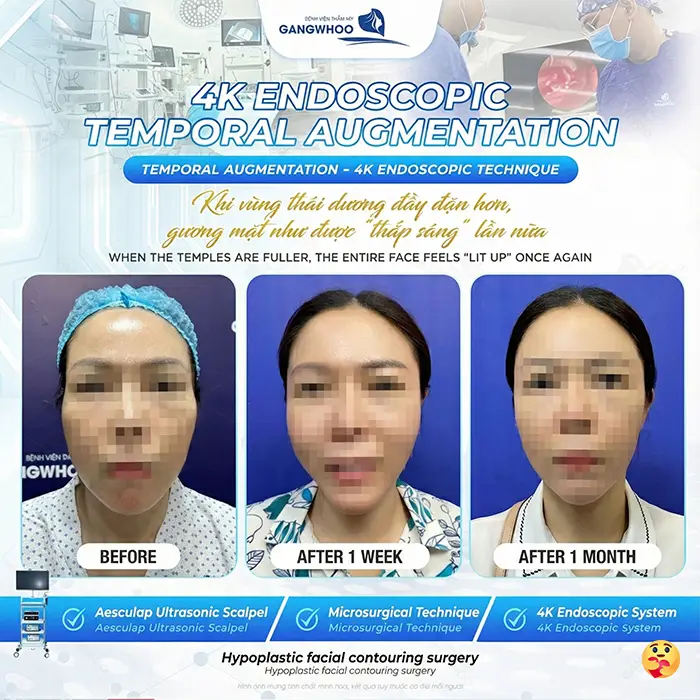
For surgical procedures such as temple implants or fat grafting, Gangwhoo utilizes a 4K endoscopic system, allowing clear visualization of anatomical structures including blood vessels, soft tissue, and implant pockets. High-resolution endoscopy enhances surgical precision, minimizes tissue trauma, and helps reduce postoperative swelling.
Additionally, the Harmonic scalpel is used to simultaneously cut and coagulate tissue using ultrasonic energy, reducing bleeding and tissue damage while supporting faster recovery. In selected cases, laser devices are also applied to achieve refined incisions, minimize edema, and enhance result stability.
As the Medical Director, I personally design and supervise the temple augmentation protocols at Gangwhoo, ensuring strict adherence to medical safety standards. All materials—whether fillers, autologous fat, or implants—are carefully selected based on origin, biocompatibility, and long-term durability.
Beyond surgical techniques and equipment, Gangwhoo emphasizes comprehensive postoperative monitoring to help patients maintain stable aesthetic results over time. The ultimate goal is not only to answer the question of how long temple augmentation lasts, but to deliver safe, natural, and sustainable aesthetic outcomes for every patient.
Temple Augmentation Price List at Gangwhoo Aesthetic Hospital
| Service Name (VND) | Price |
|---|---|
| Facial Hypoplasia Correction (Temple Augmentation – Korea) | 30,000,000 |
| Facial Hypoplasia Correction (Temple Augmentation – USA) | 40,000,000 |
| Facial Hypoplasia Correction (Temple Augmentation – Nano) | 50,000,000 |
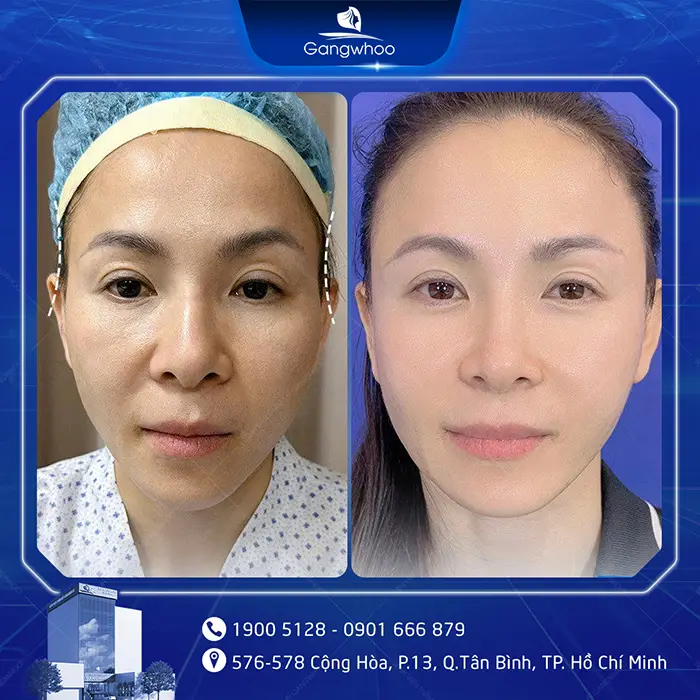
Images of Clients Who Underwent Temple Augmentation at Gangwhoo
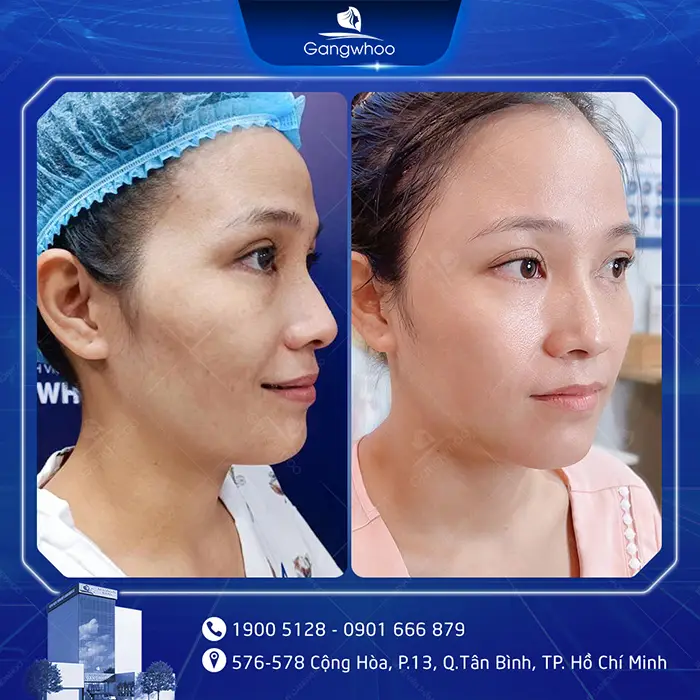
In summary, how long temple augmentation lasts does not have a single fixed timeline for everyone. Longevity depends on the chosen method—fillers, autologous fat grafting, or implants—as well as individual physiology, technique, and postoperative care. Most importantly, selecting the right method and the right surgeon from the beginning is key to ensuring safety and long-term aesthetic success.
At Gangwhoo Aesthetic Hospital, every temple augmentation procedure is built on comprehensive consultation, advanced technology, and strict medical standards. By combining 4K endoscopy with tools such as the Harmonic scalpel and laser systems, Gangwhoo enhances precision, minimizes trauma, and supports long-term result stability. Beyond improving temple contours, Gangwhoo is committed to achieving natural harmony and lasting safety for every face.
If you are wondering how long temple augmentation lasts and which method is best for you, a direct consultation with a specialist at Gangwhoo Aesthetic Hospital will provide the most accurate and personalized answers. Aesthetic results are truly sustainable only when performed with proper expertise, correct indications, and safety as the top priority.