
How long lucky ear filler lasts is a question many people ask before choosing this method of plumping up the earlobe with filler. In reality, there is no single fixed timeframe that applies to everyone. How long the results last depends on the type of filler used, the tissue characteristics of the earlobe area, the injection technique, individual metabolism, and post-procedure care.
From a professional standpoint, filler is a material injected into soft tissue to create a volumizing or contour-improving effect. With hyaluronic acid (HA) filler, the effect is generally temporary and gradually diminishes as the body metabolizes the material over time. Professional literature also notes that filler longevity can vary significantly depending on the product, the injection site, and the individual.
At Gangwhoo Cosmetic Hospital, the earlobe-shaping service is offered as part of the filler injection – aesthetic contouring service group.
How long does lucky ear filler last?
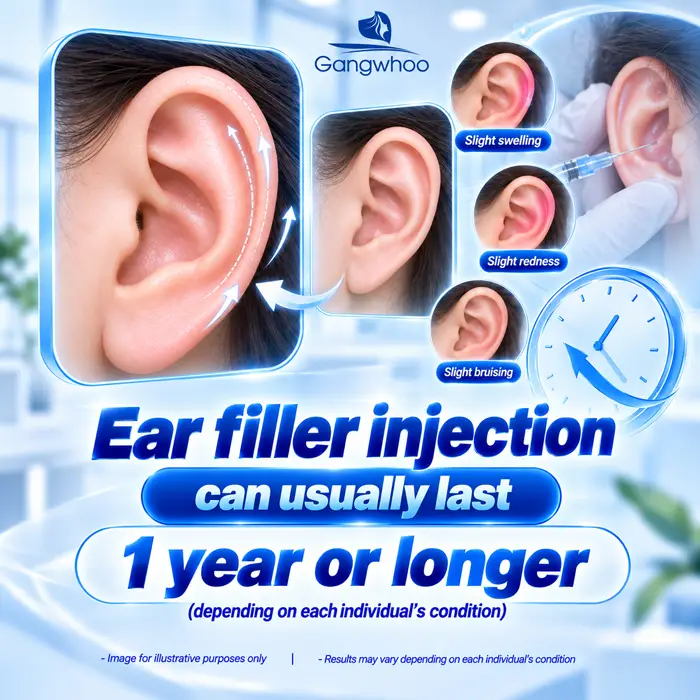
If HA filler is used, the results typically last from several months up to around a year or longer, depending on the product and the specifics of each case. A reference figure should not be understood as a guaranteed duration for everyone.
According to the American Society of Plastic Surgeons (ASPS), fillers in general can last anywhere from about 6 months to 2 years depending on the type; many HA products specifically tend to fall within the 6–18 month range. The injection site, filler type, the body’s metabolism, and individual factors can all affect how long results last.
So when asking how long lucky ear filler holds up, a more accurate answer is: the duration is not fixed and needs to be assessed based on the specific product and each person’s tissue condition.
Why do some people keep results longer than others after the same procedure?
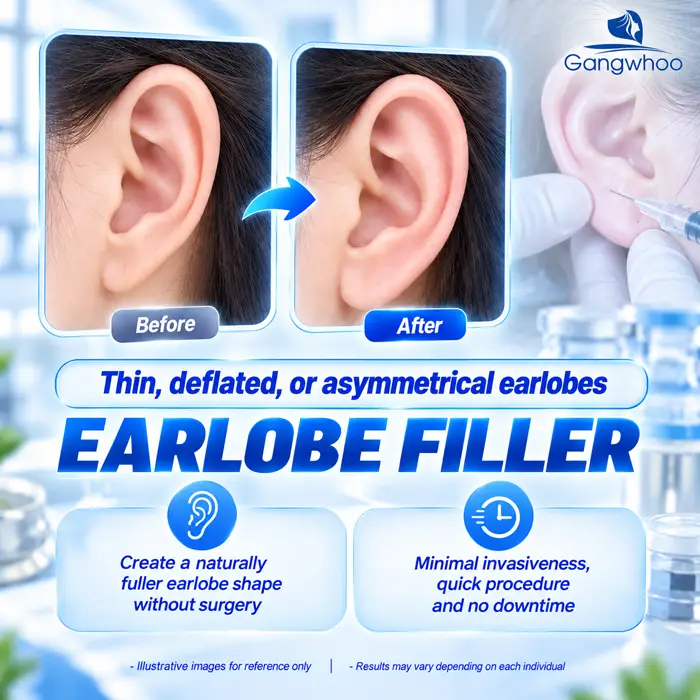
Once injected into tissue, filler does not behave identically in every body. Individual metabolism, tissue structure, filler volume, material properties, and placement can all influence the outcome.
In particular, it’s important to distinguish between how long the filler remains present in the tissue and how long the earlobe retains the desired aesthetic shape. These two things are not exactly the same.
A person may notice the volume gradually decreasing before the filler is fully metabolized by the body. So you shouldn’t wait until the ear “returns to its original state” before reassessing the result.
Factors that determine how long lucky ear filler lasts
1. Type of filler used
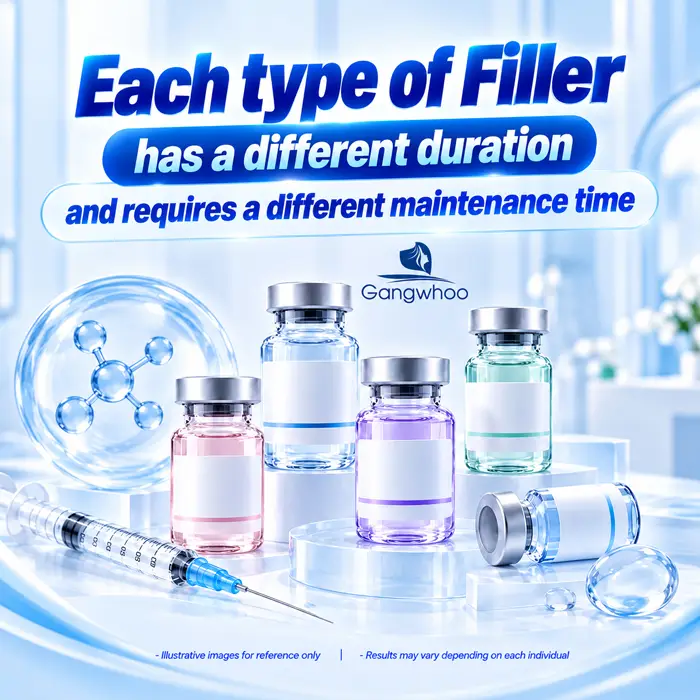
The type of filler is a major factor affecting how long results last after lucky ear filler injection. Not every product is suitable for the earlobe area.
- Hyaluronic acid (HA) filler
HA filler is widely used for its ability to add tissue volume and its temporary nature. The body gradually absorbs it over time. In some cases, HA filler can be dissolved using the enzyme hyaluronidase as directed by a physician.
How long it lasts depends on the product, injection site, and individual body chemistry. It’s therefore important to clarify the origin, properties, and indications of a filler rather than simply referring to it generically as “filler.”
- CaHA and PLLA filler
CaHA and PLLA can help stimulate collagen production, but they have different properties from HA filler and cannot be dissolved with hyaluronidase. These products are not suitable for every case — especially in a small area like the earlobe — so they require careful evaluation by a physician before use.
- PMMA filler and long-lasting fillers
PMMA filler can last a long time or be nearly permanent. However, if complications occur, they are generally harder to manage than with temporary fillers. So a product shouldn’t be chosen just because it’s advertised as “lasting for years” or “never dissolving.”
When researching how long lucky ear filler lasts, you should ask:
- What category does the filler belong to, and does it have a clear origin?
- Is the product suitable for the earlobe area?
- If a complication occurs, how can it be managed or reversed?
- Is the expected duration based on product data or just advertising claims?
Filler selection should be based on tissue condition, aesthetic goals, and a physician’s recommendation — not solely on how long it lasts.
2. Tissue and earlobe condition before injection
Earlobes have different soft-tissue structures and natural volumes from person to person. Someone with thin earlobes, low volume, or signs of tissue aging will have different contouring needs than someone whose tissue is already full.
A physician needs to assess tissue condition before deciding whether injection is appropriate, where to place the filler, and how much material to use.
The goal should not simply be injecting as much filler as possible. The amount of filler suited to the anatomy and aesthetic goal is what matters for a balanced result.
3. Injection technique
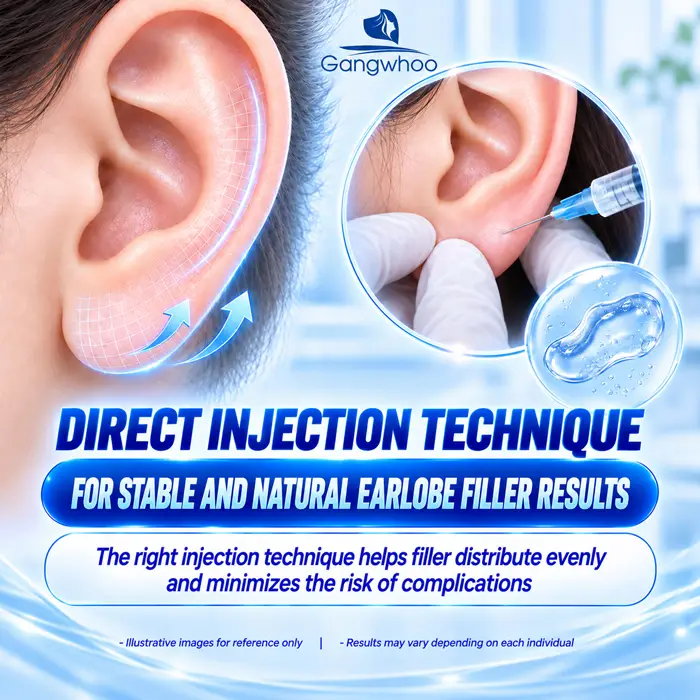
Filler injection is a medical procedure that requires the practitioner to have a thorough understanding of the treatment area’s anatomy, the product’s properties, and proper injection technique.
The FDA recommends that filler practitioners be properly trained, have knowledge of the anatomy at the injection site, and have a plan in place to manage complications related to blood vessels.
Improper technique can increase the risk of an unbalanced result, lumping, filler migration, or other complications.
4. Individual body chemistry and metabolic rate
Everyone metabolizes filler material at a different rate. As a result, one person may retain results longer than another even when using the same type of filler.
ASPS also notes that the rate at which filler is metabolized varies from person to person, which is why maintenance planning needs to be individualized.
Because of this, you shouldn’t use someone else’s results-duration as a “benchmark” for your own.
5. Post-injection care
Post-procedure care cannot turn a temporary filler into a permanent one, but it can help minimize unwanted effects in the early stage and support a smoother recovery process.
After the injection, patients should closely follow the physician’s guidance on caring for the treated area, physical activity, mechanical pressure, and follow-up appointment schedules.
How long until lucky ear filler results look good and settle?
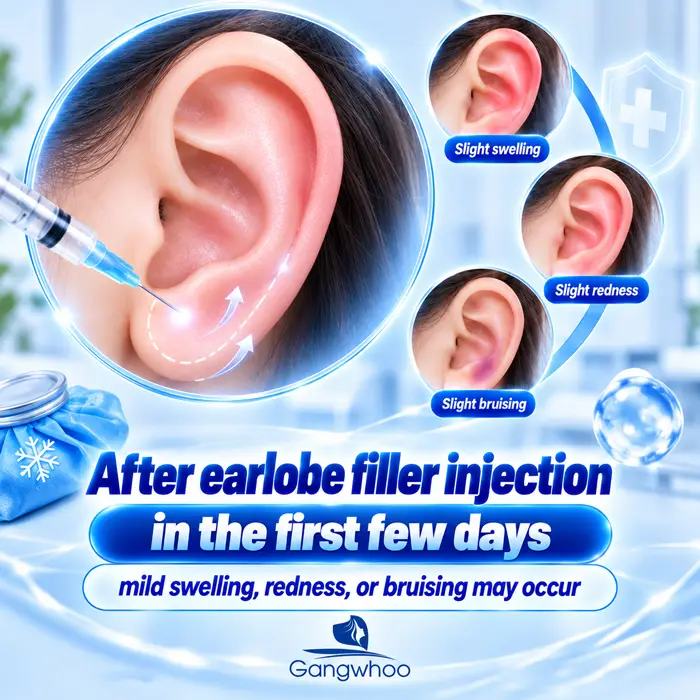
The filling effect can often be seen fairly soon after the procedure. However, the shape immediately after injection is not necessarily the final result.
In the initial period, the earlobe area may show swelling, redness, bruising, or a mild feeling of tightness. These are common reactions after filler injection and usually subside gradually.
So if the earlobe looks slightly swollen or feels fuller than expected right after the injection, it doesn’t necessarily mean too much filler was used.
The physician will assess results based on how things progress after the procedure. If anything unusual occurs, patients should not massage the area forcefully, try to puncture it, or attempt to dissolve the filler themselves at home.
When should you get lucky ear filler touched up?
There is no mandatory timeframe such as “must redo at 6 months” or “must redo at 12 months.”
The decision of when to get a lucky ear filler touch-up should be based on the actual condition. When earlobe volume has visibly decreased, the shape no longer meets the aesthetic goal, or there’s a desire for adjustment, a physician can reassess before deciding whether a top-up is needed.
More importantly, additional filler shouldn’t be injected automatically just because a certain amount of time has passed.
If filler is still present, any top-up injection needs to be carefully evaluated to avoid overcorrection — that is, over-filling that causes imbalance or an undesired change in shape.
Is there any way to make lucky ear filler last longer?
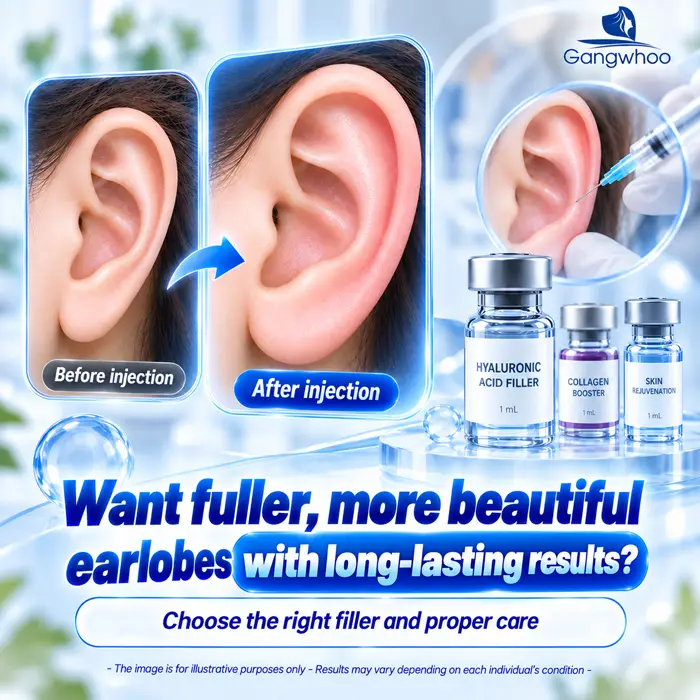
There is no care method that can guarantee filler will keep its exact shape for an absolute period of time.
However, patients can actively manage the factors within their control: choosing the right product, having the procedure performed by a qualified professional, following post-procedure instructions, and returning for follow-up if anything seems abnormal.
ASPS also emphasizes that no injection method lasts forever, and that maintenance planning should be personalized based on the filler type, treatment site, and individual characteristics.
In particular, you should not try to extend the results by massaging the area yourself, self-medicating, or injecting additional filler on your own.
Gangwhoo Cosmetic Hospital – An earlobe-shaping destination many customers are interested in
When researching how long lucky ear filler lasts, duration is just one of several factors to consider. More importantly, customers need to choose a facility with a consultation, examination, and safety-control process appropriate to the nature of filler injection procedures.
Gangwhoo Cosmetic Hospital currently offers an Earlobe Shaping (“Lucky Ear”) service as part of its filler injection – aesthetic contouring service group. According to the hospital’s service information, this method aims to improve the shape and fullness of the earlobe using a contouring technique suited to each customer’s aesthetic goals.
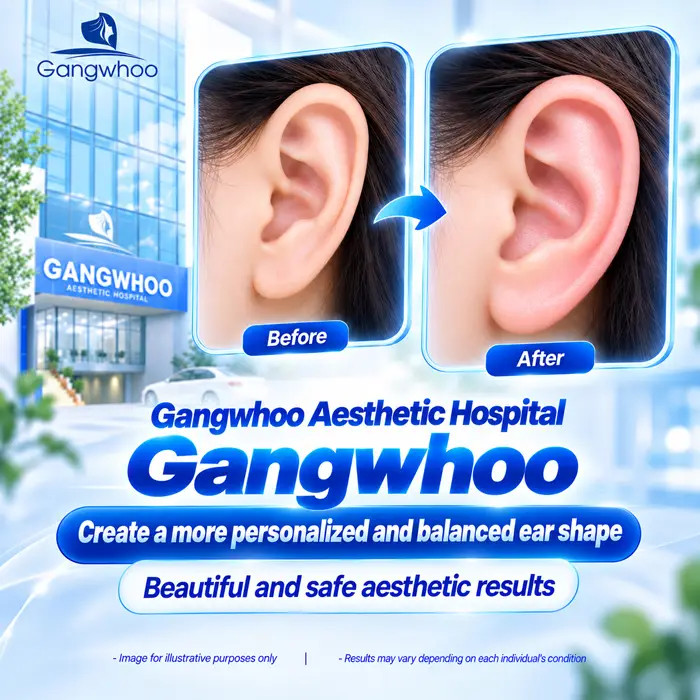
1. Consultation based on the actual condition of the earlobe
Everyone has a different earlobe structure, soft-tissue thickness, and aesthetic goals. That’s why an in-person examination and assessment before the procedure plays an important role in determining the right method, filler amount, and shape.
Rather than only asking “how long will lucky ear filler last?”, customers should also discuss with their physician the type of filler planned for use, the product’s origin, expected results, how long it may last, and potential risks.
2. Prioritizing safety over simply seeking the longest-lasting filler
A product advertised as lasting a long time doesn’t necessarily mean it’s suitable for every case. In aesthetic medicine, material selection should be based on medical indication, treatment site, tissue characteristics, and the ability to manage complications if they occur.
So whether choosing Gangwhoo Cosmetic Hospital or any other facility for earlobe shaping, customers should proactively ask about the product being used and the procedure process before agreeing to treatment.
3. When should you visit Gangwhoo for a consultation?
If your earlobes are thin, lacking volume, uneven, or you’d like to improve their shape using a minimally invasive method, you can book an examination for a physician’s in-person assessment.
In particular, anyone who has previously had filler injections, still has filler present in their tissue, or has experienced a reaction after a previous injection should provide full details to their physician. This gives the physician a better basis for assessing the current condition and considering the appropriate approach.
Note: Earlobe shaping (“lucky ear”) is an aesthetic choice, not a method that changes fate or guarantees good fortune. The actual outcome depends on each individual’s condition, the product used, and the technique performed.
So, how long does lucky ear filler last? The answer is that there is no single fixed duration for everyone. If HA filler is used, the effect generally lasts several months and can last longer depending on the product, treatment site, individual body chemistry, and technique used. Professional sources on filler also emphasize that duration varies between products and between individuals.
Rather than simply searching for a filler advertised as “longest-lasting,” anyone considering this procedure should pay more attention to product quality, proper indication, anatomical assessment, injection technique, and the ability to manage complications.
If you’re considering earlobe shaping, you can learn more about the Earlobe Shaping (“Lucky Ear”) service at Gangwhoo Cosmetic Hospital and speak directly with a physician for an in-person assessment before deciding whether to proceed.