
After undergoing temple augmentation, the most common question I receive from patients is how long temple augmentation takes to heal and when they can return to normal daily activities without affecting aesthetic results. In reality, recovery after temple augmentation does not occur at a single point in time but progresses through multiple stages, depending on the technique used, individual healing capacity, and post-procedure care. Understanding the correct recovery timeline helps patients plan their activities more confidently while minimizing potential complications.
Medical Recovery Stages After Temple Augmentation
From a physiological perspective, wound healing after temple augmentation typically occurs in three main stages. The first stage is the acute inflammatory response during the first 2–3 days, when the temple area may appear swollen, tight, or mildly bruised. This is a normal response of the body to tissue intervention.
From day 4 to approximately days 10–14, the tissue enters the regeneration phase. The incision gradually dries and closes, pain decreases significantly, and swelling subsides day by day. After about two weeks, the soft tissue transitions into the remodeling and stabilization phase, during which the aesthetic outcome becomes increasingly natural. However, determining whether temple augmentation has fully healed requires consideration of the technique used and individual recovery speed.
How Long Does Temple Augmentation Take to Heal Based on Each Method?
1. Temple Augmentation with Implants
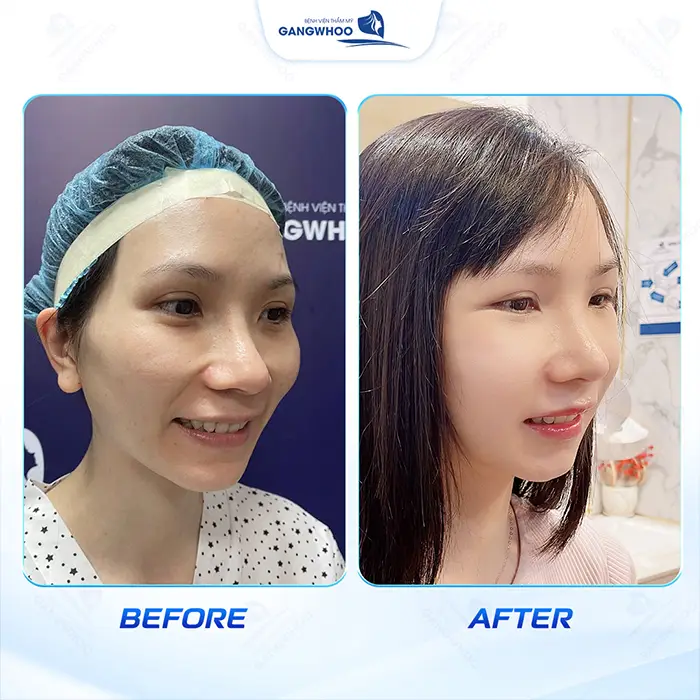
Temple augmentation with implants is a surgical procedure involving pocket dissection and placement of an implant in the temple area. Due to the deeper level of intervention, recovery time is generally longer than minimally invasive techniques.
Clinically, the incision typically becomes dry and initially healed after about 5–7 days, with pain significantly reduced after the first week. Patients may resume light daily activities after approximately 2–3 weeks if no complications occur. However, for the soft tissue to fully adapt to the implant and for the temple contour to feel soft and natural, complete stabilization usually requires 4–8 weeks. During this period, avoiding strong impact and attending follow-up visits is essential.
2. Temple Augmentation with Autologous Fat Grafting
With autologous fat grafting, recovery involves not only the temple area but also the fat harvesting site. After transfer, fat cells require time to establish blood supply and survive stably in the recipient tissue.
Swelling and bruising are usually most noticeable during the first 7–10 days and gradually decrease thereafter. Patients may feel the temple area becoming softer after 2–3 weeks, but relatively stable results are typically assessed after 4–6 weeks. In some individuals, full stabilization of the grafted fat may take several months. Therefore, when asking how long temple augmentation takes to heal with fat grafting, it is important to distinguish between wound healing and long-term result stability.
3. Temple Augmentation with Dermal Fillers

Temple augmentation with fillers is the least invasive option and does not involve surgical incisions. Mild swelling or bruising may occur during the first 1–3 days and typically resolves quickly within the first week. Most patients can resume normal activities within a few days, and fillers usually stabilize within 2–4 weeks.
Despite the quick recovery, patients should still avoid massage, pressure, or intense heat exposure to the temple area during the early days to ensure even filler distribution.
Factors Affecting Healing Time After Temple Augmentation
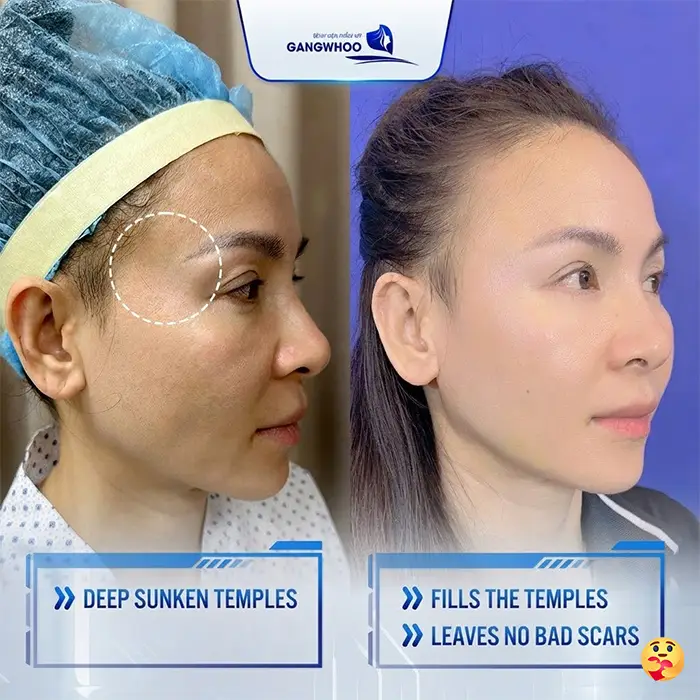
Recovery time after temple augmentation varies among individuals. Surgical technique, surgeon expertise, type of material used, medication compliance, and post-procedure care all directly influence healing speed. Additionally, personal factors such as healing capacity, smoking, alcohol consumption, and underlying conditions like diabetes may prolong recovery.
Therefore, when evaluating how long temple augmentation takes to heal, a personalized approach is more appropriate than applying a fixed timeline to all patients.
Proper Care to Shorten Recovery Time After Temple Augmentation
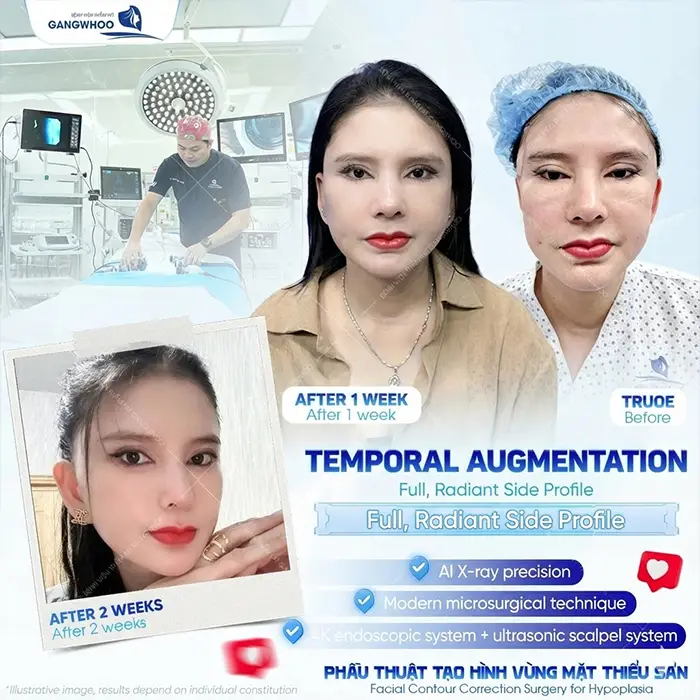
In clinical practice, I observe that the first 7–14 days after temple augmentation are critical in determining healing speed and result stability. During this time, the temple soft tissue is regenerating and adapting, making post-care especially influential.
Patients should rest adequately and limit physical activity to reduce circulatory pressure in the temple area. Proper sleep, keeping the head elevated, and avoiding prolonged bending or sudden head movements help minimize swelling and promote drainage.
Strict adherence to doctor-prescribed medication after temple augmentation is essential. Antibiotics help prevent infection, while pain relief and anti-swelling medications support early recovery. Patients should not discontinue medication without medical advice.
Keeping the incision clean and dry during the first 1–2 weeks is a fundamental rule after surgical temple augmentation. Proper wound care reduces infection risk and supports faster healing.
During early recovery, patients should also avoid strong mechanical impact or heat stimulation such as massage, steam baths, or hot showers, as these can prolong swelling.
From the second week onward, most patients can gradually resume normal daily activities if no abnormal signs appear. However, intense exercise and sports should be postponed until full tissue stabilization is confirmed by the physician.
Overall, correct care and strict adherence to medical guidance after temple augmentation not only shorten recovery time but also play a crucial role in ensuring safety and long-lasting aesthetic results.
Why Does Temple Augmentation at Gangwhoo Aesthetic Hospital Heal Faster?
In facial aesthetic surgery—especially temple augmentation—recovery speed depends not only on individual physiology but also heavily on surgeon expertise and supporting technology. These factors form the foundation of treatment success at Gangwhoo Hospital.
At Gangwhoo, experienced board-certified aesthetic surgeons carefully assess temple anatomy and select the most appropriate technique for each patient. Precise intervention at the correct anatomical plane minimizes unnecessary tissue trauma, reducing swelling and accelerating healing.
The hospital also utilizes advanced surgical technologies, including the Harmonic scalpel, which uses ultrasonic energy to cut and coagulate simultaneously. Compared to traditional instruments, it significantly reduces bleeding, tissue trauma, and inflammatory response.
Additionally, laser-assisted techniques are applied in procedures requiring high precision, resulting in cleaner incisions, minimal invasiveness, and reduced infection risk—allowing wounds to heal faster.
Postoperatively, patients may also benefit from hyperbaric oxygen therapy, which enhances tissue oxygenation, promotes cell regeneration, reduces swelling, and accelerates healing.
The seamless integration of surgeon expertise, modern technology, and comprehensive postoperative care explains why many patients experience faster and more comfortable recovery after temple augmentation at Gangwhoo.
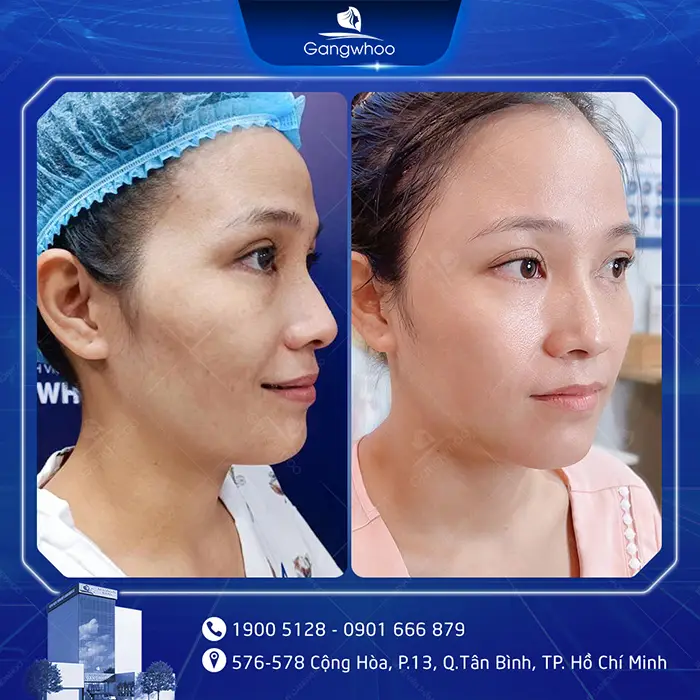
Patient Images – Temple Augmentation at Gangwhoo Aesthetic Hospital
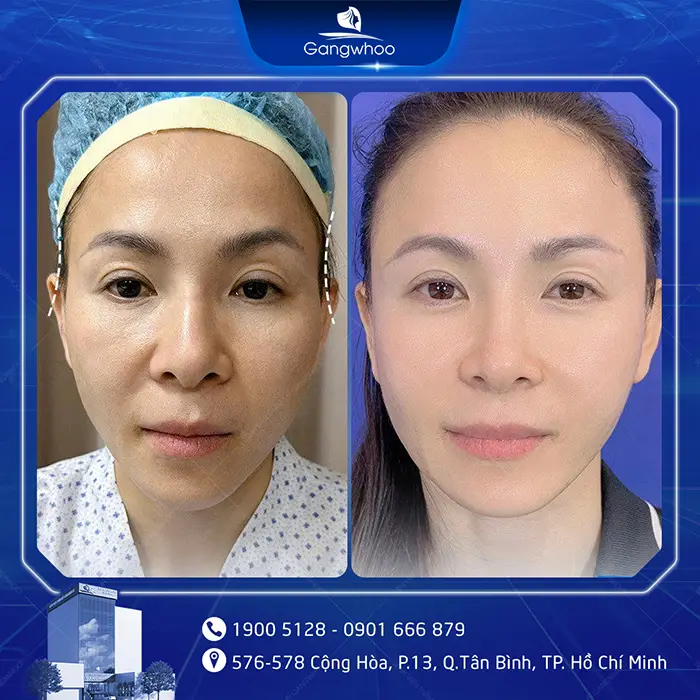
Patient Videos – Temple Augmentation at Gangwhoo Aesthetic Hospital
At Gangwhoo Aesthetic Hospital, each patient receives a personalized treatment and postoperative care plan, along with a clear follow-up schedule to closely monitor recovery. This individualized approach is key to ensuring medical safety and achieving harmonious, long-lasting temple augmentation results.