
After temple augmentation, in addition to concerns about whether the temple contour looks natural, many patients wonder how long after temple augmentation they can wash their hair and whether washing too early may affect the incision or aesthetic outcome. In reality, hair washing—although seemingly simple—plays an important role in recovery after facial procedures. Washing your hair at the right time and in the correct manner helps reduce the risk of infection, minimize swelling, and ensure long-term stability of the temple area.
Why Is the Timing of Hair Washing Important After Temple Augmentation?

The temple area has thin skin, is located close to the hairline, and contains a dense network of blood vessels. After undergoing temple augmentation—whether with implants, autologous fat, or dermal fillers—the soft tissues in this area require time to heal and adapt to structural changes.
Washing your hair too early may expose the incision to water, shampoo chemicals, or excessive friction, creating favorable conditions for bacterial growth and increasing the risk of infection. In addition, bending the head forward for prolonged periods or applying excessive force during hair washing may worsen swelling in the temple area during the early recovery phase. Therefore, determining the appropriate time to wash your hair is an essential part of post-procedure care.
How Long After Temple Augmentation Can You Wash Your Hair?
From a medical perspective, the recommended time to wash your hair after temple augmentation usually ranges from 24 to 72 hours, depending on the surgical technique, incision location, and individual healing response. The general rule is to wash your hair only when the incision is dry, shows no discharge, and has been approved by your treating physician.
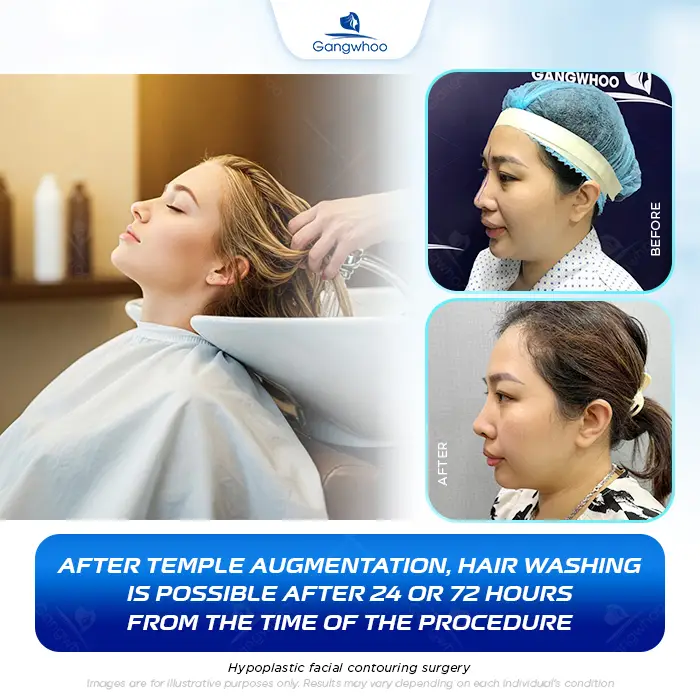
For cases where the incision is located within the hairline or behind the ear, the waiting period may be longer than for minimally invasive procedures. Therefore, a fixed timeline should not be applied to all patients; personalized instructions from the treating doctor should always be followed.
Hair-Washing Timeline Based on Temple Augmentation Methods
Temple Augmentation with Implants:
This method involves surgical dissection and placement of an implant into the temple area. Incisions are typically hidden within the hairline or behind the ear, making it especially important to keep the area dry during the first few days. Patients are usually advised to wait at least 48–72 hours before gently washing their hair, and only after dressings have been removed as instructed. Avoiding direct contact between water and the incision is critical to reducing infection risk.
Temple Augmentation with Autologous Fat:
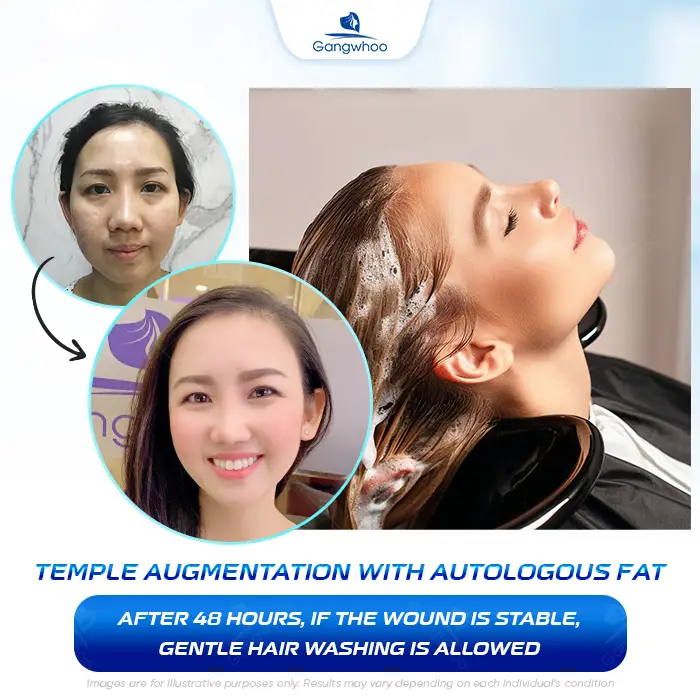
In addition to the temple area, patients must also care for the fat-harvesting site. Fat grafts require time to establish blood supply, so strong traction or pressure on the skin should be avoided early on. Hair washing may be allowed after approximately 48 hours if the incision is stable; however, washing should be gentle, avoiding prolonged head bending and preventing water from flowing directly over the treated temple area.
Temple Augmentation with Dermal Fillers:
This is a minimally invasive procedure with no open incisions. In many cases, patients may wash their hair after 24–48 hours. Nevertheless, during the first 2–3 days, massage, pressure, and strong manipulation of the temple area should still be avoided to allow the filler to stabilize properly.
How to Wash Your Hair Safely After Temple Augmentation
In addition to knowing when you can wash your hair after temple augmentation, proper washing technique is crucial to preventing infection, minimizing swelling, and protecting aesthetic results. Clinically, many cases of prolonged swelling or incision irritation are linked to improper hair washing during early recovery.
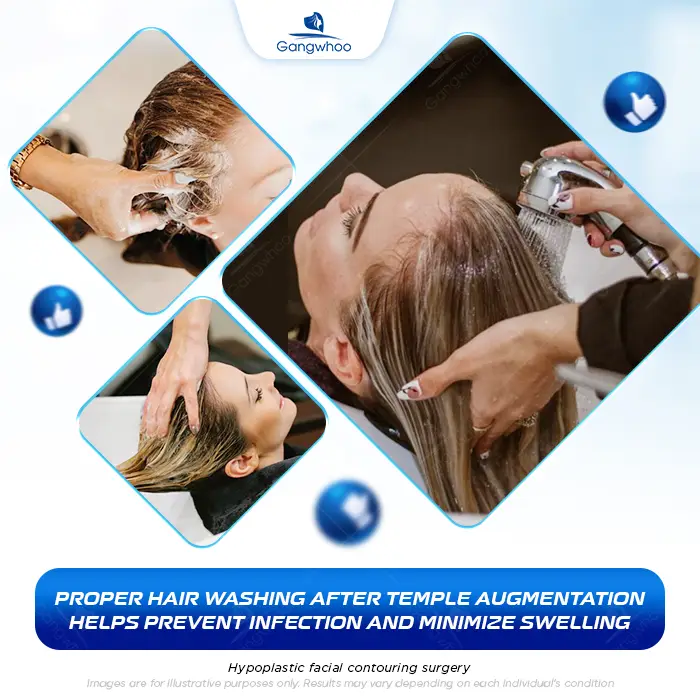
Before washing your hair, ensure that the incision is dry, free of discharge, and approved by your doctor for water exposure. If dressings or protective coverings are still in place, do not remove them without medical instructions. If needed, consider having your hair washed at a medical facility or with assistance to better control posture and technique.
During hair washing, water temperature should be mildly warm, around 32–35°C (90–95°F). Avoid hot water, as heat may cause vasodilation, increase blood flow to the temple area, and prolong swelling. Use a gentle shampoo with minimal cleansing agents and no strong fragrances to reduce the risk of scalp and incision irritation.
Throughout the process, movements should be slow and gentle. Avoid vigorous rubbing, scratching with fingernails, or applying direct pressure to the temple area. Head position should be controlled to avoid prolonged forward bending; ideally, keep the head upright or slightly tilted back.
After washing, gently pat the hair and surrounding temple area dry with a soft towel. Do not rub vigorously. Complete drying is essential, as prolonged moisture may encourage bacterial growth. If using a hair dryer, select a cool or low-heat setting, maintain an appropriate distance, and avoid directing hot air toward the treated area.
During the first few hair washes after temple augmentation, closely observe the treated area. If symptoms such as increasing pain, swelling, redness, or unusual tightness occur, stop washing and contact your doctor promptly for evaluation.
Following proper hair-washing techniques after temple augmentation not only maintains personal hygiene but also plays a key role in protecting the incision, shortening recovery time, and preserving long-term aesthetic results.
When Should Hair Washing Be Delayed and a Doctor Contacted?
If the incision continues to ooze, shows abnormal redness, increasing pain, or if dressings have not yet been removed, hair washing should be postponed. These signs indicate that the tissue may not be stable or that infection risk is present, requiring medical evaluation and guidance.
Frequently Asked Questions After Temple Augmentation
1. Should I use warm or cool water to wash my hair?
After temple augmentation, mildly warm water is recommended, ideally within the range of 32–35°C. Hot water may increase swelling by causing vasodilation, while very cold water can cause discomfort in the sensitive temple area. Mild warmth allows effective cleansing while maintaining safety.
2. Can I go to a hair salon after temple augmentation?
During the early recovery phase, going to a salon is not recommended. Prolonged head bending and vigorous scalp massage are difficult to control and may place pressure on the treated temple area, increasing swelling or interfering with healing. Salon hair washing should only be considered after the early recovery period, once the incision has healed well and your doctor approves.
From clinical experience, I emphasize that the question “how long after temple augmentation can you wash your hair?” does not have a universal answer. Recovery time varies depending on the augmentation method, incision location, and individual healing capacity. Adhering to personalized instructions from your treating physician is the most important factor in ensuring safe recovery and optimal aesthetic outcomes.
At Gangwhoo Hospital, patients not only undergo temple augmentation following standardized medical protocols but also receive close monitoring and detailed post-procedure care guidance—including everyday activities such as hair washing. This comprehensive approach helps ensure safety, minimize complications, and achieve harmonious, long-lasting aesthetic results.