
After temple augmentation, many patients ask: how long after temple augmentation can you sleep on your side, and whether changing sleeping positions too early may affect aesthetic results. In fact, sleeping posture is an important factor in post-procedure care, especially for facial interventions such as temple augmentation. Following proper medical instructions not only supports safe recovery but also helps maintain a stable and natural temple contour over time.
Why Does Sleeping Position Affect Results After Temple Augmentation?
The temple area has relatively thin anatomical structures, with a high concentration of blood vessels and soft tissue. When performing temple augmentation—whether using implants, autologous fat, or dermal fillers—the tissues in this area require time to adapt and stabilize in their new position.
In the early post-procedure stage, sleeping on your side or placing pressure on the temples can increase the risk of prolonged swelling, hematoma formation, and even displacement of the augmentation material. This is why sleeping posture is considered a critical part of post–temple augmentation care from a medical perspective.
How Long After Temple Augmentation Can You Sleep on Your Side?
Based on soft tissue healing principles, patients are advised not to sleep on their side for at least 10–14 days after temple augmentation. During this period, the tissues are still healing and have not fully stabilized. Sleeping on your side too early may cause uneven pressure on the temples, increasing the risk of asymmetrical swelling or distortion of the newly created contour.
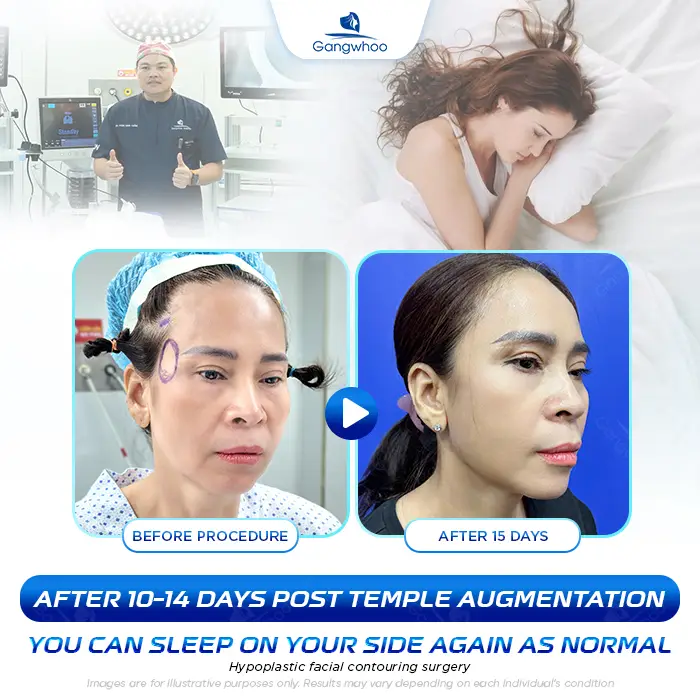
After approximately two weeks, when swelling has significantly subsided and soft tissues begin to stabilize, patients may gently sleep on their side for short periods. However, direct pressure on the treated temple area should still be avoided. The time when side sleeping becomes fully comfortable depends on the temple augmentation method and the individual healing capacity of each patient, typically ranging from 3–4 weeks or longer.
Side-Sleeping Timeline Based on Temple Augmentation Methods
1. Temple Augmentation with Implants
Temple augmentation using implants involves surgical dissection and placement of an implant into the temple pocket. Due to the deeper level of intervention, recovery time is generally longer than with minimally invasive techniques. In the initial postoperative weeks, the implant requires sufficient time to stabilize within the created pocket.

Sleeping on your side too early may increase the risk of pocket hematoma, prolonged pain, or implant displacement. Therefore, patients undergoing implant-based temple augmentation are usually advised to sleep strictly on their back for the first 2–3 weeks, and only consider gentle side sleeping after the surgeon confirms good healing during follow-up visits.
2. Temple Augmentation with Autologous Fat Grafting

For autologous fat grafting to the temples, the transferred fat cells need time to establish blood supply and integrate into the recipient tissue. During the early stage, fat cells are highly sensitive to mechanical pressure. Sleeping on your side too soon may reduce fat survival rates or lead to uneven fat distribution.
Patients are generally advised to avoid side sleeping for 10–14 days after fat grafting to the temples. After this period, once swelling subsides and tissues become more stable, gentle side sleeping may be allowed under medical guidance.
3. Temple Augmentation with Dermal Fillers
Temple augmentation with dermal fillers is the least invasive method, requiring no surgery and offering a shorter recovery time. However, injected fillers still need time to settle properly within the tissue.
During the first 48 hours, sleeping on your side or applying pressure to the treated area may cause filler displacement. Therefore, patients should avoid side sleeping for at least 2–3 days after filler injections. After 5–7 days, when the filler becomes more stable, sleeping positions can be more flexible, although prolonged pressure on one side of the temple should still be avoided.
What Is the Best Sleeping Position After Temple Augmentation?

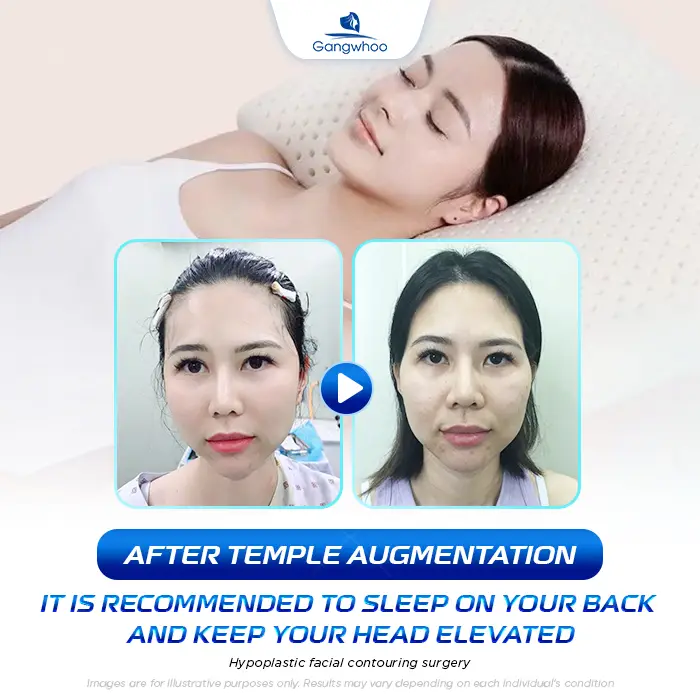
The recommended sleeping position after temple augmentation is sleeping on your back with your head elevated above heart level. This position helps reduce blood pressure in the temple area, minimizing swelling and supporting recovery. In some cases, placing pillows on both sides of the head can help maintain proper positioning and prevent unconscious head turning during sleep, especially in the first few days after the procedure.
Warning Signs of Sleeping on Your Side Too Early
If after sleeping on your side you notice明显 asymmetrical swelling, increasing tightness, or worsening pain instead of gradual improvement, these may indicate that the tissues are not yet stable or that an abnormal reaction is occurring. In such cases, contacting your treating physician promptly for evaluation and guidance is essential.
When Should You Contact Your Doctor?
Any signs such as prolonged swelling, increasing pain, skin discoloration, or abnormal sensations in the temple area should be evaluated promptly. Attending scheduled follow-up visits allows the doctor to accurately assess healing progress and adjust post-care instructions if necessary, ensuring both safety and long-term aesthetic results.
From a professional standpoint, I always emphasize that the question “how long after temple augmentation can you sleep on your side” does not have a single fixed answer for everyone. Each augmentation method and individual healing response differs. Therefore, strictly following your doctor’s instructions—especially during the early recovery phase—is key to preventing complications and maintaining a stable temple contour.
At Gangwhoo Aesthetic Hospital, patients not only undergo temple augmentation following standardized medical protocols but also receive detailed, personalized post-procedure care and guidance. This comprehensive approach is the foundation for achieving safe, harmonious, and long-lasting aesthetic results.