
After undergoing rhinoplasty, many women wish to resume their usual skincare routine as soon as possible — especially moisturizing and applying facial masks to hydrate and rejuvenate their skin. However, the question “How long after rhinoplasty can you use face masks?” is one that doctors hear quite often.
In this article, Dr. Tran Kim Thach, Specialist Level I – Deputy Medical Director of Gangwhoo Aesthetic Hospital, explains the safe timeline for post-surgery skincare, along with essential tips to avoid unwanted complications.
Why You Should Be Cautious When Using Face Masks After Rhinoplasty
After rhinoplasty, the soft tissue and skin around the nose have been dissected, sutured, and restructured, making them highly sensitive to external influences.
During this stage, blood circulation and skin cell regeneration are not yet stable. Applying a face mask too early or using unsuitable products may cause:
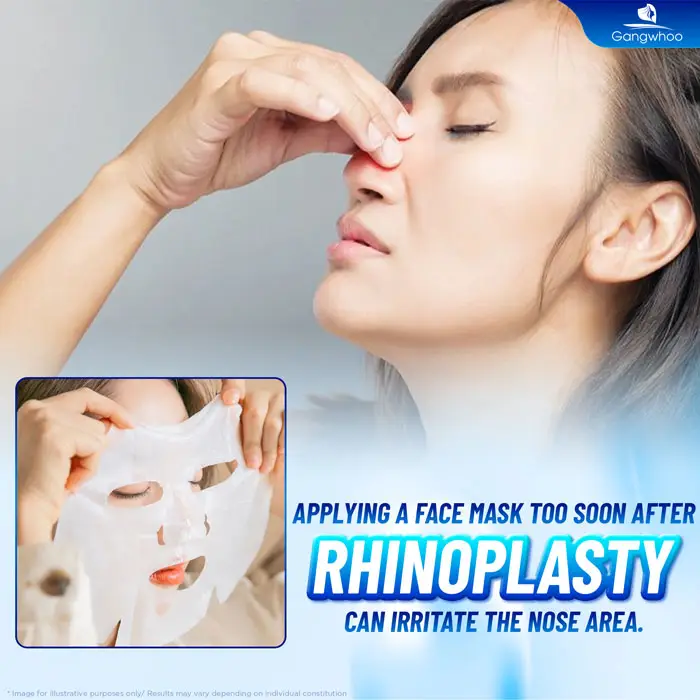
Skin irritation or inflammation around the nose
Implant displacement due to pressure or friction from the mask
Infection risks, especially if the wound hasn’t fully healed
According to the American Society of Plastic Surgeons (ASPS, 2023), epidermal cells in surgical areas require at least 21–30 days to regenerate properly. This explains why early use of facial masks is not recommended within the first month after rhinoplasty.
Medically Approved Healing Timeline After Rhinoplasty
| Recovery Stage | Skin & Tissue Condition | Recommended Skincare |
| 0 – 7 days | Swelling, dressing in place | Do not wash the nose; gently wipe around eyes and cheeks |
| 7 – 14 days | Cast removed, stitches taken out | Gentle cleansing only; no masks yet |
| 14 – 30 days | Skin starts healing | Use mild cleansers and moisturizers; avoid strong masks |
| 4 – 6 weeks | Skin becomes more stable | Light moisturizing masks allowed if approved by doctor |
| After 6 weeks | Tissue and cartilage fully stable | Resume full skincare and makeup routines |
How Long After Rhinoplasty Can You Use Face Masks?
Based on clinical experience, it’s generally recommended to wait at least 4–6 weeks before reintroducing facial masks.
The exact timing depends on:
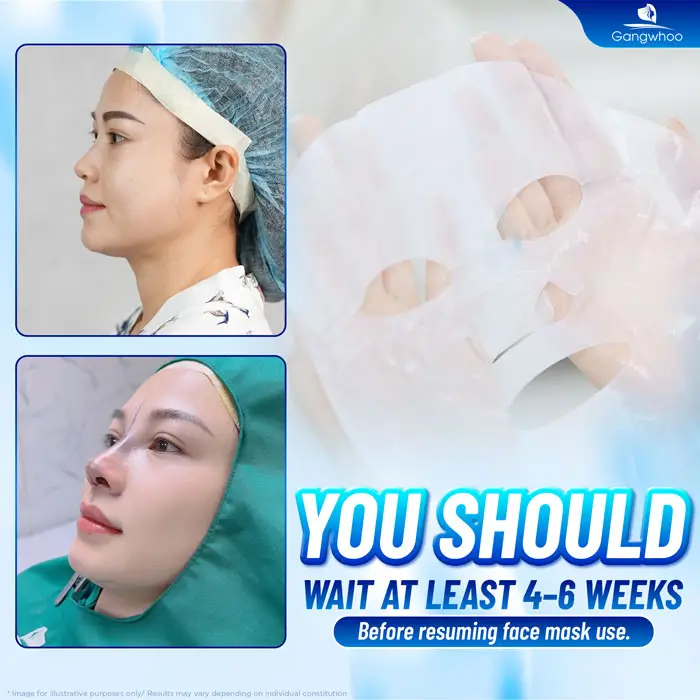
Individual healing ability (sensitive or thin skin may need more time)
Type of rhinoplasty (structural, autologous cartilage, or filler corrections)
Postoperative inflammation and tissue recovery speed
At Gangwhoo Hospital, patients are advised to attend a 1-month follow-up for the doctor to assess the skin and nasal area before resuming facial mask use.
Recommended and Avoided Mask Types
1. Safe Options (with doctor’s approval):
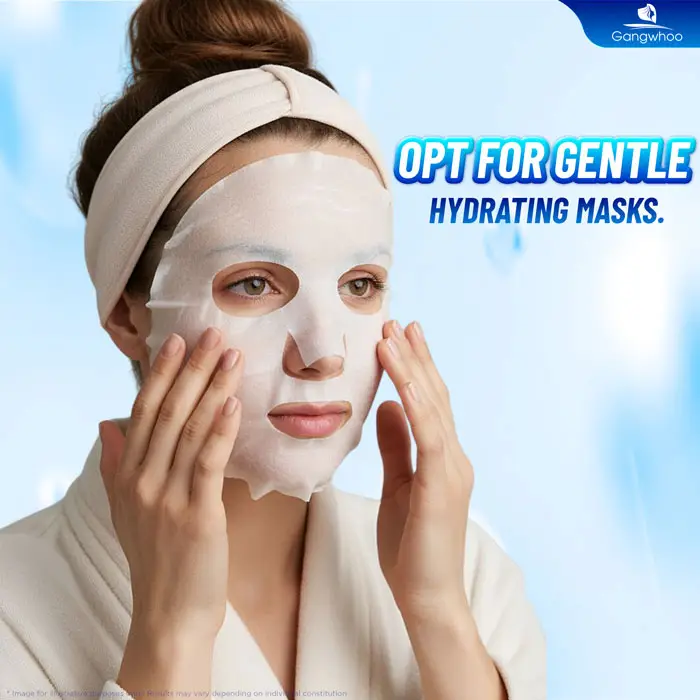
Hydrating masks with Hyaluronic Acid, Panthenol (Vitamin B5), or Centella Asiatica (Gotu Kola)
Cooling gel-type masks to reduce dryness and irritation
Medical-grade recovery masks designed for post-procedure skin
2. Avoid These:
Peel-off, clay, or exfoliating masks — they create friction and pull on healing skin
Masks containing AHA/BHA acids, retinol, alcohol, or strong fragrances
Charcoal or vacuum-suction masks, which increase pressure on the nose
As noted by Dr. Hecht (Arizona Facial Plastic Surgeon, 2022) and Allure.com, using chemical or peeling masks too early can thin fragile new skin layers, leading to scarring, pigmentation, or prolonged inflammation.
Safe Post-Rhinoplasty Skincare Routine
Proper skincare after rhinoplasty is crucial for faster healing, reduced swelling, and long-lasting results. Many patients ask, “How long after rhinoplasty can I use face masks?” — but before advanced care, it’s important to understand each healing phase.
1. Phase 1: Days 1–7 – No Touching or Skincare
Condition: Sensitive skin, mild swelling, possible bruising.
Care Tips:

Clean gently using saline solution or soft damp cloth
Avoid masks, creams, steam, or facial massages
Keep incision area dry and clean
Drink plenty of water and eat vitamin C-rich foods
2. Phase 2: Days 7–14 – Gentle Cleansing & Basic Care
Condition: Stitches removed, skin starting to stabilize.
Care Tips:

Use fragrance-free, alcohol-free cleansers
Apply mild hydrating serums (Panthenol or Hyaluronic Acid)
If using a mask, apply only to the cheeks or forehead, avoiding the nose
Avoid makeup and exfoliation
Doctor’s note: The earliest safe time for mild facial masks is around 2 weeks, depending on your skin’s recovery speed.
3. Phase 3: Weeks 3–4 – Full-Face Hydration Masks
Condition: Skin and tissue are healing well.
Care Tips:
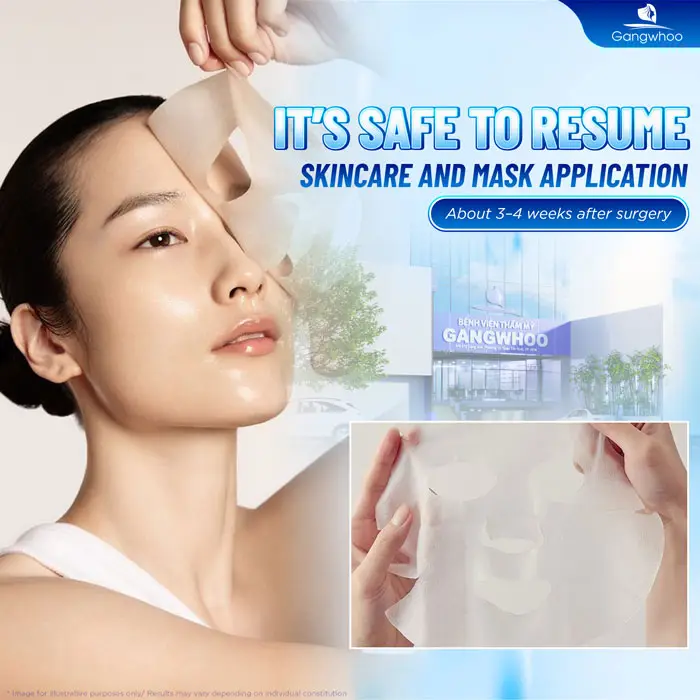
Use collagen, aloe vera, or HA-based masks 2–3 times per week
Choose dermatologist-tested products free of parabens, AHA/BHA, and retinol
Apply sunscreen daily, even indoors
A study in the Journal of Plastic and Reconstructive Surgery found that proper skincare after nasal surgery can reduce infection risk by 35% and accelerate epithelial recovery by 1.8×.
4. Phase 4: Months 1–3 – Advanced Skincare Routine
Condition: Nose nearly fully healed.
Care Tips:
Introduce vitamin C, peptide, or brightening masks
Light microneedling or mild peels (only with medical approval)
Avoid peel-off masks, harsh exfoliation, and hot steaming near the nose
Dr. Tran Kim Thach emphasizes: “Post-rhinoplasty skin needs at least 90 days to fully regenerate. Using facial masks correctly not only aids skin recovery but also helps the nose settle into a more natural shape.”
When Should You See Your Doctor?
Even with proper at-home care, some warning signs require immediate medical attention to prevent complications.
1. Prolonged Swelling, Redness, or Pain
If after 5–7 days swelling worsens or you notice:

Bright red, painful, or hot nasal area
Yellow discharge, pus, or foul odor
These could indicate infection or fluid accumulation — seek medical treatment right away.
2. Nasal Deviation, Cartilage Exposure, or Skin Discoloration
If within 1–2 weeks you notice:
Nose appears crooked or uneven
Skin on nasal tip becomes thin, shiny, or white
This may suggest cartilage pressure or skin necrosis, requiring urgent evaluation. Avoid using any masks or skincare products until cleared by your doctor.
3. Allergic Reactions to Skincare or Masks
If you experience:
Itching, burning, or redness around the nose
Peeling or unusual darkening of the skin
Stop using the product immediately and consult a dermatologist or plastic surgeon.
4. Delayed Healing or Persistent Wound Discharge
If after 7–10 days the incision remains moist or emits a light odor, this may signal minor infection or contact dermatitis. Avoid all skincare and masks until properly disinfected and treated by your surgeon.
Even after learning “How long after rhinoplasty can I use face masks?”, always listen to your body and follow your doctor’s instructions. Regular check-ups, gentle skincare, and timely medical attention are the keys to maintaining a beautiful nose, healthy skin, and long-lasting aesthetic results.