
After rhinoplasty, many patients experience itching, dryness, or nasal discharge—especially during the first few days. However, picking your nose too soon or doing it the wrong way can cause infection, tissue damage, and negatively affect the surgical outcome.
The question “How long after rhinoplasty can you pick your nose?” may sound simple, but it actually involves understanding the soft tissue structure, cartilage grafts, and internal healing process.
In this article, Dr. Tran Kim Thach – Deputy Medical Director at Gangwhoo Aesthetic Hospital, shares medically accurate information based on clinical experience and scientific evidence to help you understand the right time and safest way to clean your nose after surgery.
How long after rhinoplasty can you pick your nose?
As a rhinoplasty specialist, I’ve noticed that many patients feel the urge to pick their nose during recovery—especially when itching or dryness occurs. However, picking your nose too early after rhinoplasty must be strictly avoided, as it can directly affect both the healing process and final aesthetic results.
1. Early stage (0–14 days): Avoid any manipulation
During the first 1–2 weeks, the nasal tissues and grafted cartilage are still in the inflammatory and revascularization stages. The internal sutures haven’t fully stabilized, and swelling remains. Picking your nose during this stage, even gently, may:
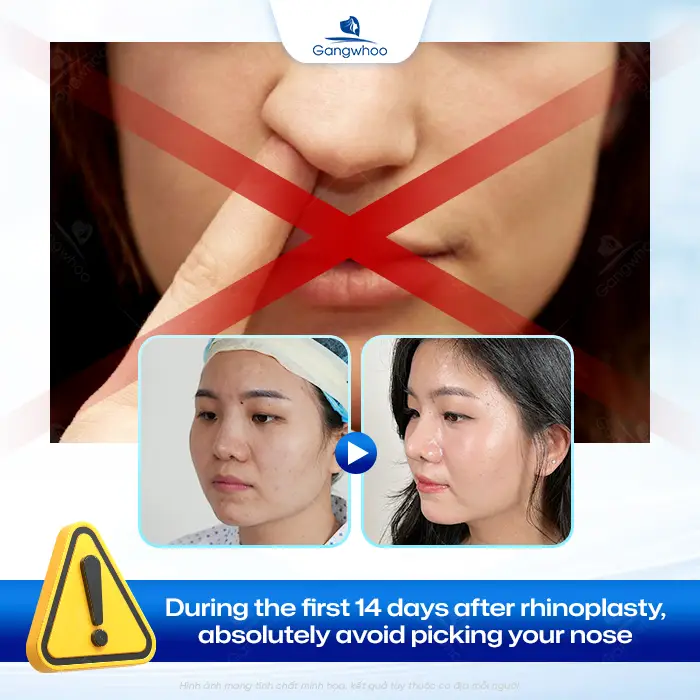
Displace the nasal implant or graft
Reopen surgical wounds, causing bleeding or discharge
Introduce bacteria, leading to infection
Instead, use sterile cotton swabs soaked in saline (NaCl 0.9%) to gently clean the nostril edges as instructed by your doctor.
2. Intermediate stage (2–4 weeks): Tissues begin to stabilize
From week three onward, the grafts start to adhere more firmly, though vascular and fibrous remodeling continues. Patients may feel dryness or mild itching due to limited mucus secretion.
Avoid using your fingers or hard objects. Instead, you may:
Use soft-tipped cotton swabs dipped in prescribed saline solution
Steam gently with warm saline to soften crusts and relieve dryness
If nasal blockage or discomfort persists, visit your doctor to rule out postoperative mucosal inflammation.
3. Full recovery (after 1–3 months)
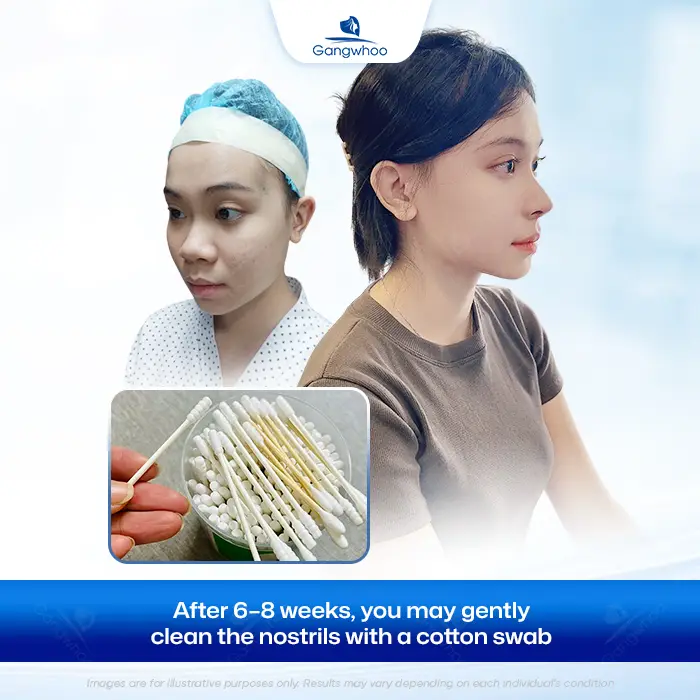
By 6–8 weeks, the nasal cartilage and surrounding tissue are usually well healed, and the internal lining has fully re-epithelialized. At this stage, you can gently clean inside your nose with a sterile swab, but still avoid strong pressure or deep insertion.
For structural rhinoplasty or cases using combined autologous and synthetic grafts, doctors may recommend waiting up to 3 months before any direct manipulation to ensure full graft stability.
Safe nasal cleaning after rhinoplasty
Proper hygiene plays a key role in preventing infection, supporting healing, and maintaining your nasal shape.
1. First 7 days – Only external cleaning
Do not pick or rinse your nose forcefully. Instead:
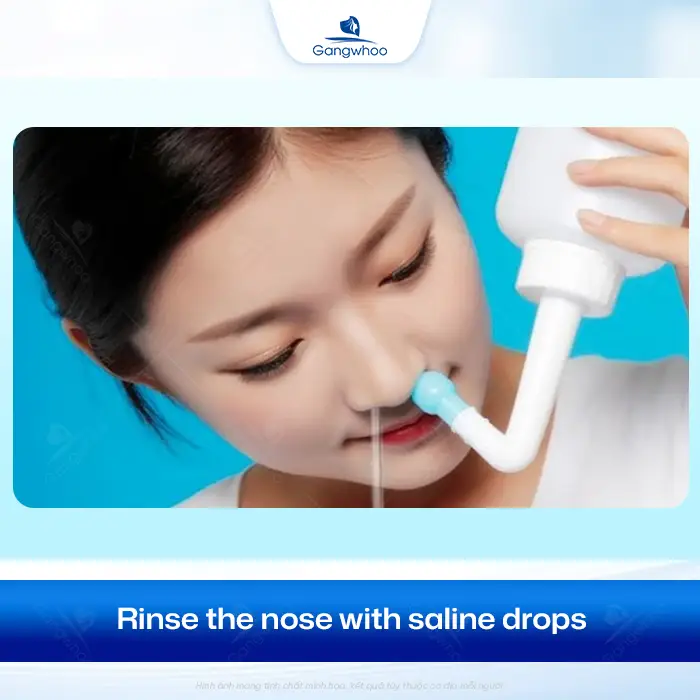
Use sterile cotton swabs soaked in saline (NaCl 0.9%) to wipe away dried secretions
Avoid inserting swabs deep into the nostrils
If crusting occurs, soften it first with saline before cleaning
At Gangwhoo Aesthetic Hospital, every patient receives detailed, stage-based cleaning instructions to promote safe and fast recovery.
2. Days 7–14 – Gentle internal cleaning
Once sutures are removed, you can rinse your nose gently with saline drops or low-pressure spray to:
Remove mucus or dust buildup
Keep mucosa hydrated
Prevent infection or nasal blockage
Avoid high-pressure nasal sprays or picking too early, which could dislodge grafts or injure healing tissue.
3. After 2 weeks – Routine maintenance
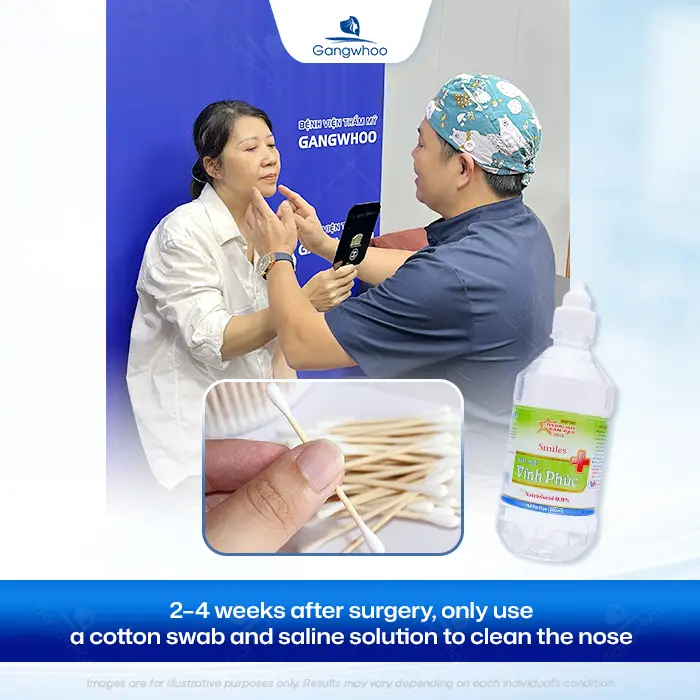
When your nose feels more stable, clean it 1–2 times daily with saline and avoid touching it with your hands.
If you experience persistent dryness, itching, or abnormal discharge, schedule a follow-up with your surgeon instead of self-medicating.
Warning signs of picking too soon
If you accidentally pick your nose early and notice:
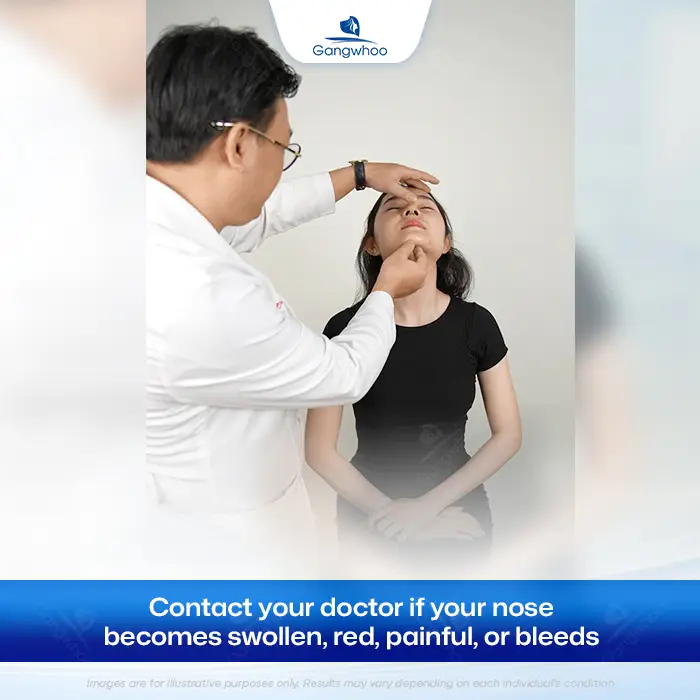
Redness, pain, or bleeding at the nasal tip
Yellow discharge or foul odor
Nose asymmetry or hard bumps
Sharp pain when touching the nasal bridge
→ Contact your surgeon immediately. These may indicate infection or tissue injury that needs prompt medical attention.
Following proper post-operative care and nasal hygiene is crucial for long-term success after rhinoplasty. While each person’s recovery speed differs, you should wait at least 3–4 weeks before directly touching or cleaning inside your nose.
If you experience unusual discomfort or symptoms, do not handle it on your own. Contact your surgeon for timely evaluation to ensure your nose heals beautifully, naturally, and safely.
At Gangwhoo Hospital, every rhinoplasty patient receives personalized follow-up care and detailed cleaning instructions from expert surgeons, ensuring both aesthetic excellence and lasting safety.