
After rhinoplasty, the question “How Long After Rhinoplasty Can You Eat Spicy Noodles?” comes up very frequently, especially among patients who enjoy spicy food. In reality, “spicy noodles” are not just spicy. This dish is usually eaten hot (right after being served) and is often salty (broth, chili paste, dipping sauces), while the early postoperative period is when the soft tissues and nasal mucosa are still sensitive and easily irritated.
The key point is that there is no single timeline that is “right for everyone.” However, based on postoperative care principles, medical guidelines, and clinical experience, patients can follow a “safe timeframe” to reduce the risk of prolonged swelling, discomfort, nasal irritation, or bleeding.
Why Should Spicy Noodles Be Avoided After Rhinoplasty?
To understand why doctors usually recommend avoiding spicy noodles for a period of time, it is important to look at the true nature of this food through three main factors: spicy – hot – salty.
First is spiciness. Spicy foods can increase nasal secretions and irritate the nasal lining, making you more prone to sneezing or a runny nose. For patients who have just undergone rhinoplasty, frequent sneezing does not “ruin the nose” as some rumors suggest, but it can cause greater discomfort, increased pressure in the nasal area, and soreness, especially in the early days when tissues are still sensitive. Many international rhinoplasty and ENT postoperative guidelines also mention avoiding spicy foods in the early phase due to the risk of nasal irritation and discomfort.
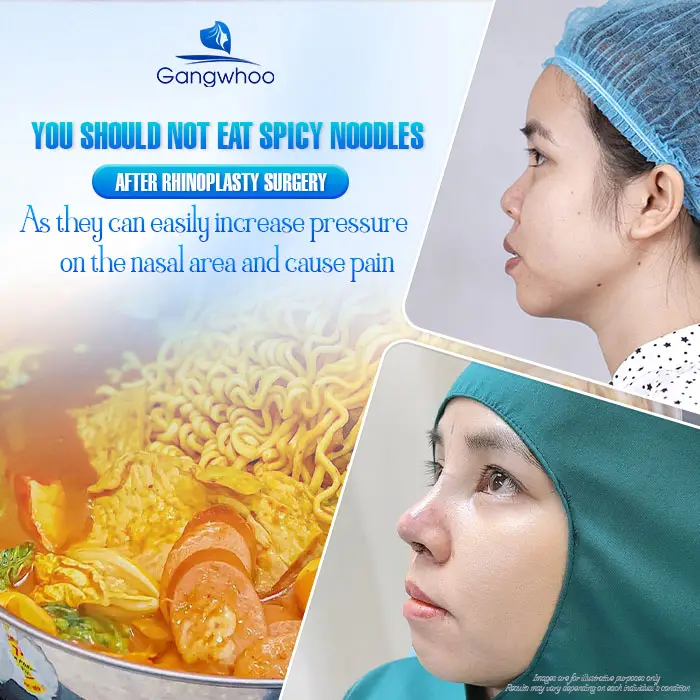
Second is temperature. Very hot food or drinks can cause blood vessels to dilate and may increase the tendency for bleeding in recently operated tissues. Although NHS documents do not focus specifically on cosmetic rhinoplasty, the principle of “avoiding very hot food and drinks immediately after surgery to reduce bleeding risk” appears consistently in postoperative care guidelines for oral, nasal, throat, and certain head-and-neck surgeries.
Third is saltiness. Foods high in salt or sodium can cause the body to retain more water, leading to prolonged swelling and slower “settling” of the nose shape in the early recovery phase. This is why, in postoperative practice, doctors often advise eating relatively bland foods, drinking enough water, and limiting salty foods during the first few weeks. Many nutritional guidelines after rhinoplasty also mention “salty foods” as a factor that may prolong swelling.
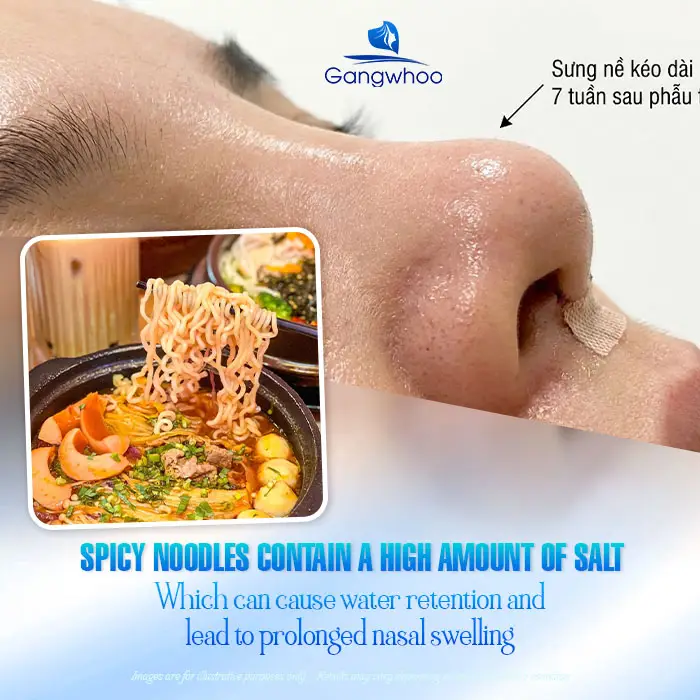
In short, with spicy noodles, you are combining all three unfavorable factors during early recovery. Therefore, instead of asking “can I eat it yet?”, a better question is: when can I eat it again safely and comfortably?
How Long After Rhinoplasty Can You Eat Spicy Noodles? A Practical Safe Timeline
At Gangwhoo Aesthetic Hospital, we usually advise patients based on two principles: prioritizing the tissue-healing phase and considering the “level of stimulation” of the food. You can refer to the timeline below and adjust it according to your actual condition, as structural rhinoplasty, cartilage-wrapped techniques, or more/less invasive procedures all have different recovery speeds.
1. First 0–48 Hours: Strictly Avoid Spicy and Hot Foods
During the first one to two days, the main goals are to reduce swelling and minimize bleeding. You should eat soft, easy-to-swallow foods, allow them to cool down to a warm temperature, and avoid anything very hot. The recommendation to “avoid hot food and drinks immediately after surgery to reduce bleeding” is noted in many NHS postoperative care documents for head, face, and neck surgeries.
If you are really craving spicy food, remember that these first 48 hours are the most critical. Do not trade a few minutes of satisfaction for prolonged swelling and discomfort.
2. Days 3–7: Continue Avoiding Spicy Noodles (Especially Very Spicy)
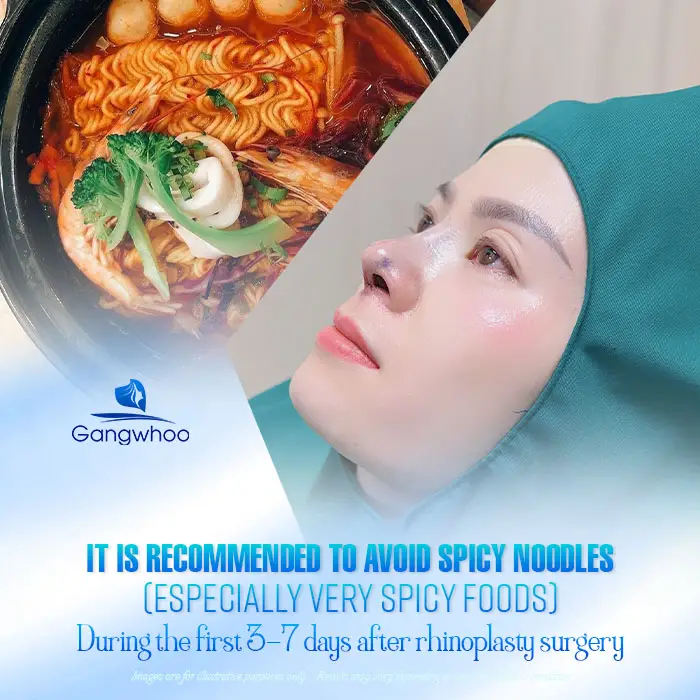
From day three through the end of the first week, most patients still experience swelling, tightness, and nasal sensitivity. Many postoperative care guidelines for rhinoplasty from surgical and ENT centers recommend avoiding spicy foods for at least one week, as spicy foods can cause irritation, increased sneezing, discomfort, and in some sensitive individuals, even a higher risk of bleeding or irritation.
Therefore, for the question “how long after rhinoplasty can I eat spicy noodles?”, a practical answer is: wait at least until the first week has passed.
3. Days 7–14: Light Spiciness May Be Considered if Recovery Is Good
After 7–14 days, many patients notice a significant reduction in swelling and feel more comfortable in daily activities. If the incision is dry, there is no discharge, and there is no increasing redness, warmth, or pain, you may try mildly spicy foods in very small amounts, prioritizing not eating them hot and not too salty.
Keep in mind that spicy noodles are usually strongly seasoned. Even after one week, a safer option is to avoid true spicy noodles and start with foods that are less stimulating.
4. Weeks 2–3: A Safer Time for Spicy Noodles (Moderate to Very Spicy)
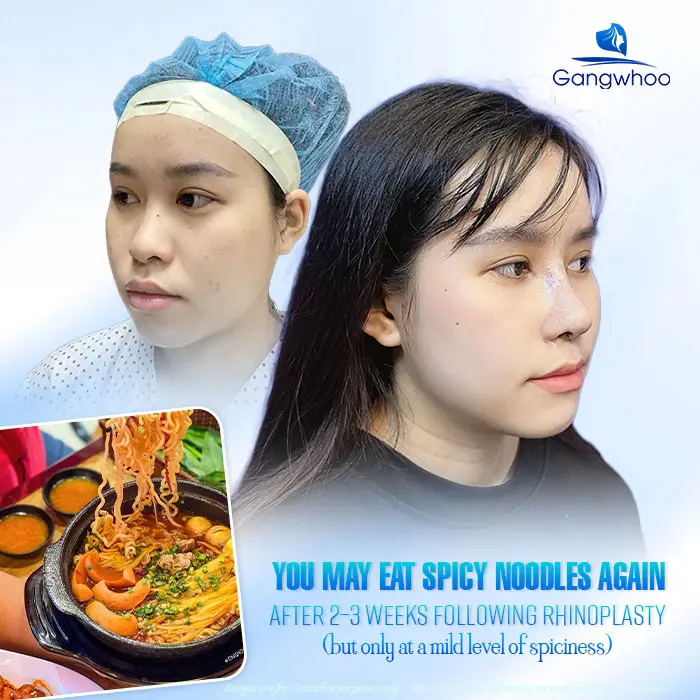
Many international postoperative guidelines from clinics and surgical centers recommend avoiding spicy foods for a longer period, sometimes up to 2–3 weeks, because the nasal mucosa can still be sensitive during this stage, and sneezing or irritation may cause discomfort or prolong swelling.
If you enjoy very spicy food or have a history of allergic rhinitis and frequent sneezing, waiting 2–3 weeks is often a more reasonable and comfortable choice.
5. After 1 Month: Eating Is Usually More Comfortable (But Still Follow Your Doctor’s Advice)
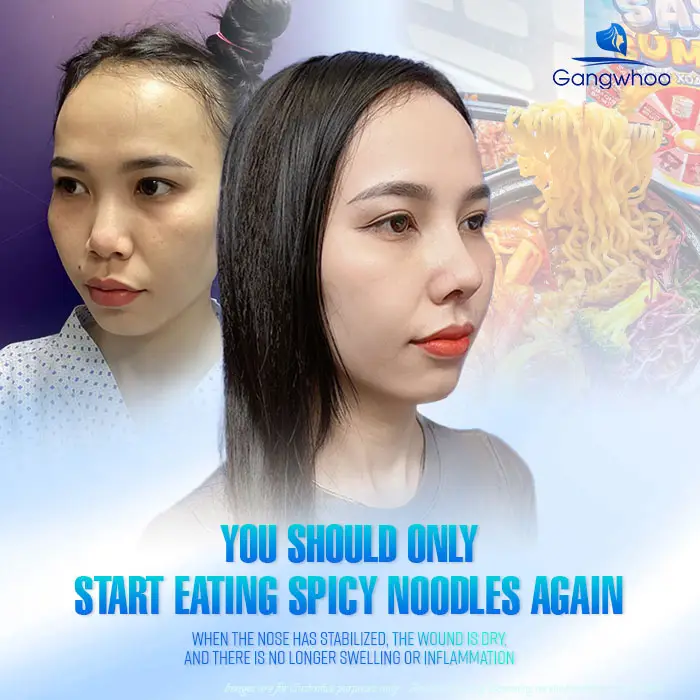
After about one month, most patients are more stable and can eat almost normally. However, how quickly the nose “settles” and how sensitive it remains still depend on individual factors such as anatomy, surgical technique, extent of intervention, and postoperative care. Some medical and academic sources emphasize that not every case requires strict dietary restrictions, but many patients still choose to avoid spicy foods during the first week simply because of discomfort.
In summary, if you want an easy rule of thumb for “how long after rhinoplasty can you eat spicy noodles”: it is generally recommended to wait at least 1–2 weeks; for greater safety and comfort, waiting 2–3 weeks is better, especially for very spicy noodles eaten hot.
How Do You Know If You Are “Ready” to Eat Spicy Noodles Again?
In practice at Gangwhoo Aesthetic Hospital, we do not rely only on the number of days after surgery but also on the actual recovery status. If the nasal area is stable, the incision is dry, there are no signs of inflammation, and daily activities feel normal, then returning to mildly spicy foods is usually reasonable.
On the other hand, if you notice increasing redness, warmth, worsening pain, spreading swelling, unusual discharge, or fever, you should contact a medical facility for evaluation, as these may be signs that require early assessment. (This article is for reference only and does not replace direct medical examination.)
What If You Eat Spicy Noodles Too Early?
In many cases, eating “just a few bites” too early will not cause serious complications, but it may make you more uncomfortable, with sensations such as burning, nasal congestion, sneezing, or increased tightness and swelling. At that point, it is best to return to a “gentle” diet for the nose: soft, bland foods at a cooler temperature, adequate hydration, and avoiding spicy, hot, and salty foods for the next few days while monitoring symptoms.
If heavy bleeding, rapidly increasing pain, or abnormal redness and swelling occur, you should contact your doctor or postoperative clinic. The principle of limiting hot foods in the early phase to reduce bleeding risk is mentioned in many NHS postoperative care guidelines.
Diet Suggestions After Rhinoplasty for Faster Stabilization
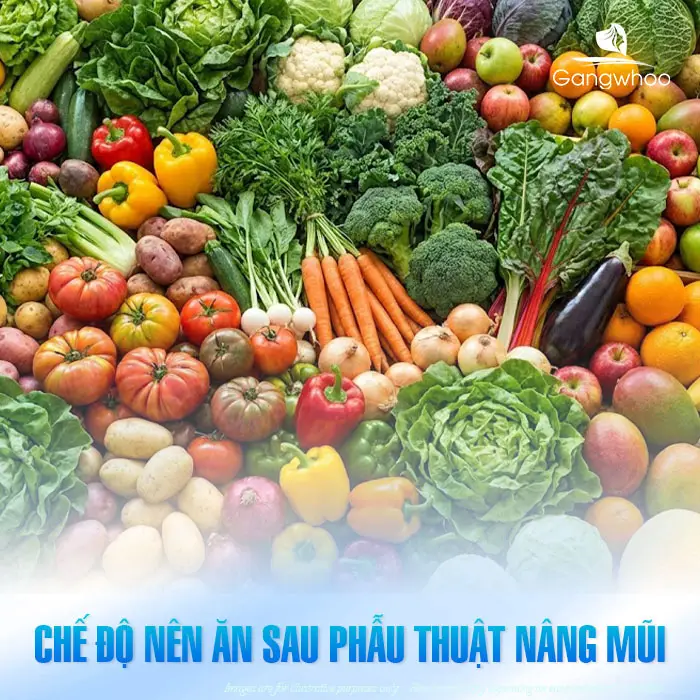
During the first few days, prioritize soft foods that are easy to chew and swallow and require minimal facial muscle movement. After the first week, you can gradually increase protein intake and vegetables, while still maintaining the principle of not eating overly salty foods and limiting strongly stimulating dishes. Some nutritional guidelines after rhinoplasty also recommend avoiding very salty, very spicy, and very hard or chewy foods to help reduce swelling and improve comfort.
Equally important is attending follow-up appointments as scheduled so your doctor can assess healing and personalize the timeline for returning to normal eating for your specific case.
For spicy noodles (spicy + hot + salty), the safest and most practical choice is to avoid them for at least 1–2 weeks. If you want to eat them again with greater peace of mind and less irritation, waiting 2–3 weeks is more appropriate, especially for those who enjoy strong spice or have sensitive nasal conditions.
If you have recently undergone rhinoplasty at Gangwhoo Aesthetic Hospital, our postoperative care team is always available to help assess your recovery and advise on a suitable diet based on your rhinoplasty technique, individual anatomy, and healing progress.