
“How long after butt augmentation can I sit?” is one of the most frequently asked questions I receive from patients during both consultations and postoperative follow-up visits. Many people assume that once the surgical incisions have healed or the discomfort begins to subside, they can safely return to sitting as usual. However, this misconception may compromise the healing process and ultimately affect the aesthetic outcome.
Following butt augmentation surgery, whether performed using autologous fat transfer (Brazilian Butt Lift – BBL) or silicone butt implants, the buttocks require adequate time for the soft tissues to stabilize, postoperative swelling to decrease, and the treated area to adapt to its new contour. Applying excessive pressure too early may interfere with the healing process, particularly in patients who undergo fat grafting.
At Gangwhoo Aesthetic Hospital, every patient receives a personalized postoperative recovery plan tailored to their surgical procedure and individual healing progress. This customized approach promotes optimal recovery while maximizing long-term aesthetic results. Therefore, there is no universal timeline for when patients can safely resume sitting. The appropriate time depends on the surgical technique performed, the body’s healing response, and the clinical evaluation of the attending plastic surgeon.
How Long After Butt Augmentation Can You Sit?
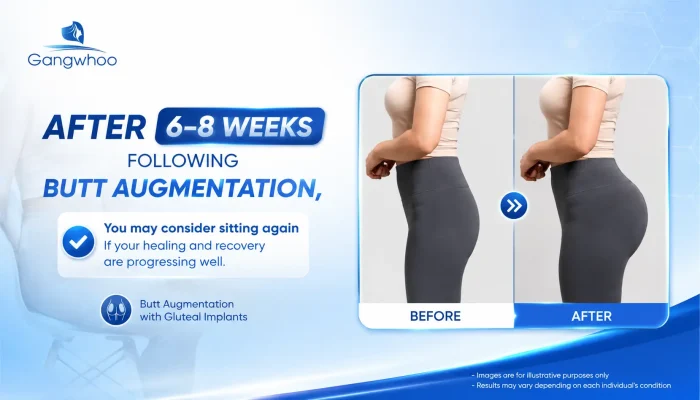
If you’re looking for a straightforward answer, here’s the most important information:
Most patients may begin sitting for short periods approximately 2–3 weeks after surgery, but only after receiving approval from their surgeon and while following proper sitting techniques designed to minimize direct pressure on the buttocks. Returning to normal sitting is generally considered around 6–8 weeks postoperatively, depending on the type of butt augmentation performed, the individual’s healing progress, and the results of follow-up examinations.
It is important to understand that there is no fixed recovery timeline that applies to everyone. Two patients undergoing butt augmentation on the same day may experience completely different recovery journeys due to variations in tissue healing, swelling, circulation, overall health, and individual biological response.
Throughout the postoperative recovery period, your plastic surgeon will carefully evaluate several factors, including incision healing, tissue stability, blood circulation, swelling, and overall recovery before determining whether it is safe to resume sitting for longer periods, driving, or returning to work.
Why Is It Important to Limit Sitting After Butt Augmentation?
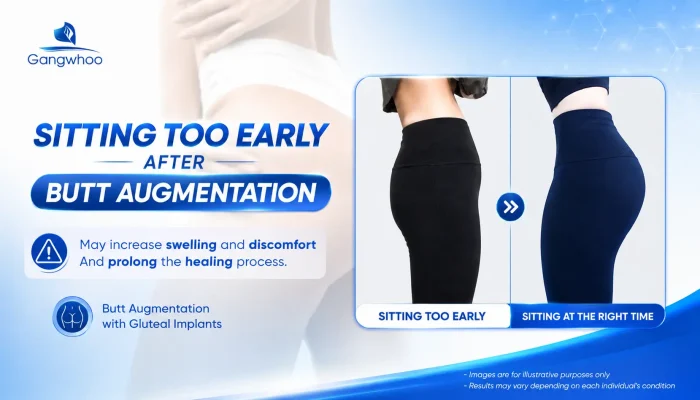
This is one of the aspects of recovery that many patients tend to underestimate.
Whenever we sit, the majority of our body weight is transferred directly onto the buttocks. This continuous pressure temporarily reduces blood circulation within the soft tissues while compressing the area that has just undergone surgical enhancement.
For patients who undergo autologous fat transfer (Brazilian Butt Lift – BBL), the transplanted fat cells require sufficient time to establish a new blood supply in order to survive. During the first several weeks, these fat cells depend on nutrients from the surrounding tissues until new capillaries develop. Excessive pressure during this critical stage may compromise blood flow, reducing fat survival and ultimately affecting the final volume and contour of the buttocks.
For patients receiving silicone butt implants, although the implant itself is designed to withstand pressure, the surrounding muscles, connective tissues, and implant pocket are still healing. Sitting incorrectly or remaining seated for prolonged periods may increase postoperative discomfort, prolong swelling, and delay tissue recovery.
Some patients, particularly those with office-based jobs, attempt to return to work within just a few days after surgery because they feel relatively comfortable. Unless specifically cleared by their surgeon, I generally advise against doing so. Instead, patients should prioritize adequate rest, light walking to promote circulation, and limit sitting to only brief periods when absolutely necessary.
What Can Happen If You Sit Too Soon?
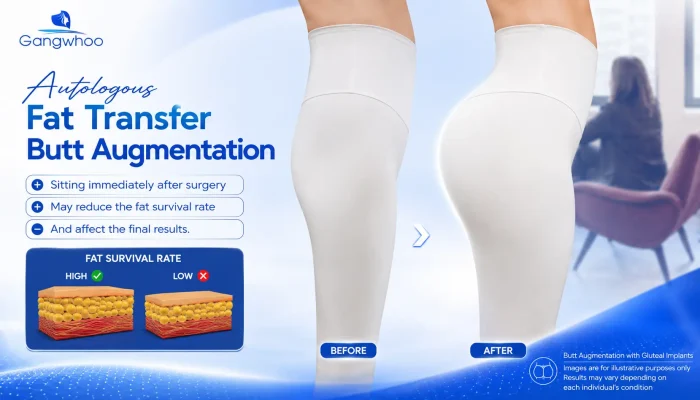
Throughout my clinical practice, one of the most common reasons for delayed recovery is failure to follow postoperative care instructions.
Sitting too early may increase pain and swelling because continuous pressure is applied directly to tissues that are still healing. Besides causing discomfort, this pressure may interfere with the body’s natural healing process.
For patients who undergo fat transfer, prolonged compression can reduce the survival rate of transplanted fat cells, potentially resulting in less retained volume than originally planned and affecting the overall aesthetic outcome.
For patients with butt implants, excessive pressure during the early healing phase may increase discomfort, restrict mobility, and prolong functional recovery while the surrounding tissues continue to stabilize.
For these reasons, following your surgeon’s instructions regarding sitting, sleeping positions, mobility, and daily activities during the first several weeks after surgery is just as important as the surgical technique itself in achieving optimal long-term results.
Recovery Timeline for Different Butt Augmentation Techniques
Although both procedures are designed to enhance the size, projection, and contour of the buttocks, autologous fat transfer and silicone butt implant surgery follow different healing processes. The amount of time you should avoid sitting depends largely on the surgical technique performed and how your body responds during recovery.
1. Recovery After Autologous Fat Transfer (Brazilian Butt Lift – BBL)
During an autologous fat transfer, commonly known as a Brazilian Butt Lift (BBL), fat is harvested from areas such as the abdomen, waist, flanks, or thighs through liposuction. The purified fat is then strategically injected into different layers of the buttocks to improve volume, projection, and overall body contour.
Unlike an implant, transferred fat consists of living cells. After transplantation, these cells require time to adapt to their new environment and establish a new blood supply. During the initial healing phase, the fat cells rely on nutrients diffusing from surrounding tissues until new capillaries develop and permanent circulation is established.
This biological process explains why plastic surgeons strongly recommend avoiding prolonged direct pressure on the buttocks during the first several weeks following surgery. Excessive compression may compromise blood circulation, reduce fat cell survival, and ultimately affect the long-term aesthetic outcome.
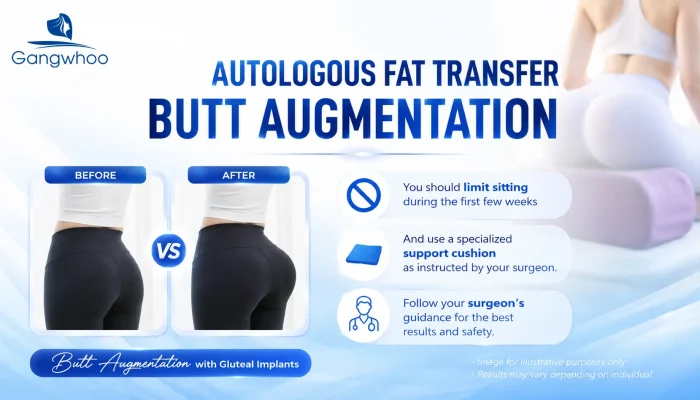
If sitting is unavoidable, patients are generally advised to use a BBL pillow or a specially designed postoperative cushion that transfers body weight to the thighs instead of the buttocks. Sitting sessions should remain brief and should always follow the postoperative instructions provided by your surgeon.
Patients who carefully follow these recommendations typically experience higher fat retention rates, resulting in softer contours, improved projection, and more natural-looking long-term results.
2. Recovery After Silicone Butt Implant Surgery
Recovery following silicone butt implant surgery differs from fat transfer because the implant itself does not rely on establishing a new blood supply. However, the surrounding muscles, connective tissues, and implant pocket still require adequate healing time before they can tolerate prolonged pressure.
Immediately after surgery, swelling, tissue inflammation, and postoperative discomfort are expected. During this period, limiting pressure on the buttocks helps reduce discomfort while allowing the surrounding tissues to stabilize around the implants.
Although implant patients may sometimes resume sitting slightly earlier than those who undergo fat transfer, prolonged sitting should still be avoided until healing progresses satisfactorily. Your surgeon will determine when it is appropriate to gradually increase sitting time based on your individual recovery.
Rather than returning immediately to unrestricted sitting, most patients are encouraged to increase sitting duration gradually over several weeks while monitoring comfort, swelling, and tissue healing.
How to Sit Properly After Butt Augmentation
Knowing when you can sit is only part of a successful recovery. Equally important is understanding how to sit correctly to minimize unnecessary pressure on the surgical area.
Throughout my clinical experience in butt augmentation surgery, patients who carefully follow postoperative positioning guidelines consistently achieve smoother recoveries and more predictable aesthetic outcomes compared with those who resume normal activities too soon.
The goal during early recovery is not to eliminate sitting altogether, but rather to minimize direct pressure on the healing buttocks until the tissues have stabilized.
1. Use a Postoperative Support Pillow
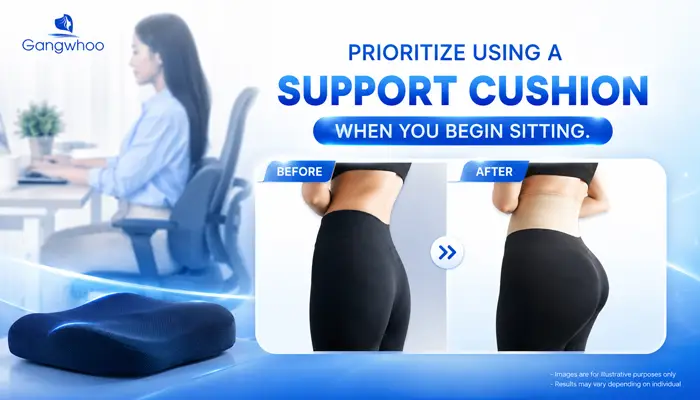
Once your plastic surgeon determines that limited sitting is appropriate, using a specialized postoperative cushion or BBL pillow is highly recommended.
These cushions are designed to shift most of your body weight toward the posterior thighs rather than directly onto the buttocks. By redistributing pressure away from the surgical site, they help protect healing tissues while improving overall comfort.
This technique has become a standard recommendation among plastic surgeons worldwide for patients recovering from fat transfer procedures and is also beneficial for many implant patients during the early postoperative period.
2. Avoid Sitting for Extended Periods
Even after your surgeon allows you to resume sitting, remaining seated for long periods should still be avoided.
If your occupation requires prolonged desk work, stand up and walk for several minutes every 20 to 30 minutes whenever possible. Frequent position changes promote healthy circulation, reduce prolonged tissue compression, and decrease postoperative stiffness.
Many patients with office-based jobs also benefit from using adjustable sit-stand desks during the early recovery period, allowing them to alternate between sitting and standing throughout the workday.
3. Avoid Hard Seating Surfaces

Wooden chairs, plastic chairs, and other rigid seating surfaces concentrate pressure directly onto the buttocks.
During the first several weeks after surgery, choosing chairs with moderate cushioning and continuing to use your postoperative support pillow can help improve comfort while reducing unnecessary stress on the healing tissues.
4. Follow Your Surgeon’s Instructions Throughout Recovery
Many patients begin feeling significantly better within two weeks and mistakenly believe that internal healing has been completed.
However, reduced discomfort does not necessarily indicate complete tissue recovery. The body continues remodeling soft tissues for several weeks—and in some cases, several months—following butt augmentation surgery.
For this reason, every change in your daily activities, including sitting duration, exercise, driving, and returning to work, should be based on your surgeon’s recommendations rather than your personal perception of recovery.
What Is the Best Sleeping Position After Butt Augmentation?
In addition to limiting pressure while sitting, maintaining the correct sleeping position is equally important during the early stages of recovery. Proper positioning helps protect the surgical area, minimizes unnecessary pressure on the buttocks, and supports the body’s natural healing process.
1. Sleeping on Your Stomach

For most patients, particularly those who have undergone autologous fat transfer (BBL), sleeping on the stomach is generally recommended during the first few weeks after surgery. This position prevents direct compression of the buttocks and allows the transplanted fat cells to establish a healthy blood supply without excessive external pressure.
Although sleeping on the stomach may feel uncomfortable for some patients initially, it remains one of the safest positions during the early recovery period. Using supportive pillows beneath the chest or hips may improve comfort while maintaining proper body alignment.
2. Sleeping on Your Side
As recovery progresses, many patients may gradually transition to sleeping on their side after receiving approval from their plastic surgeon.
Placing a pillow between the knees and another pillow behind the back can improve comfort while reducing pressure on the hips and gluteal region. This position is often easier to maintain throughout the night and provides an effective alternative for patients who find stomach sleeping difficult.
3. Sleeping Positions to Avoid
Unless specifically instructed otherwise by your surgeon, prolonged sleeping on your back should generally be avoided during the initial recovery period.
Sleeping directly on the buttocks may place continuous pressure on healing tissues, especially following fat transfer procedures, potentially affecting fat survival and delaying recovery.
Tips to Promote a Faster and Safer Recovery
Successful recovery depends not only on surgical expertise but also on how well patients care for themselves after the procedure.
A balanced diet rich in high-quality protein supports collagen production and tissue regeneration. Staying well hydrated also promotes healthy circulation and contributes to faster wound healing.
Smoking and excessive alcohol consumption should be avoided during recovery because both can impair blood circulation and interfere with the body’s natural healing mechanisms. For patients undergoing fat transfer, smoking may also reduce the survival rate of transplanted fat cells.
Wearing postoperative compression garments exactly as instructed by your surgeon helps control swelling, supports tissue stabilization, and contributes to smoother body contours throughout the recovery process.
Regular postoperative follow-up appointments are equally important. During these visits, your surgeon will evaluate healing, monitor your progress, and identify any concerns early before they develop into more significant complications.
Patients who consistently follow postoperative instructions typically experience faster recovery, fewer complications, and more predictable long-term aesthetic outcomes.
When Should You Contact Your Plastic Surgeon?
Although butt augmentation is considered a safe and well-established cosmetic procedure when performed by qualified plastic surgeons, every surgical procedure carries potential risks during the recovery period. Recognizing abnormal symptoms early allows timely intervention and helps prevent complications that could affect both your health and aesthetic outcome.
You should contact your plastic surgeon immediately if you experience any of the following symptoms:
- Severe pain that progressively worsens despite taking prescribed medications.
- A persistent fever above 38°C (100.4°F) or chills.
- Excessive redness, warmth, or rapidly increasing swelling around the surgical site.
- Persistent drainage, foul-smelling discharge, or bleeding from the incision.
- Sudden changes in the shape, firmness, or symmetry of the buttocks.
- Skin discoloration, especially if accompanied by increasing pain or numbness.
- Difficulty walking or worsening mobility compared with previous days.
Do not attempt to self-medicate or delay seeking medical attention if any unusual symptoms develop. Early evaluation allows your surgeon to identify potential complications promptly and provide appropriate treatment before they become more serious.
How long after butt augmentation can you sit? There is no single answer that applies to every patient. Recovery depends on multiple factors, including the surgical technique, your body’s natural healing capacity, postoperative care, and your surgeon’s clinical assessment.
Whether your procedure involves autologous fat transfer (Brazilian Butt Lift – BBL) or silicone butt implants, protecting the surgical area during the early healing phase plays a critical role in achieving long-lasting, natural-looking results. Following your surgeon’s recommendations regarding sitting, sleeping positions, physical activity, and follow-up appointments significantly reduces the risk of complications while optimizing your final outcome.
Throughout my experience as a plastic surgeon specializing in body contouring procedures, I have found that patients who actively participate in their postoperative care consistently achieve smoother recoveries and more predictable aesthetic results. Successful butt augmentation is not determined solely by the surgical procedure itself—it also depends on how carefully patients follow their individualized recovery plan.
If you are considering butt augmentation or would like personalized guidance regarding postoperative recovery, choosing an experienced plastic surgery team is one of the most important decisions you can make.
At Gangwhoo Aesthetic Hospital, every patient receives a personalized surgical treatment plan together with comprehensive postoperative care designed to promote safe healing, minimize recovery time, and achieve harmonious, natural-looking body contours.