
One of the most common questions patients ask after a nose job is: “How Long After a Nose Job Can You Eat Water Spinach?” In Vietnam, water spinach is often considered a food that may cause keloid scars or darken wounds, making many patients concerned about post-operative care.
As a surgeon who performs and follows up on thousands of rhinoplasty cases each year, I aim to provide a professional perspective supported by medical evidence, giving accurate, safe, and easy-to-understand advice.
Why Is Water Spinach Often Avoided After Rhinoplasty?
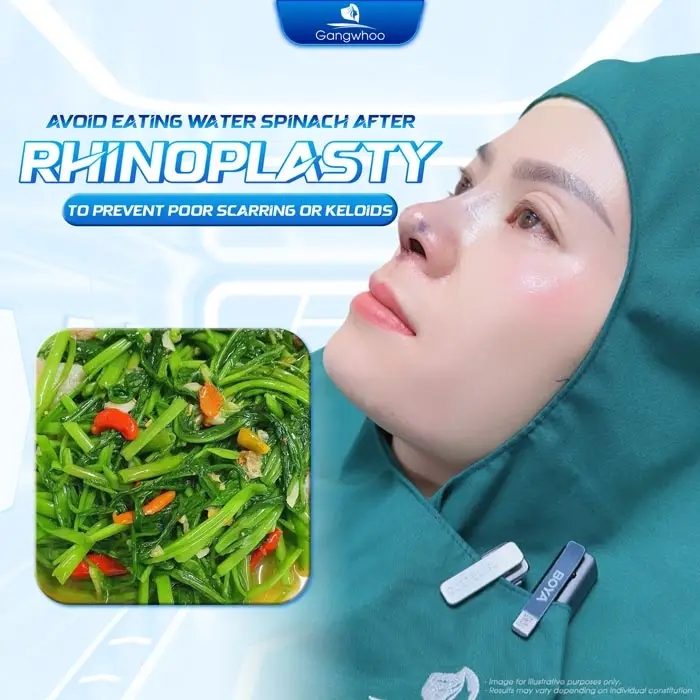
Traditionally, water spinach is believed to promote excessive fibrous tissue growth, which may make wounds more prone to raised scars. Many aesthetic surgery patients—including those undergoing thread lifts, nose jobs, or eyelid surgery—are advised to avoid water spinach to reduce scarring.
In practice, this advice is common in Vietnam and some Asian countries. Its recommendation is based on clinical observation of tissue healing and collagen formation, rather than formal clinical trials.
What Does Current International Medical Evidence Say?
Currently, no international study has proven that water spinach directly affects rhinoplasty outcomes. According to guidelines and research from:

American Society of Plastic Surgeons (ASPS)
Aesthetic Society
Post-operative studies published in PubMed and JAMA Facial Plastic Surgery
there is no recommendation listing water spinach as a risk factor for complications after rhinoplasty.
International guidelines focus on factors that truly affect wound healing, such as:
Controlling inflammation and swelling
Avoiding irritants (alcohol, tobacco)
Avoiding foods that may trigger allergic or excessive body reactions
Providing adequate protein and micronutrients to support tissue regeneration
This shows that avoiding water spinach is primarily based on traditional experience and clinical observations in Asia, not global medical standards. However, individuals with keloid-prone skin or hyperactive tissue growth should receive personalized advice from their surgeon.
How Long After a Nose Job Can You Eat Water Spinach?
Based on years of clinical experience and principles of soft tissue and cartilage healing, I recommend:
1. First 2 Weeks: Do Not Eat Water Spinach
This is the initial healing phase: sutures are closing, soft tissue around the nose is stabilizing.
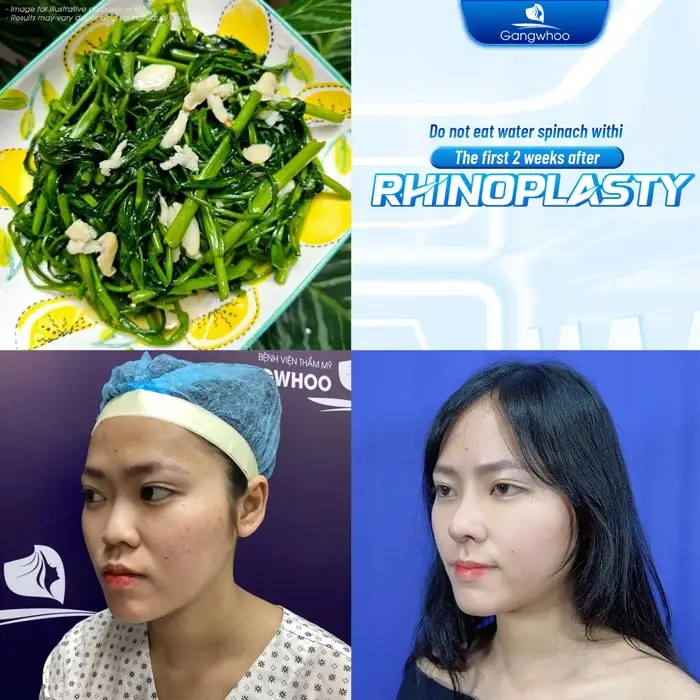
Collagen is rapidly produced → higher risk of raised scars in sensitive patients.
Water spinach may stimulate faster granulation tissue growth in some people, leading to darker or raised scars along the incision line.
Recommendation: avoid completely during the first 2 weeks to minimize excessive tissue response.
2. Weeks 3–4 (Days 14–30): Consider Your Body Type
At this stage, tissue is stabilizing but not fully matured.
Normal healing individuals (no keloids or hyperpigmentation): can eat small amounts, 1–2 trial meals per week. If there is no increased pigmentation, redness, or itching → gradually return to normal.
Those with keloids, hyperpigmentation, or sensitive skin: should avoid until 1 month for safety. These patients tend to have stronger collagen responses and need stricter control.
3. After 1 Month: Safe to Eat Normally
From week 4 onward:

Soft tissue has passed the rapid proliferation phase and entered tissue remodeling.
Risk of raised or pigmented scars decreases significantly.
Eating water spinach at this point does not affect nose shape or surgical results.
4. For Open Rhinoplasty Patients
Longer incision and slower healing require more caution.
Recommendation: avoid water spinach for at least 3–4 weeks, especially for keloid-prone patients.
5. Important Notes for All Patients
Water spinach does not cause nasal deviation, cartilage displacement, or infection—these complications are related to surgical technique, wound care, or infection risk.
Avoiding it mainly helps reduce scar thickness and pigmentation around the columella incision.
Summary Recommendation: water spinach does not directly affect nose shape or cartilage. To minimize dark or raised scars:
0–2 weeks: avoid completely
2–4 weeks: consider your body type
After 1 month: safe to eat normally
The most important factor remains following post-operative care instructions and attending scheduled check-ups to ensure safe and stable rhinoplasty results.
Other Foods to Consider Avoiding After Rhinoplasty
Besides water spinach, some foods may need to be limited during the first 2–4 weeks to support healing and reduce scar risks:
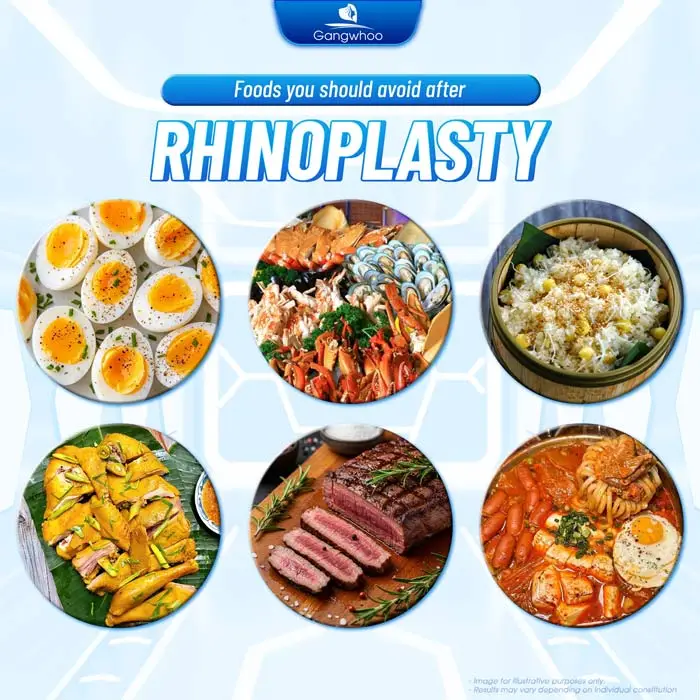
Seafood (shrimp, crab, squid): may trigger allergies, redness, or swelling.
Beef, chicken: may cause prolonged swelling or heatiness in sensitive individuals.
Sticky or sweet foods (glutinous rice, sticky cakes, chocolate): can increase bacteria and delay wound healing.
Spicy foods, alcohol, tobacco: stimulate inflammation, reduce blood circulation.
Allergy-prone foods (nuts, legumes, milk): avoid if previously reactive.
Principle: prefer soft foods rich in protein, vitamins, and minerals; monitor your body’s reaction; always follow your surgeon’s guidance.
Nutrition to Support Healing After Rhinoplasty
Proper nutrition significantly affects wound healing and scar reduction:

Protein: supports collagen and new tissue formation. Sources: lean meat, fish, eggs, dairy, tofu.
Vitamin C: boosts collagen, reduces pigmentation. Sources: oranges, kiwi, bell peppers, leafy greens.
Zinc: supports skin cell differentiation and tissue regeneration. Sources: seafood, nuts, whole grains.
Iron: supports oxygen delivery, promoting wound healing. Sources: red meat, eggs, leafy greens.
Water: keeps tissue soft, reduces swelling and dryness. Drink 1.5–2 liters daily.
Principle: eat a balanced diet with adequate protein, vitamins, and minerals for 1–2 months post-surgery to optimize healing and achieve the best rhinoplasty results.
Conclusion
How long after a nose job you can eat water spinach depends on healing progress and individual body type. To ensure safety and reduce the risk of dark or raised scars:
0–2 weeks: strictly avoid
2–4 weeks: consider your body type
After 1 month: safe to eat normally
At Gangwhoo Hospital, we provide personalized post-operative care, including nutritional guidance, tailored dietary restrictions, and scheduled follow-ups. Following these recommendations, along with a diet rich in protein, vitamins, and minerals while avoiding inflammatory foods, will help your wounds stabilize and achieve long-lasting, safe, and aesthetically optimal rhinoplasty results.