
One of the most common questions I receive during consultations for facial contouring surgery is: “Does jaw reduction surgery leave scars?” This concern is completely understandable, as the face is one of the most visible aesthetic features, and any postoperative marks may affect a person’s confidence.
In reality, thanks to advances in modern maxillofacial surgery, jaw reduction surgery rarely leaves visible external scars when it is performed using the correct surgical technique by an experienced maxillofacial surgeon, in a fully equipped operating room, and followed by proper postoperative care.
However, this does not mean that every patient will experience the same outcome. The final result depends on several factors, including individual anatomy, healing capacity, surgical technique, and the surgeon’s expertise.
In this article, I will explain from a professional medical perspective why jaw reduction surgery generally does not leave visible facial scars, while also discussing the factors that may influence wound healing.
Does Jaw Reduction Surgery Leave Scars?
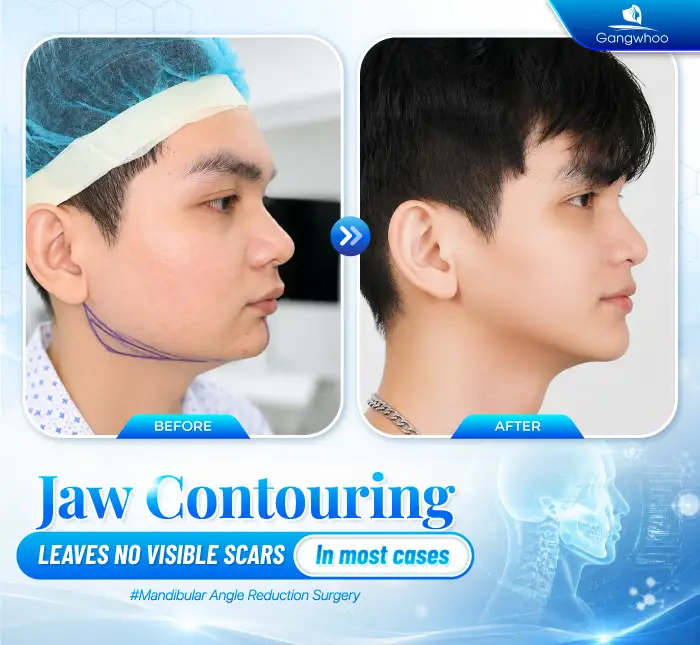
If you are looking for a straightforward answer to the question, “Does jaw reduction surgery leave scars?”, the answer is generally no in most cases.
This is because the entire procedure is performed through an incision inside the mouth rather than through the facial skin. This intraoral approach has become the standard technique in modern maxillofacial surgery because it maximizes aesthetic outcomes while eliminating visible external scars.
As a result, once healing is complete, there are typically no noticeable scars on the chin, jawline, or cheeks.
This is one of the reasons why many celebrities, public figures, and individuals with high aesthetic expectations choose V-Line jaw reduction surgery to refine their facial contours without worrying about visible postoperative scarring.
Why Doesn’t Jaw Reduction Surgery Leave External Scars?
To understand this, it is important to first understand how the procedure is performed.

Contrary to what many people imagine, surgeons do not make incisions on the outside of the face to access the jawbone. Instead, modern jaw reduction surgery is performed through a small incision made inside the oral vestibule. Through this intraoral incision, the surgeon gains access to the mandibular angle and reshapes the jawbone using specialized surgical instruments according to a carefully planned treatment protocol.
Once the bone contouring is complete, the oral mucosa is closed using absorbable sutures.
Because the entire procedure takes place inside the mouth, no incisions are made on the facial skin, eliminating the risk of visible external scars.
From a clinical perspective, this is one of the greatest advantages of mandibular contouring surgery, as it provides significant aesthetic improvement while minimizing visible postoperative evidence.
Does the Oral Mucosa Leave Scars?
This is another common question patients ask after learning that the incision is made inside the mouth.
The answer is that the oral mucosa has an excellent healing capacity.
Unlike skin, the oral mucosa has an abundant blood supply, allowing faster tissue regeneration while being protected from ultraviolet radiation and other environmental factors that can impair healing.
In most cases, the incision heals well within several weeks, and after a few months it becomes extremely difficult to identify the original surgical site, provided postoperative care has been properly followed.
For this reason, many patients eventually forget they ever underwent surgery because there are no visible signs left on the face.
Where Is the Incision Made During Jaw Reduction Surgery?
The location of the incision is the key factor that determines whether jaw reduction surgery leaves scars.
With current surgical techniques, the incision is typically placed inside the oral mucosa, near the lower gum line.
This incision is just large enough to allow specialized surgical instruments to access the mandibular angle safely.
After careful dissection along the correct anatomical planes, the surgeon will:
- Expose the section of bone requiring contouring.
- Mark the planned bone resection line.
- Reshape the mandibular angle according to the patient’s facial proportions.
- Ensure bilateral facial symmetry.
- Achieve meticulous hemostasis.
- Close the incision with absorbable sutures.
Since every step of the procedure is performed inside the mouth, there are no visible surgical scars on the facial skin after healing.
Modern Surgical Technology Helps Minimize Tissue Trauma
In addition to the incision technique, surgical technology plays a significant role in patient recovery.
In the past, mandibular contouring was performed primarily with conventional mechanical instruments, which often caused greater trauma to surrounding soft tissues.
Today, many advanced aesthetic hospitals utilize specialized bone-cutting systems that provide several important advantages:
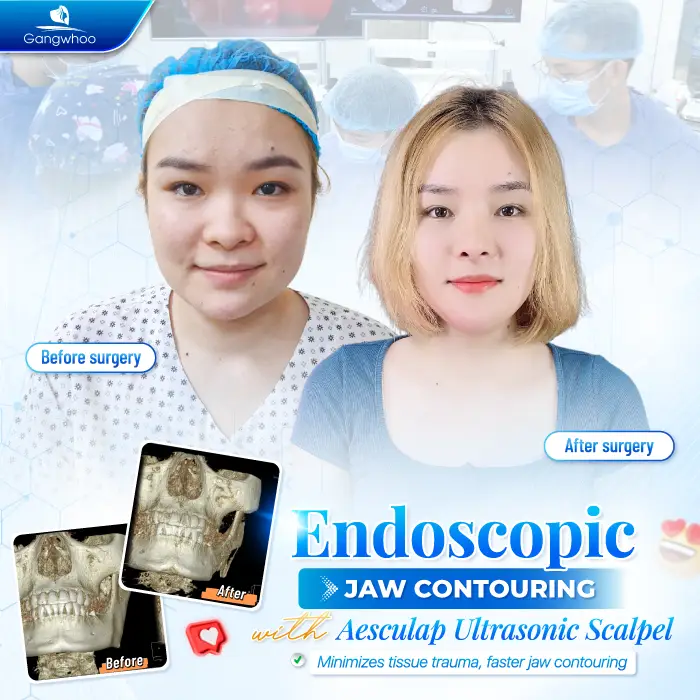
- More precise bone cuts.
- Reduced soft tissue trauma.
- Less intraoperative bleeding.
- Better protection of nearby nerves.
- Reduced postoperative swelling.
- Faster recovery.
At Gangwhoo Aesthetic Hospital, jaw reduction surgery is performed using standardized surgical protocols supported by advanced technology and an experienced team of Oral and Maxillofacial Surgeons. Before surgery, each patient undergoes comprehensive imaging studies and skeletal analysis to create a personalized surgical plan, helping optimize both precision and aesthetic outcomes.
How Long Does the Surgical Incision Take to Heal?
In clinical practice, healing time varies from one individual to another.
However, for healthy patients who carefully follow postoperative instructions, recovery generally progresses as follows:
Days 3–5: This is typically the period of greatest swelling due to the body’s normal inflammatory response. Patients may experience tightness around the jaw, although discomfort is generally well controlled with prescribed medication.
Days 7–10: Swelling decreases significantly, allowing patients to resume light daily activities while maintaining easier oral hygiene.
Weeks 2–4: The intraoral incision has largely healed, and patients can gradually return to a more normal diet under their surgeon’s guidance.
Months 3–6: Bone healing continues to stabilize, soft tissues adapt to the new facial contour, and the final aesthetic outcome gradually becomes apparent.
Throughout this recovery period, patients who follow appropriate postoperative care instructions generally do not need to worry about developing visible facial scars.
Cases That May Increase the Risk of Scarring After Jaw Reduction Surgery
Although the answer to the question “Does jaw reduction surgery leave scars?” is generally no visible external scars, there are still certain situations in which the healing process may not progress as expected. In most cases, these issues involve the intraoral incision or postoperative complications rather than scarring on the facial skin.
As an Oral and Maxillofacial Surgeon, I always emphasize that the success of jaw reduction surgery depends not only on surgical technique but also on each patient’s healing capacity and adherence to postoperative care instructions.
1. Individual Healing Capacity

Every patient heals at a different rate. While some individuals experience complete mucosal healing within a few weeks, others may require a longer recovery period.
Medical conditions such as diabetes, immune disorders, poor nutritional status, or long-term smoking can reduce blood circulation to the surgical site, slowing tissue regeneration and prolonging recovery.
Although keloid formation primarily affects the skin rather than the oral mucosa, prolonged inflammation or inadequate postoperative care may delay healing inside the mouth.
2. Postoperative Infection
The oral cavity naturally contains a large number of bacteria.
For this reason, maintaining proper oral hygiene after mandibular contouring surgery is essential for preventing complications.
If food debris accumulates around the incision, or if patients fail to use antiseptic mouthwash or prescribed medications as instructed, the risk of infection increases significantly.
Once an infection develops, the surrounding tissues may remain swollen and painful for a longer period, potentially delaying wound healing.
This is why surgeons schedule regular follow-up appointments to monitor healing and identify any complications at an early stage.
3. Surgery Performed at an Inadequately Equipped Facility

One of the most important factors that can increase the risk of complications is undergoing surgery at a facility that lacks a dedicated Oral and Maxillofacial Surgery department or does not meet operating room sterilization standards.
Jaw reduction surgery is a complex procedure involving direct modification of the facial skeleton. It requires careful management of critical anatomical structures, including the inferior alveolar nerve, blood vessels, and masticatory muscles.
If the surgeon lacks sufficient experience or the surgical plan is not properly developed, patients may face prolonged recovery as well as complications such as facial asymmetry, nerve injury, or postoperative infection.
For this reason, jaw reduction procedures should always be performed in hospitals with specialized Oral and Maxillofacial Surgery teams, comprehensive anesthesia services, and strict infection-control protocols.
Factors That Contribute to Optimal Healing

The Surgeon’s Expertise Is the Most Important Factor
In maxillofacial surgery, every millimeter matters.
Before surgery, the surgeon must carefully evaluate bone thickness, the location of the inferior alveolar nerve, bilateral facial symmetry, and overall facial proportions to determine exactly how much bone should be removed.
Precise dissection along the correct anatomical planes minimizes trauma to soft tissues, reduces bleeding, and promotes faster healing.
Conversely, excessive tissue manipulation or improper surgical technique may increase tissue trauma and prolong the recovery process.
Advanced Surgical Technology
Modern imaging systems such as Cone Beam CT (CBCT) allow surgeons to thoroughly evaluate skeletal anatomy before surgery.
Three-dimensional surgical planning enables highly accurate bone contouring while minimizing unnecessary bone removal and reducing intraoperative risks.
In addition, advanced bone-cutting devices generate less heat during osteotomy, helping preserve surrounding soft tissues and protect nearby nerves.
These technological advances contribute to faster healing, reduced swelling, and improved surgical outcomes.
A Sterile Surgical Environment
A successful operation depends not only on surgical skill but also on a fully integrated healthcare system.
A sterile operating room, standardized anesthesia protocols, properly sterilized instruments, and an experienced anesthesia team all play essential roles in minimizing postoperative infection and supporting patient safety.
At Gangwhoo Aesthetic Hospital, every patient undergoes comprehensive preoperative examinations, laboratory testing, and medical evaluation before surgery. This thorough assessment allows surgeons to identify potential risk factors and develop an individualized treatment plan rather than applying a one-size-fits-all approach.
Postoperative Care to Minimize Complications
Patients should understand that the success of jaw reduction surgery depends not only on the procedure itself but also on the recovery period that follows.
During the first postoperative week, soft foods such as porridge, soup, yogurt, and nutritional shakes are recommended to minimize stress on the jaw. Hard or chewy foods should be avoided because they may increase discomfort and interfere with wound healing.
Patients should rinse with the antiseptic mouthwash prescribed by their surgeon while continuing to brush gently with a soft-bristled toothbrush to prevent plaque accumulation around the surgical site.
Smoking and alcohol consumption should be avoided for several weeks after surgery. Nicotine constricts blood vessels, decreases blood flow to healing tissues, and can significantly delay recovery.
Sleeping with the head elevated during the first few days helps reduce facial swelling. Patients should also attend all scheduled follow-up appointments so that bone healing can be monitored and any potential complications can be addressed promptly.
How Soon Can Patients Return to Normal Activities?
This is another question frequently asked by patients considering jaw reduction surgery.
Most patients experience a significant reduction in swelling after approximately one week and are able to return to office-based work or light daily activities.
Within two to four weeks, normal eating habits can gradually resume, although excessively hard foods should still be avoided.
By approximately three months, the jawbone has largely stabilized. However, the soft tissues continue adapting to the new facial contours, and the final aesthetic result typically becomes fully apparent between six months and one year, depending on individual healing characteristics.
Patients should remain patient throughout this process, as soft tissue remodeling naturally progresses more slowly than bone healing.
Professional Perspective from Dr. Nguyen Minh Hien, Specialist Level II in Oral and Maxillofacial Surgery
Throughout my years of clinical practice in Oral and Maxillofacial Surgery, I have found that many patients focus primarily on whether jaw reduction surgery will leave scars while paying less attention to selecting a qualified surgeon and an appropriately equipped medical facility.
In reality, a successful jaw contouring procedure begins with an accurate diagnosis, proper surgical indications, individualized treatment planning, meticulous surgical execution, and comprehensive postoperative care.
When these essential elements are carefully combined, patients can achieve not only a slimmer, more balanced facial contour but also a smooth recovery with minimal complications and no visible external scarring.
Who Is a Good Candidate for Jaw Reduction Surgery?
Not everyone with a square or broad jaw requires jaw reduction surgery. In clinical practice, I always recommend a comprehensive examination to determine the underlying cause of the facial shape before considering any surgical intervention.
If the lower face appears wide primarily because of enlarged masseter muscles, non-surgical treatments such as Botulinum toxin injections may provide satisfactory improvement without surgery. However, when the prominent jawline is caused by excessive mandibular bone development, jaw reduction surgery remains the most effective and long-lasting solution for achieving a slimmer and more harmonious facial contour.
Jaw reduction surgery is generally recommended for individuals who:
- Have a naturally square or broad jaw caused by bone structure.
- Present with a prominent mandibular angle that creates a masculine or overly angular facial appearance.
- Have facial asymmetry related to the lower jaw.
- Desire a softer, more balanced V-Line facial profile.
- Have completed skeletal growth and are in good overall health.
Conversely, patients who are pregnant, have uncontrolled systemic diseases, bleeding disorders, or conditions that contraindicate general anesthesia should undergo thorough medical evaluation before surgery is considered.
Common Misconceptions About Jaw Reduction Surgery
Will Jaw Reduction Surgery Make the Face Look Unnatural?
This is one of the most common misconceptions.
Modern facial contouring surgery is no longer aimed at creating an extremely pointed chin or producing identical facial shapes for every patient. Instead, the primary objective is to achieve facial harmony while preserving each individual’s natural characteristics.
Before surgery, surgeons carefully evaluate facial proportions, mandibular width, chin projection, and overall facial balance. This personalized approach allows the jawline to be refined while maintaining natural facial aesthetics that complement the patient’s gender, ethnicity, and unique facial anatomy.
Does Jaw Reduction Surgery Affect Chewing Function?
When performed correctly by an experienced Oral and Maxillofacial Surgeon, jaw reduction surgery primarily reshapes the outer portion of the mandibular angle without affecting the temporomandibular joints, dental occlusion, or normal chewing function.
Although patients may initially experience temporary discomfort while chewing during recovery, normal function typically returns once healing is complete.
Can Jaw Reduction Surgery Damage Facial Nerves?
The inferior alveolar nerve runs through the mandibular canal and supplies sensation to the lower lip and chin. Protecting this nerve is one of the surgeon’s highest priorities during jaw contouring procedures.
For this reason, Cone Beam Computed Tomography (CBCT) is routinely performed before surgery to accurately identify the location of the nerve and facilitate precise surgical planning.
When surgery is performed by an experienced maxillofacial surgeon using advanced surgical techniques, the risk of permanent nerve injury is extremely low.
Some patients may notice temporary numbness around the lower lip or chin after surgery due to tissue swelling. In most cases, sensation gradually returns as postoperative swelling subsides and healing progresses.
Why Choose a Specialized Oral and Maxillofacial Surgery Center?
Jaw reduction surgery is far more than a cosmetic procedure—it is a highly specialized skeletal surgery involving the bones of the face.
For this reason, patients should choose a medical facility that offers comprehensive expertise in Oral and Maxillofacial Surgery, advanced diagnostic technology, modern operating rooms, and multidisciplinary perioperative care.
Important factors to consider when selecting a surgical center include:
- Board-certified Oral and Maxillofacial Surgeons with extensive experience.
- Advanced three-dimensional imaging and surgical planning technology.
- Fully equipped sterile operating rooms.
- Modern bone-cutting systems and anesthesia equipment.
- Comprehensive postoperative monitoring and follow-up care.
At Gangwhoo Aesthetic Hospital, every jaw reduction procedure begins with a comprehensive facial analysis and CBCT evaluation. Surgical plans are individually customized based on each patient’s skeletal anatomy, facial proportions, and aesthetic goals, ensuring that treatment is personalized rather than standardized.
This individualized approach enhances surgical precision, improves safety, and helps patients achieve balanced, natural-looking facial contours.
Frequently Asked Questions
Does jaw reduction surgery leave visible facial scars?
No. In the vast majority of cases, the incision is made entirely inside the mouth, so there are no visible scars on the face after healing.
When can I return to work?
Most patients with office-based jobs can resume work within 7–10 days, depending on their individual recovery.
How long does facial swelling last?
Approximately 70–80% of postoperative swelling subsides within two to four weeks. Final facial contours generally become apparent after three to six months.
Will the stitches need to be removed?
No. The intraoral incision is typically closed with absorbable sutures that dissolve naturally during the healing process.
Is jaw reduction surgery painful?
The procedure is performed under general anesthesia, so patients do not experience pain during surgery. Mild discomfort or tightness afterward is normal and is usually well controlled with prescribed medications.
Are the results permanent?
Yes. When excessive mandibular bone has been appropriately reshaped, the improvement is considered permanent because the removed bone does not regenerate.
“Does jaw reduction surgery leave scars?” is a completely reasonable question for anyone considering facial contouring surgery.
From a clinical perspective, I can confidently state that modern jaw reduction surgery is designed to avoid visible facial scarring because the surgical incision is placed entirely inside the oral cavity. More importantly, successful outcomes depend on appropriate patient selection, meticulous surgical technique, and strict adherence to postoperative care instructions.
Jaw reduction surgery not only enhances facial harmony but can also significantly improve self-confidence when performed safely and appropriately.
As an Oral and Maxillofacial Surgeon, I strongly encourage every patient to undergo a comprehensive consultation before making a treatment decision. Careful evaluation of skeletal anatomy, dental occlusion, soft tissue characteristics, and overall health allows the surgeon to recommend the most suitable treatment plan based on scientific evidence rather than online information alone.
If you are still wondering whether jaw reduction surgery leaves scars, or would like to determine whether you are a suitable candidate for the procedure, visit Gangwhoo Aesthetic Hospital. Our team of experienced Oral and Maxillofacial Surgeons will perform a comprehensive facial assessment using advanced imaging technology and develop a personalized treatment plan tailored to your individual needs.
The best surgical outcomes always begin with an accurate diagnosis, transparent consultation, and evidence-based medical care.