
“Does chin augmentation require general anesthesia?” is one of the questions I’m frequently asked when consulting with clients who want to improve their chin shape. Many people worry that chin augmentation surgery must involve general anesthesia, while others fear pain if only local anesthesia is used.
In reality, chin augmentation does not always require general anesthesia. The choice of anesthesia method depends on the surgical technique, the extent of the procedure, the patient’s health condition, and the assessment made by the surgeon together with the anesthesia and resuscitation team. Therefore, you should not decide for yourself whether to use local or general anesthesia based solely on information found on the Internet.
In this article, I will clarify the difference between local and general anesthesia in chin augmentation, the cases in which each method may be applied, and the factors patients should keep in mind before surgery.
Does Chin Augmentation Require General Anesthesia?

It may, but not every chin augmentation case requires general anesthesia.
In surgical practice, local anesthesia and general anesthesia are two different methods of pain control. Local anesthesia eliminates pain sensation in the area being operated on, while general anesthesia puts the patient into a controlled state of unconsciousness throughout the surgery. Which method is chosen depends on the type of surgery, the patient’s physical condition, risk factors, and the anesthesiologist’s assessment.
For chin augmentation surgery specifically, the doctor needs to conduct a specific evaluation before deciding. There is no single anesthesia method suitable for everyone.
What matters more than the question “local or general anesthesia?” is which method is most suitable and safest for your particular surgery.
Is Chin Augmentation Usually Done With Local or General Anesthesia?
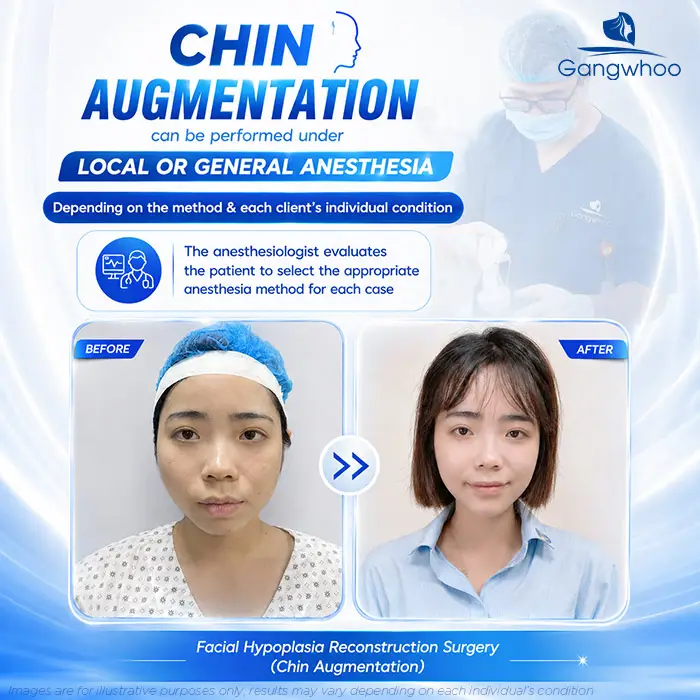
To understand this better, it’s first necessary to distinguish between three concepts that are often confused: local anesthesia, sedation, and general anesthesia.
Local anesthesia is a method that reduces or eliminates pain sensation in the surgical area while the patient remains conscious. Depending on the case, local anesthesia may be combined with sedatives to help the patient relax and feel drowsier.
General anesthesia is a controlled state of unconsciousness. During this process, the patient is unaware and does not feel pain during surgery; the anesthesiologist monitors and adjusts the anesthetic throughout the operation.
Therefore, if you hear that “chin augmentation involves general anesthesia,” you should ask the facility to clarify whether they mean local anesthesia, pre-medication/sedation, or general anesthesia. These are three distinct concepts that should not be used interchangeably.
Is Chin Augmentation Under Local Anesthesia Painful?
This is the issue that worries people the most.
During the administration of local anesthesia, patients may feel some discomfort as the medication is injected into the area to be numbed. Once the medication takes effect, pain in the numbed area is controlled.
After surgery, as the effect of the local anesthetic gradually wears off, patients may experience tightness, pain, or discomfort in the chin area. The degree varies depending on individual constitution, the technique used, and the extent of the procedure.
Therefore, saying that chin augmentation is “completely painless” is a way of putting it that I don’t recommend. Medically speaking, it’s more accurate to say that anesthesia and pain-control methods are used to minimize pain during surgery, while post-operative sensations need to be monitored and managed on a case-by-case basis.
When Might Chin Augmentation Require General Anesthesia?
General anesthesia may be considered when the surgical method or the patient’s condition makes local anesthesia alone unsuitable.
The anesthesiologist typically considers many factors before deciding, including the type of surgery, the duration and extent of the procedure, the patient’s health condition, current medications, allergy history, as well as any issues that occurred during previous anesthesia procedures.
This also explains why two people seeking chin augmentation may not necessarily receive the same anesthesia method.
General anesthesia is not a “more advanced” option than local anesthesia. The doctor’s goal is to choose the method appropriate to the surgery and the patient’s specific condition.
Is General Anesthesia Dangerous for Chin Augmentation?
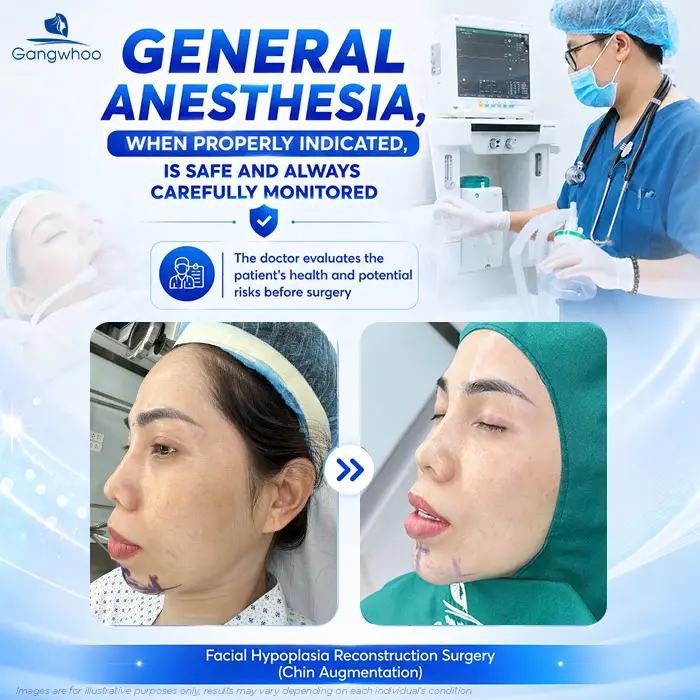
No medical procedure can guarantee zero risk.
Modern general anesthesia is generally considered quite safe when performed under proper indication, since patients are evaluated before surgery and their vital signs are monitored throughout the anesthesia process. However, general anesthesia can still be accompanied by side effects or complications, ranging from common symptoms like nausea, dizziness, and sore throat to more serious but rare complications. The specific risk depends on each individual’s health condition and type of surgery.
Therefore, instead of asking “is general anesthesia dangerous?” in a general way, patients should ask the anesthesiologist:
“Which anesthesia method is suitable for my case?”
“Are there any risk factors I should be aware of?”
“What do I need to prepare before anesthesia?”
“How long will I need to be monitored after surgery?”
These are the questions that actually matter for the safety of a surgical procedure.
Is a Health Check Needed Before Chin Augmentation?
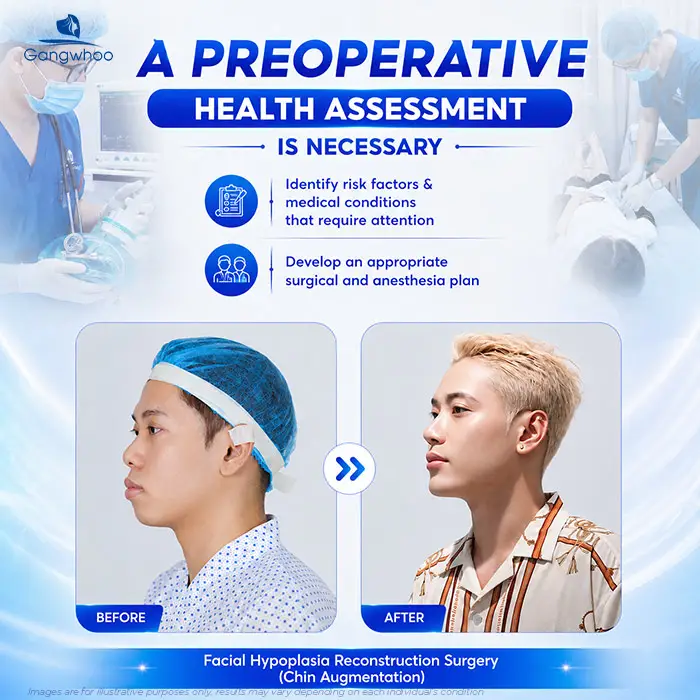
Yes. Before surgery, the doctor needs to assess the patient’s health condition and any factors that could affect the operation as well as the anesthesia method.
Patients need to honestly disclose any existing medical conditions, medications currently being taken, supplements, allergy history, and any issues encountered during previous surgeries or anesthesia. Medical facilities may order additional tests or examinations as needed depending on the case.
This is not just a formality. Pre-operative evaluation helps the team identify risk factors and build an appropriate plan before the procedure.
If you currently have an acute illness, are taking special medications, or have any health issues, please proactively inform your doctor rather than stopping medication on your own or assuming you’re fit for surgery.
What Does the Chin Augmentation Procedure With Local or General Anesthesia Involve?
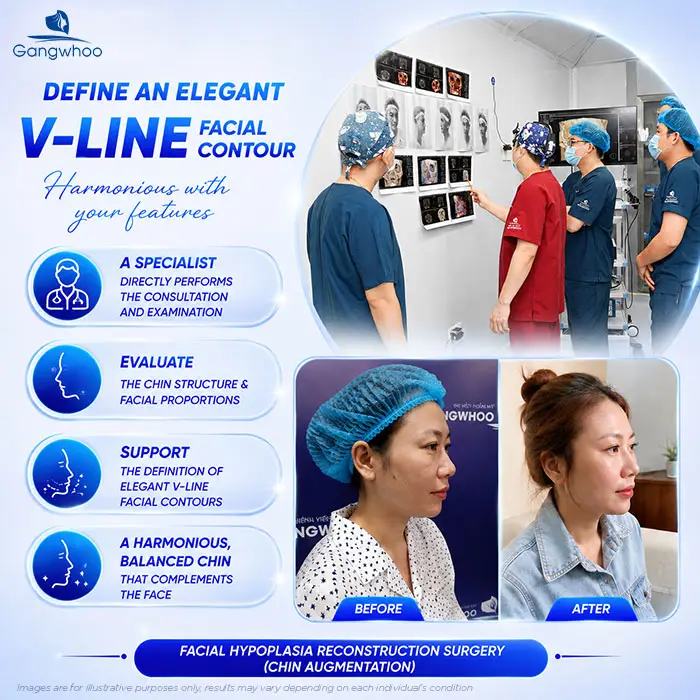
- Step 1: Examination and Assessment of Chin Shape
The doctor evaluates facial structure and the proportion of the chin relative to the lips, nose, and the rest of the face, then determines the chin’s condition and recommends an appropriate method.
The goal of chin augmentation is not simply to lengthen the chin. A beautiful chin shape needs to be harmonious with the overall face.
- Step 2: Consultation on Technique and Implant Material
Depending on the specific condition, the doctor may recommend a suitable material and technique. Current service data from Gangwhoo Cosmetic Hospital shows options such as chin augmentation with Korea Implant, USA Implant, Nano, Surgiform, and screw-fixed chin implants.
However, this list of materials doesn’t mean all of them are suitable for everyone. The choice needs to be based on chin structure, aesthetic goals, and professional assessment.
- Step 3: Pre-Operative Health Assessment
The doctor checks the necessary factors to determine whether the patient is fit for the surgery and the planned anesthesia method.
If general anesthesia is planned, the anesthesiologist will assess the patient’s health and discuss the anesthesia method, its benefits, risks, and any preparation required before surgery.
- Step 4: Administering Local or General Anesthesia as Indicated
After completing the pre-operative assessment, the team proceeds with the chosen anesthesia method.
Patients need to strictly follow the facility’s instructions regarding eating and drinking, current medications, and other preparation requirements if general anesthesia is planned. When general anesthesia is used, following fasting instructions before surgery is especially important.
- Step 5: Performing the Chin Augmentation Surgery
The doctor creates an appropriate incision, forms a pocket, and places the implant material according to the previously agreed plan. After checking the position and symmetry, the material is fixed in place using the appropriate technique.
Importantly, the surgical plan needs to be personalized rather than applying the same chin shape to every client.
- Step 6: Post-Operative Monitoring
After the procedure, the patient is monitored according to the facility’s post-operative protocol. If general anesthesia or sedation was used, the monitoring period and discharge conditions must follow the medical team’s assessment.
You should not drive or perform tasks requiring alertness immediately after anesthesia. The effects of anesthesia/sedation medication may persist for some time after surgery.
Chin Augmentation With General vs. Local Anesthesia: Which Is Better?
It’s not possible to simply say that general anesthesia is better or local anesthesia is better.
| Criteria | Local Anesthesia | General Anesthesia |
|---|---|---|
| Consciousness | Patient usually remains awake | Patient is in a controlled unconscious state |
| Scope of effect | Mainly limited to the numbed area | Affects the entire body |
| Sensation during surgery | Pain is controlled in the treated area | Unaware and does not feel pain while unconscious |
| Recovery | Usually no whole-body effects as with general anesthesia | Requires time to wake up and appropriate monitoring |
| Selection | Depends on technique and patient condition | Depends on technique, health condition, and the anesthesiologist’s assessment |
General anesthesia generally involves more side effects and factors to monitor compared to local anesthesia or light sedation, so it should not be treated as the default choice simply because a patient wants to “be unaware during the surgery.”
Does Chin Augmentation at Gangwhoo Cosmetic Hospital Require General Anesthesia?
At Gangwhoo Cosmetic Hospital, the anesthesia method needs to be determined based on the actual technique used and the assessment of the professional team, rather than applying the same approach to every client.
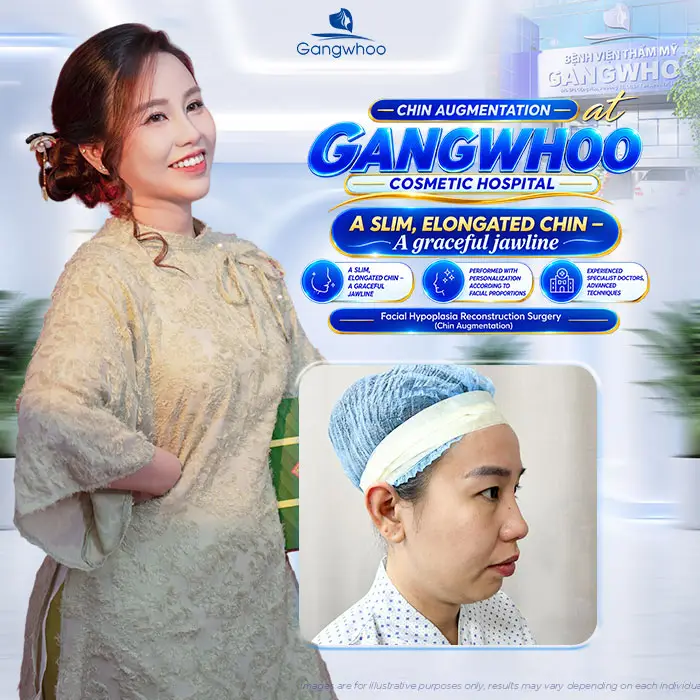
Gangwhoo’s professional data shows that the hospital performs maxillofacial surgeries with a team of specialized doctors, including Dr. Nguyen Minh Hien and Dr. Phung Manh Cuong. The hospital is also described as applying AI-computed X-ray systems in analyzing jawbone structure and facial proportions, along with 4K endoscopy and Aesculap equipment in maxillofacial surgeries.
For maxillofacial surgeries involving a greater degree of intervention, such as V-line jaw contouring, Gangwhoo’s data describes a process that includes pre-operative assessment, evaluation of anesthesia eligibility, a dedicated anesthesia and resuscitation team, and monitoring of vital signs during surgery.
This needs to be clearly distinguished from chin augmentation surgery. The anesthesia process used for a major maxillofacial surgery should not be used to claim that every chin augmentation case at Gangwhoo requires general anesthesia.
For each specific case, the doctor will assess the chin’s condition, the planned technique, and overall health before proposing an appropriate plan.
Photos of Clients Who Underwent Chin Augmentation at Gangwhoo Cosmetic Hospital
Chin augmentation can be performed under either local or general anesthesia depending on the case; not every chin augmentation procedure requires general anesthesia.
What matters is not choosing the “stronger” method, but determining the anesthesia method suited to the surgical technique and the patient’s health condition.
If you’re considering chin augmentation, I recommend not deciding on local or general anesthesia by yourself before your examination. Let the doctor assess your facial structure, the planned surgical method, and your overall health, then have them clearly explain the treatment plan.
At Gangwhoo Cosmetic Hospital, clients can receive direct examination and consultation to determine their chin condition, choose an appropriate technique, and build a personalized surgical plan. The hospital’s professional data currently lists Dr. Nguyen Minh Hien among the specialized team for maxillofacial surgery.