
Whether chin augmentation is painful is one of the questions I most often hear from people considering surgery to improve the shape of their chin. Many people want a slimmer, more balanced chin but worry about pain during the procedure and in the first days afterward.
In reality, the level of discomfort after chin augmentation varies from person to person. It depends on the anesthesia method, surgical technique, extent of tissue intervention, implant material, individual physiology, and especially post-operative care.
So rather than simply answering “yes, it hurts” or “no, it doesn’t,” it’s important to understand when pain occurs, how severe it is, how long it lasts, and which signs should be checked by a doctor.
Professional note: The information below is for general reference only. Actual pain levels and recovery time should be assessed by a doctor based on each individual’s anatomy and specific surgical method.
Does chin augmentation hurt?
1. Does it hurt during the surgery itself?
No, it doesn’t.
During chin augmentation surgery, patients do not feel pain because they are given local anesthesia or general anesthesia, depending on the method. The anesthetic completely numbs the treated area, allowing the surgeon to operate safely while the patient remains comfortable throughout the procedure.
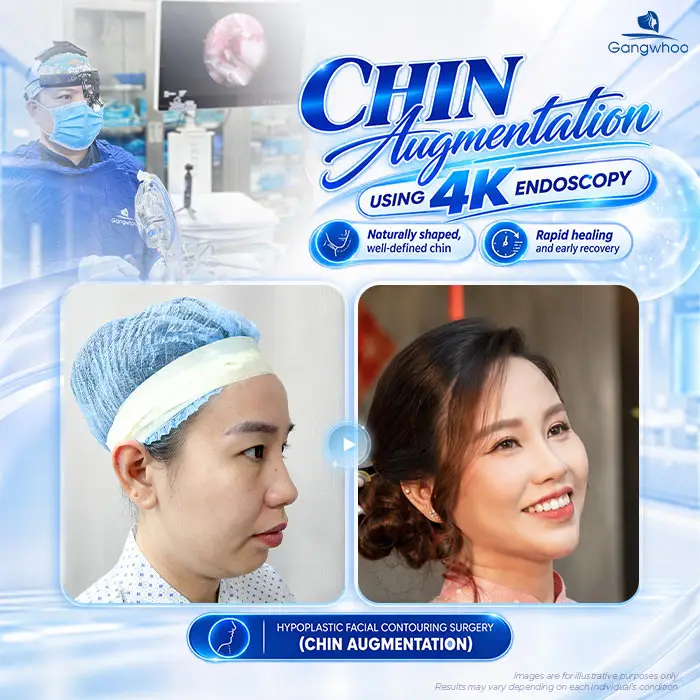
2. Does it hurt after the surgery?
Yes, but at a mild to moderate level, and only for a short period.
Once the anesthesia wears off, patients may begin to feel soreness, tightness, or mild pain in the chin area. This is a normal reaction as the soft tissue has been affected and is beginning to heal.
Typically, the most noticeable pain occurs within the first 24–72 hours, then gradually subsides. In most cases:
- Pain clearly decreases after 3–5 days
- Significant pain disappears after about 7–10 days
3. Why doesn’t the pain last long?
Pain after chin augmentation doesn’t last long because:
- The chin area involves intervention in a relatively small area of tissue
- It doesn’t directly affect chewing function the way major jaw surgeries do
- Pain medication and post-operative care help control discomfort effectively
- Soft tissue adapts quickly in the early recovery stage
This level of pain is considered manageable and short-term, and won’t be prolonged if the surgery is performed with proper technique and care instructions are followed correctly.
How long does chin augmentation pain last? Sensation timeline after surgery
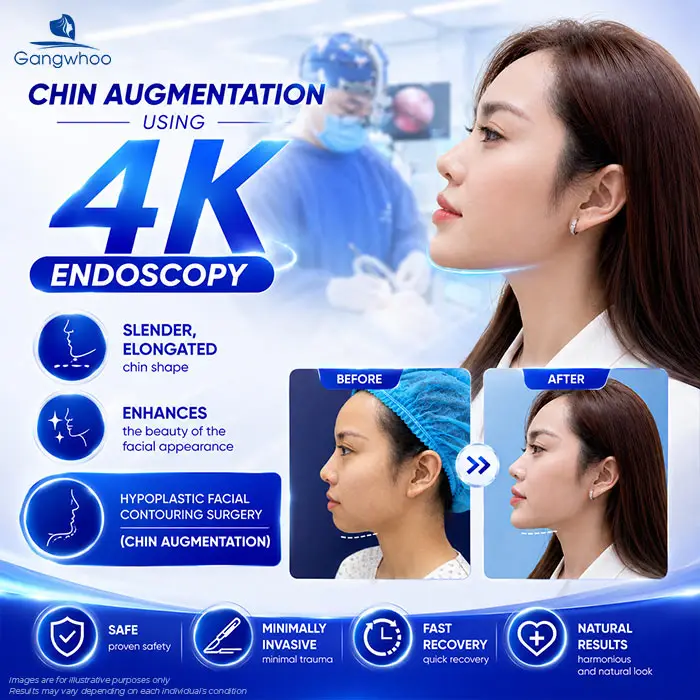
1. The first hours after surgery
In the first hours, patients may still feel the effects of the anesthesia. As this wears off, sensation in the chin area becomes more noticeable.
Some people may feel mild to moderate tightness or soreness, while others experience more noticeable discomfort. This is why doctors typically provide medication and care instructions right at the end of the surgery.
During this period, patients should not take additional pain medication or other drugs without a doctor’s guidance.
2. The following days
In the first few days, the chin area may continue to swell, causing a feeling of tightness. Pain should generally be assessed alongside swelling, bruising, and the patient’s ability to go about daily activities.
Talking too much, opening the mouth too wide, or directly touching the chin area can increase discomfort.
Therefore, after chin augmentation, following post-operative care instructions is important not only for comfort but also for the recovery of the surgical area.
3. When does the pain noticeably decrease?
Generally, discomfort changes along with the recovery process. However, no single absolute timeline applies to every case.
One person may recover from pain quickly, while another may need more time for swelling and tightness to subside. Surgical technique, extent of intervention, and individual physiology can all affect this process.
The important thing is the trend of the symptoms. If discomfort gradually decreases over time, that is generally different from pain that keeps increasing or is accompanied by other unusual signs.
Factors affecting pain level after chin augmentation
1. Technique and extent of intervention
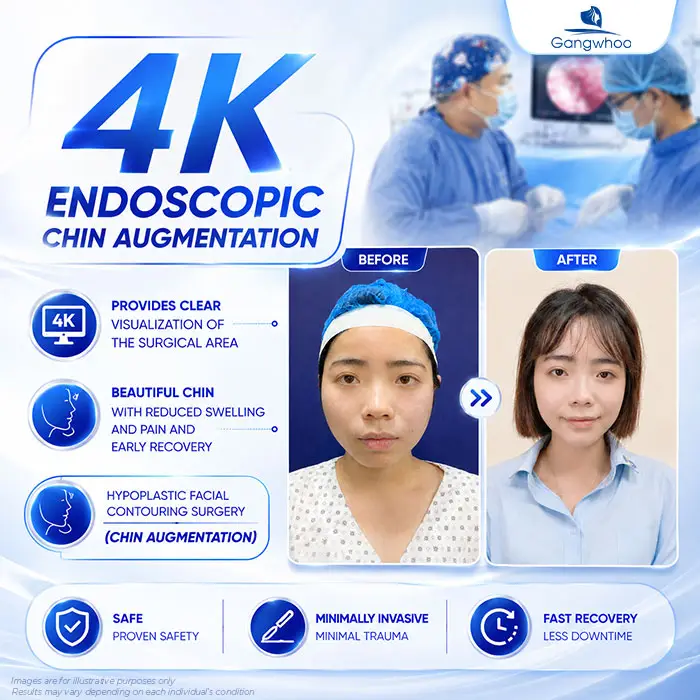
The degree of tissue impact during surgery is one of the factors that should be considered when assessing post-operative sensation.
The incision, how the implant pocket is created, the extent of dissection, and the fixation method all need to be carefully considered by the doctor based on each patient’s anatomy.
One shouldn’t simply look at the name of a technique and conclude that it is definitely less painful for every patient.
2. The surgeon’s experience
Chin surgery takes place in the complex anatomical region of the jaw and face. Examination, assessment of facial structure, method selection, and correct technique execution all play an important role.
A doctor with appropriate expertise will be able to assess the chin’s condition, the degree of tissue deficiency or structure that needs correction, and propose a suitable plan instead of applying the same method to everyone.
3. Implant material and size
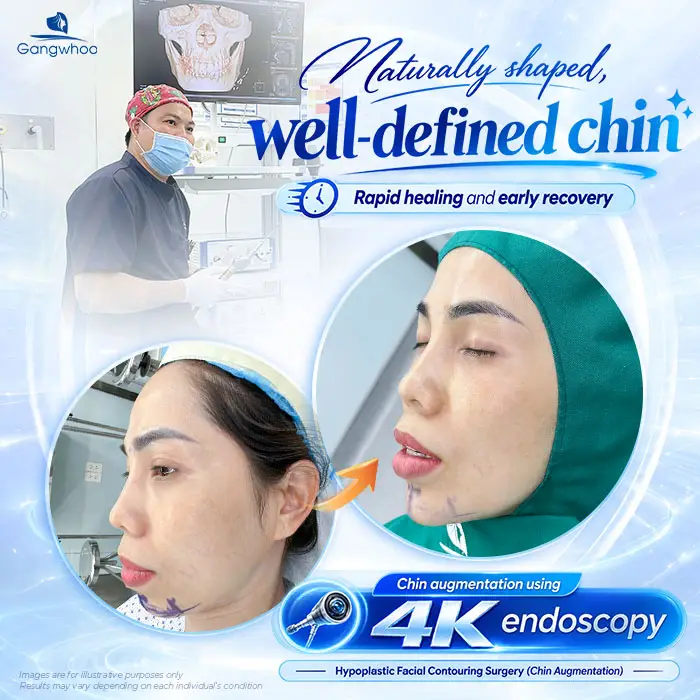
The material, size, and shape of the implant should be chosen based on the patient’s facial structure.
An unsuitable implant can result in an unnatural chin shape or cause tightness and discomfort. Therefore, the goal of the surgery is not simply to lengthen the chin but to create harmony with the overall face.
4. Individual physiology and recovery ability
Each person reacts differently after surgery. Pain tolerance, soft tissue condition, degree of swelling, and healing speed can all affect the post-operative experience.
Therefore, one should not use another person’s experience as an absolute standard for predicting how long their own pain will last.
5. Post-operative care
Proper post-operative care, following instructions, is also very important. Touching, pressing, or applying pressure to the chin area on one’s own, or ignoring the doctor’s instructions, can affect the recovery process.
Patients should take medication as prescribed, attend follow-up appointments as scheduled, and inform the doctor if any unusual symptoms appear.
What can be done to reduce pain and discomfort after chin augmentation?
1. Take medication as prescribed
After chin augmentation surgery, doctors typically prescribe certain medications to control pain, reduce swelling, and prevent infection. Patients need to take the correct dosage at the correct times as instructed, and should never change this on their own.
A typical pain-management regimen may include:

- Paracetamol (Acetaminophen): a mild to moderate pain reliever, commonly used after cosmetic surgery.
- Efferalgan / Panadol (containing Paracetamol): branded forms of paracetamol that reduce pain and fever.
- Ibuprofen or other non-steroidal anti-inflammatory drugs (NSAIDs): reduce both pain and inflammation, prescribed in certain suitable cases.
- Antibiotics (e.g., Amoxicillin, Cephalexin… depending on the doctor’s regimen): help prevent post-surgical infection.
- Anti-edema medication (such as Alpha chymotrypsin): helps reduce soft-tissue swelling in the chin area.
Patients should not purchase additional strong painkillers or combine multiple medications on their own without a prescription, as this can cause side effects on the liver or stomach, or mask abnormal signs after surgery.
If pain does not decrease despite taking medication, or if symptoms such as nausea, allergic reaction, or increasing pain appear, contact a doctor immediately for examination.
2. Care for the chin area as instructed
After surgery, the chin area is in the process of tissue stabilization and the implant is settling into position, so it needs to be protected carefully.
Patients should keep in mind:
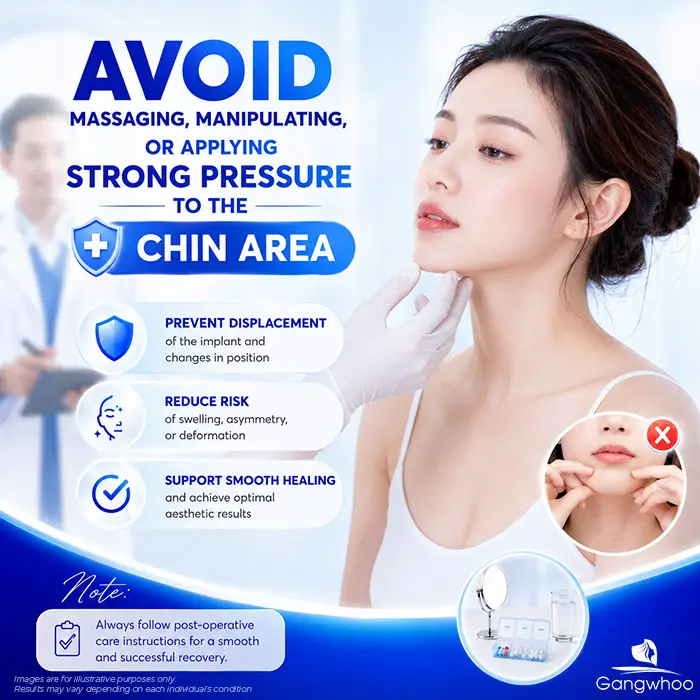
- Do not massage, adjust, or press firmly on the chin on your own
- Do not check the implant’s position by hand
- Avoid applying force to the surgical area in the first few days
- Cold or warm compresses (if used) should only be applied at the right time and in the right way, as instructed by the doctor
Proper care helps reduce swelling and pain, and lowers the risk of the chin shifting or becoming deformed during the early recovery period.
3. Eat appropriately in the early period
In the first days after chin augmentation, diet should be adjusted to reduce pressure on the jaw and minimize pain while chewing.
Patients should prioritize soft foods that are easy to swallow and require little chewing, such as:
- Thin rice porridge, minced-meat porridge, fish porridge
- Vegetable soup, chicken soup, pumpkin soup
- Soft or well-cooked rice
- Mashed potatoes, mashed sweet potatoes
- Steamed eggs
- Milk, yogurt, smoothies (avoid using a straw in the early period unless the doctor allows it)
- Soft fruits such as banana, avocado, ripe papaya
During this period, avoid:
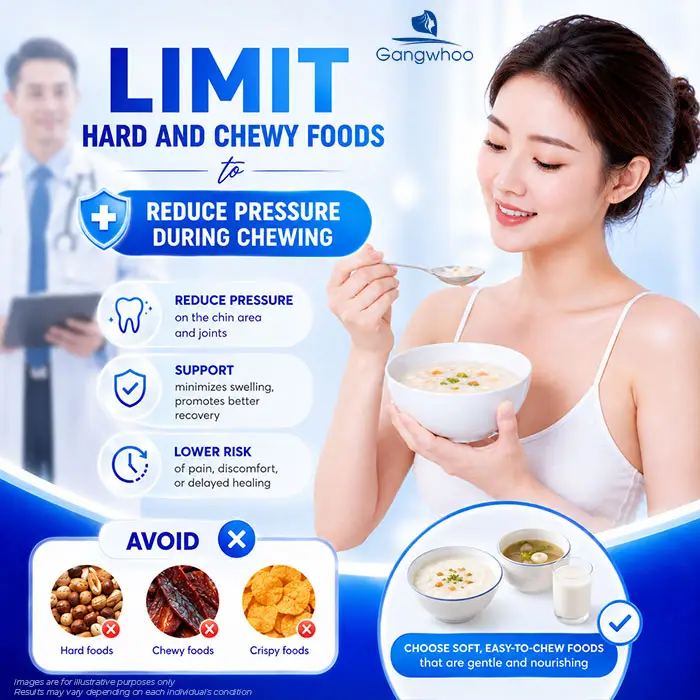
- Hard or chewy foods (grilled meat, dried meat, cartilage, etc.)
- Foods that require a lot of chewing or opening the mouth wide
- Foods that are too hot or too spicy
- Alcohol and stimulants
Eating properly not only helps reduce pain from jaw movement but also supports a smoother healing process.
4. Limit contact with the chin area
During the recovery period after surgery, patients should minimize any mechanical impact on the chin area as much as possible.
Specifically:
- Do not touch, press, or lean on the chin
- Avoid sleeping on your side in a way that presses directly on the surgical area
- Avoid vigorous sports or facial impact
- Keep the head in a stable position while sleeping, avoiding strong turning movements
Following these principles reduces the risk of prolonged pain and chin misalignment, and supports a more stable recovery process.
Chin Augmentation at Gangwhoo Cosmetic Hospital: A Trusted Choice for Many Customers
One of the factors customers pay attention to when researching whether chin augmentation is painful is the surgical method and technology used during the procedure. At Gangwhoo Cosmetic Hospital, the medical team regularly takes part in conferences and professional development programs both domestically and internationally to stay current with new knowledge and trends in cosmetic surgery. Images and materials provided also show Dr. Gangwhoo’s doctors participating in professional conferences on surgical technology and techniques.
Beyond the human factor, Gangwhoo highlights the use of a 4K endoscopic system in surgery. This technology allows doctors to observe the surgical area in high-resolution images, helping them identify structures and perform dissection more precisely. Combined with microsurgical technique and the Harmonic scalpel, the goal is to minimize unnecessary tissue damage, thereby helping reduce swelling and pain and creating favorable conditions for recovery. Gangwhoo’s materials also describe the combination of 4K endoscopy, microsurgery, and the Harmonic scalpel as being guided by the principle of precision – safety – minimal invasiveness.
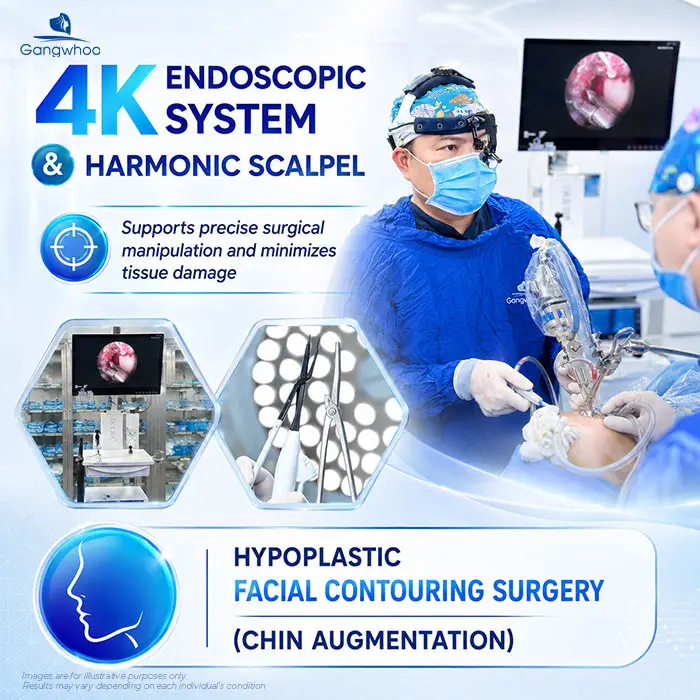
For customers choosing chin augmentation, the use of supporting technology does not mean a guarantee of “no pain.” Pain levels after surgery still depend on many factors such as technique, extent of intervention, individual physiology, and post-operative care. However, good control of surgical technique and minimizing unnecessary tissue damage are factors that can help make the post-operative process more comfortable.
Another point customers care about is the chin implant material. Depending on facial features, chin structure, and aesthetic goals, the doctor may advise on a suitable material and shape for the implant. Gangwhoo offers a range of cartilage/implant options, giving doctors a basis to consider each individual case rather than using a single material for every customer.
Most importantly, the choice of material should not be based solely on brand names or advertising. The doctor needs to directly assess facial proportions, chin length, jawline, soft tissue, and the customer’s wishes before proposing a plan. This approach also helps balance a harmonious chin shape, the extent of intervention, and the recovery process.
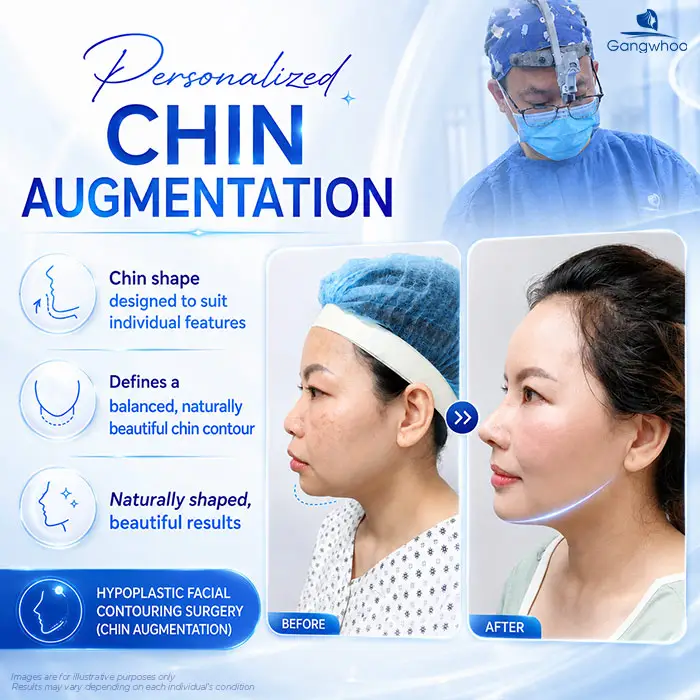
If you’re concerned about whether chin augmentation is painful, you can visit Gangwhoo Cosmetic Hospital for a direct examination and consultation with a doctor. Rather than focusing only on “does it hurt or not,” you should ask clearly about the technique used, the anesthesia method, the technology involved, the appropriate implant material, and the post-operative care plan to get a full picture before making a decision.
Photos of Customers Who Had Chin Augmentation at Gangwhoo
So, does chin augmentation hurt?
The answer is that there may be some pain, soreness, or tightness after surgery, but the level and duration are not the same for everyone. During the procedure, anesthesia is used to control sensation; after surgery, patients may experience discomfort as the anesthesia wears off and during the first days of recovery.
What matters is not finding a guarantee that “chin augmentation doesn’t hurt,” but choosing an appropriate method, having it directly assessed by a doctor, having it performed at a facility that meets the necessary requirements, and properly following post-operative care instructions.
If you’re considering chin augmentation at Gangwhoo Cosmetic Hospital but are still concerned about pain, speak directly with a doctor to have your chin structure assessed and get a detailed explanation of the method, extent of intervention, and recovery process suited to your specific case.