
Chin augmentation for a receding chin is one of the cosmetic solutions many people consider when the chin lacks sufficient projection, making the facial profile look unbalanced or the jawline appear undefined. However, from a Dentomaxillofacial specialist’s perspective, a receding chin is not simply a matter of external shape. In some cases, it may be related to the structure of the lower jawbone or the bite relationship, so correctly identifying the cause before choosing an intervention method is very important.
In this article, we will explore what a receding chin is, its causes, methods of improvement, when chin augmentation may be considered, and the issues to keep in mind so that the cosmetic procedure is carried out safely and appropriately for each individual case.
What Is a Receding Chin?
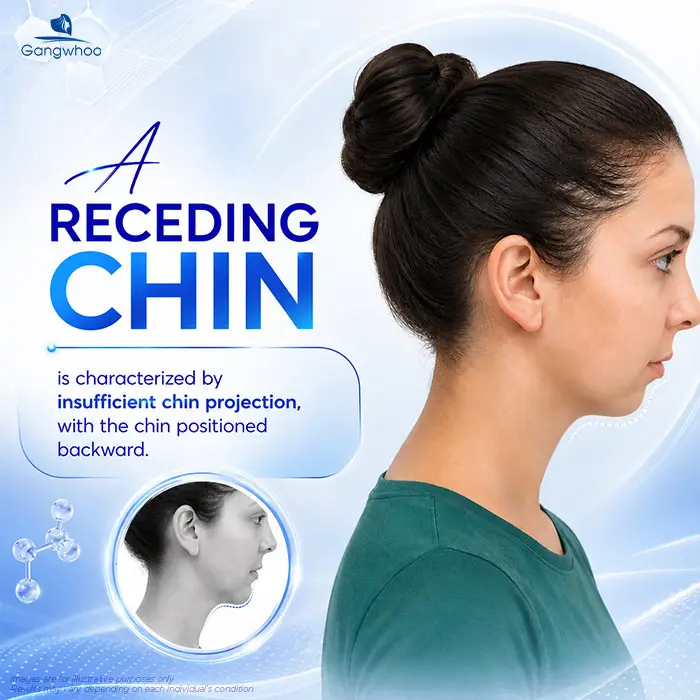
A receding chin, or retruded chin, is a condition in which the chin projects forward less than the facial proportions call for. Viewed in profile, the chin may sit further back relative to the lips and other aesthetic landmarks on the face, creating the impression of a short chin or one lacking fullness.
The degree of chin recession varies from person to person. Some people are missing only a small amount of chin projection, while in other cases there is a clear deficiency in the structure of the lower jawbone.
This is worth noting, because a chin that appears “recessed” does not necessarily always have the same cause. In a professional evaluation, the doctor needs to consider the face as a whole, the chin area, the lower jaw, and, when necessary, may further assess the relationship between the teeth, jaw, and bite.
How Does a Receding Chin Affect the Face?
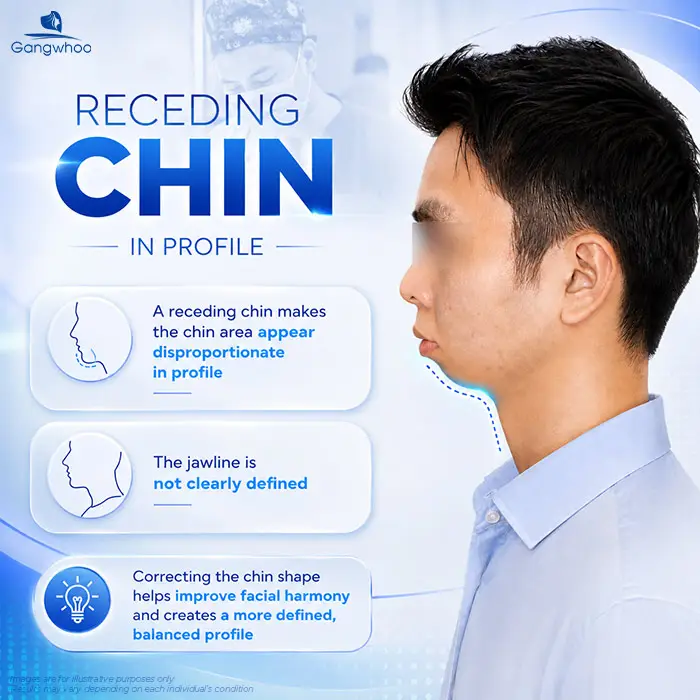
Aesthetically, the chin is one of the important components that shape the contours of the lower face. When the chin lacks projection, the jawline can look less defined and the facial profile may seem unbalanced.
However, a receding chin should not be equated with a medical condition. If a person’s chin is only slightly set back but there are no dentomaxillofacial functional issues, this may mainly be a cosmetic concern.
Conversely, if the receding chin is accompanied by a retruded lower jaw, a bite misalignment, or other abnormal signs, the issue should be evaluated from a Dentomaxillofacial standpoint rather than simply seeking a solution to fill in or increase the chin’s projection.
This is also why I always recommend that anyone with a receding chin undergo an examination before deciding on a treatment method.
Why Does the Chin Recede?

A receding chin can stem from characteristics of the facial bone structure. Some people have a smaller chin or a lower jaw that sits further back than the typical relationship calls for, causing the chin area, when viewed in profile, to lack the desired projection.
In addition, congenital factors and facial development characteristics can also affect chin shape. During assessment, the doctor must look not only at the chin but also consider the relationship between the chin, lips, nose, lower jaw, and the entire face.
In particular, for cases of pronounced chin recession, a Dentomaxillofacial doctor may need to assess the bite and bone structure. In some cases, specialized X-rays may be ordered to evaluate bone structure and jaw relationships.
Therefore, the question “what should be done for a receding chin?” cannot be answered the same way for everyone.
Should a Receding Chin Be Augmented?

Chin augmentation may be an option for some cases of receding chin that are primarily related to a desire to improve shape and that do not involve other jaw structural issues requiring treatment.
Chin augmentation surgery uses implant material to increase the projection of the chin area. According to the American Society of Plastic Surgeons (ASPS), chin reshaping surgery can be performed using implants or bone-related techniques, depending on the individual’s condition.
However, it should not be assumed that any receding chin can simply be given a larger implant to “push the chin forward.” Chin shape needs to be designed based on each individual’s facial proportions and anatomical structure.
In particular, if the receding chin is related to a retruded lower jaw or bite abnormalities, performing chin augmentation alone may not address the underlying structural cause. In such cases, the doctor needs to conduct a more comprehensive assessment to choose the appropriate method.
Current Methods for Correcting a Receding Chin
1. Chin Augmentation with Implant Material
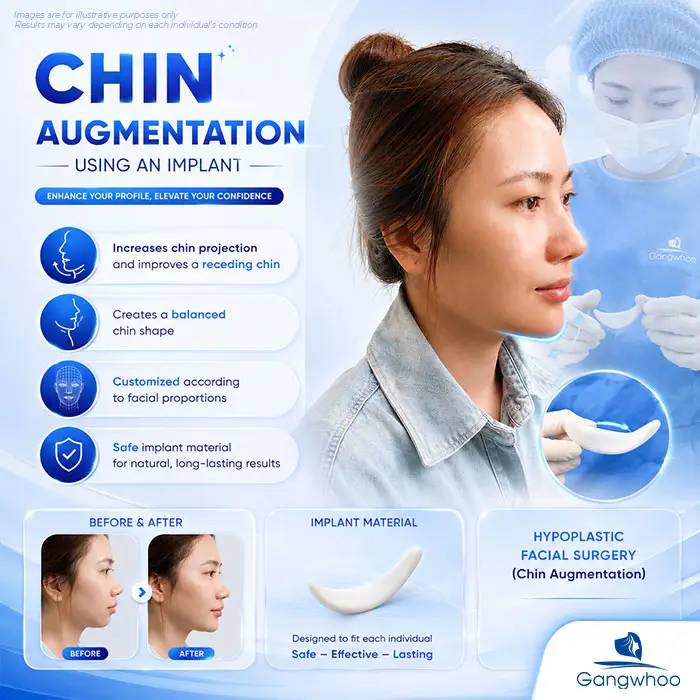
Chin augmentation is a surgical method that uses suitable implant material to increase projection and shape the chin area. This option is considered for people who want to improve chin shape without necessarily changing the entire jawbone structure.
The most important point is not that a larger implant automatically makes for a more attractive chin. The size, shape, and position of the implant must be considered based on anatomy and aesthetic goals.
An attractive chin shape should be in harmony with the face, rather than creating a chin that projects excessively relative to the lips, nose, and jawline.
2. Injecting Dermal Fillers into the Chin Area
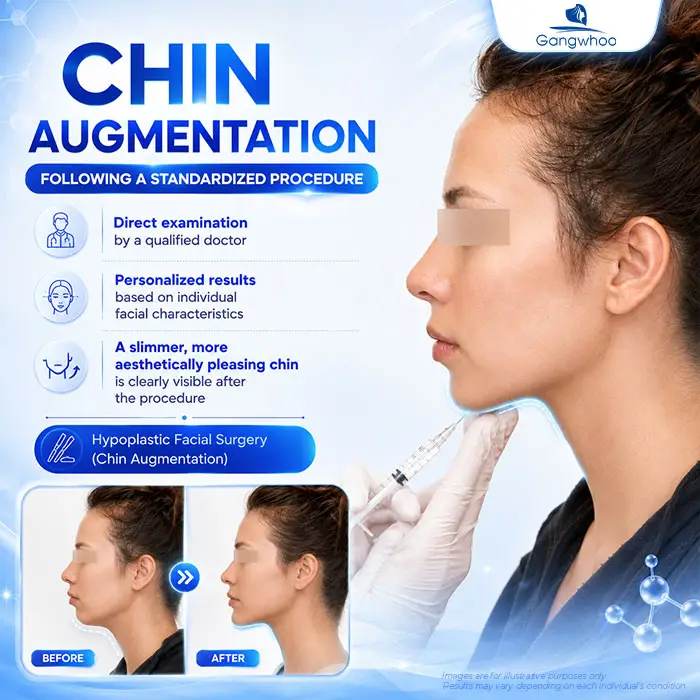
Certain fillers can be used to add volume to the chin area. The FDA has approved some dermal fillers for chin augmentation in adults, depending on the specific product and indication.
The advantage of this method is that it does not require implant surgery. However, the effectiveness of fillers depends on the type of material, the volume used, and each person’s tissue structure; for absorbable fillers, the results are also not permanent.
It is important that fillers be administered by a qualified professional using products of clear origin and for the correct indication. Improperly performed filler injections can lead to complications such as swelling, bruising, infection, nodule formation, or, more seriously, injury from injection into a blood vessel.
3. Intervention on the Bone Structure of the Chin or Jaw
For some cases of receding chin related to bone structure, the doctor may consider chin bone reshaping techniques or appropriate jaw treatment.
This group of methods involves a different level of intervention than standard chin augmentation. Therefore, people with a pronounced receding chin or signs related to bite misalignment should not choose a method on their own based solely on before-and-after photos found online.
Comparison of Methods for Improving a Receding Chin
| Method | Characteristics | Main Goal | Notes |
|---|---|---|---|
| Chin implant | Surgical placement of implant material | Increase projection and shape the chin | Requires assessment of structure and indication |
| Chin filler | Filler injection | Add volume, adjust shape | Effectiveness depends on the product and is usually not permanent |
| Bone reshaping | Intervention on bone structure | Adjust the shape of the chin/jaw bone | Requires in-depth assessment |
No single method is considered best for every case. The appropriate option must be determined after the doctor evaluates the cause and treatment goals.
How Is Chin Augmentation for a Receding Chin Performed?
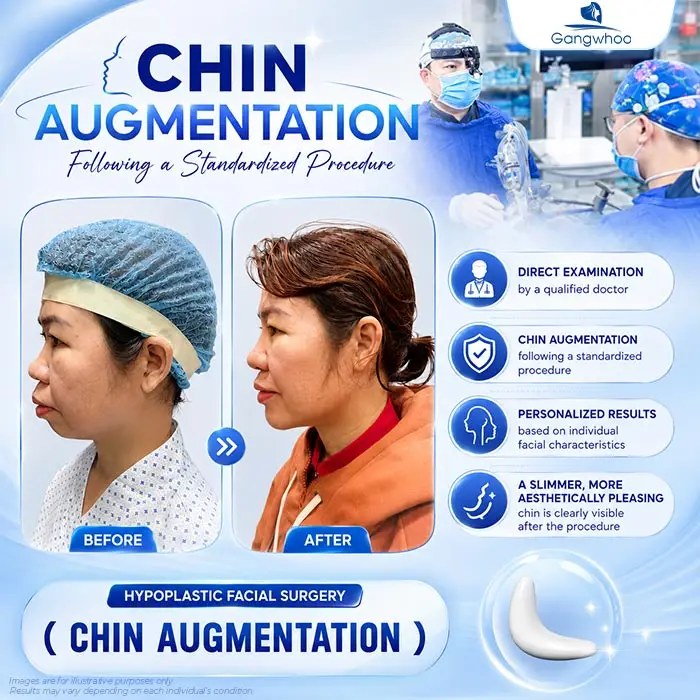
The process should begin with an in-person examination. The doctor will assess chin shape, facial proportions, and factors related to the lower jaw area.
If necessary, the Dentomaxillofacial doctor may further check the bite or order diagnostic imaging to get a clearer view of the bone structure.
Only after this assessment will the doctor advise on the appropriate method and determine the extent of correction needed. This is a particularly important step, because the goal of chin augmentation is not simply to push the chin forward but to create balance with the entire face.
Once a plan is agreed upon, the patient needs a health check and assessment of factors that could affect the surgery. After the procedure, patients need to follow care instructions, take medication as prescribed, and return for follow-up visits as scheduled.
Is Chin Augmentation for a Receding Chin Safe?
No surgery can be considered completely without risk.
According to ASPS, the risks of chin reshaping surgery may include bleeding, infection, fluid or blood accumulation, changes in sensation, prolonged swelling, asymmetry, implant displacement, unfavorable scarring, persistent pain, and, in some cases, the possibility of revision surgery.
The level of safety depends on many factors: whether the indication is appropriate, the performing doctor, the surgical facility, the materials used, sterile procedures, pre-surgical health assessment, and the subsequent care process.
Therefore, instead of simply asking “is chin augmentation safe?”, patients should ask more specific questions: Am I a suitable candidate for this method? Who will perform the procedure directly? What material will be used? What are the surgical procedure and post-surgical follow-up like?
How Much Does Chin Augmentation for a Receding Chin Cost?
The cost of chin augmentation for a receding chin is not fixed for every case.
| SERVICE NAME (VND) | SERVICE PRICE |
| Chin augmentation surgery (Block White USA) | 1,200 |
| Chin augmentation surgery (Surgiform) | 2,420 |
| Chin augmentation surgery with fixation plate and screws | 2,200 |
What’s Notable About Chin Augmentation for a Receding Chin at Gangwhoo Cosmetic Hospital?
When choosing where to have chin augmentation for a receding chin, besides the doctor’s expertise, patients should also pay attention to the operating room conditions, supporting equipment systems, and safety control procedures. These are factors that can help support the doctor in observing, operating, and controlling the surgical process better.
At Gangwhoo Cosmetic Hospital, the facility system is equipped with a range of surgical support equipment, including 4K endoscopic technology and the Harmonic surgical scalpel. According to professional information provided by the hospital, 4K endoscopic technology is used to support observation during surgery, helping the doctor operate more precisely and limit unnecessary damage to surrounding tissue.
1. 4K Endoscopic Technology Helps Doctors Observe More Clearly
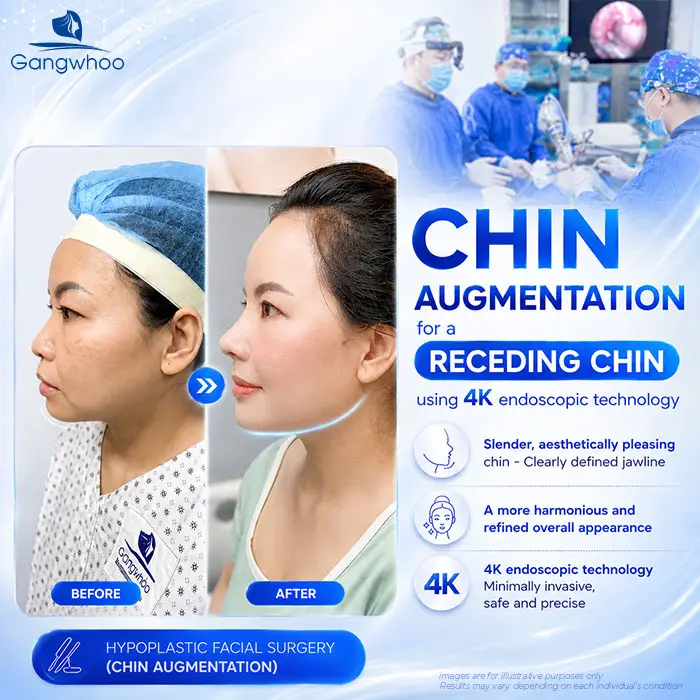
In surgeries that require precise observation and manipulation, high-quality endoscopic imaging can help the doctor identify the surgical area more clearly.
Gangwhoo Cosmetic Hospital introduces a 4K endoscopic system aimed at supporting surgical precision and limiting impact on surrounding tissue. This is one of the technologies the hospital applies within its cosmetic surgery system.
However, it should be correctly understood that 4K endoscopy is a supporting device, not a factor that automatically determines the surgical outcome. Actual effectiveness still depends on the indication, technique, the doctor’s skill level, each person’s anatomical condition, and the post-surgical care process.
2. Harmonic Surgical Scalpel Supports Tissue Manipulation
Alongside the endoscopic system, Gangwhoo also introduces the Harmonic surgical scalpel — a device that uses ultrasonic energy during surgery.
According to information from the hospital, the Harmonic scalpel is used with the aim of supporting high-precision manipulation and reducing tissue trauma during surgery.
The use of this device should be understood within the overall surgical process. The use of the Harmonic scalpel should not be equated with a guarantee of “no bleeding,” “no swelling,” or “immediate recovery,” since the degree of pain, swelling, bruising, and recovery time still depend on the technique used, individual physiology, and the specific type of surgery.
3. Operating Room and Sterile Conditions
For a chin augmentation for a receding chin procedure, safety is determined not only by equipment but also by operating room conditions and infection control.
According to information published by Gangwhoo Cosmetic Hospital, the operating rooms are fully equipped with medical devices and instruments and are described as meeting safety and sterility standards set by the Ministry of Health. The hospital also introduces a disinfection robot system that helps sterilize the operating room environment.
These are factors that anyone considering chin augmentation should pay attention to when evaluating a surgical facility, in addition to the doctor’s expertise and the post-procedure follow-up process.
4. Why Must Technology Go Hand in Hand with a Skilled Doctor?
A modern equipment system cannot replace the role of the doctor.
For someone with a receding chin, the first and most important step remains identifying the cause and degree of deficiency in the chin area. The doctor needs to assess the face as a whole, the chin structure, the lower jaw, and related factors to determine whether chin augmentation is the appropriate choice.
At Gangwhoo, technology systems such as 4K endoscopy, the Harmonic scalpel, and other supporting equipment are intended to support the surgical process. The hospital also introduces its team of doctors and facility system serving examination, surgery, and post-operative care activities.
Therefore, if you are researching where to get chin augmentation for a receding chin, patients should not look at a single piece of equipment in isolation. Evaluate the doctor – indication – technique – operating room – supporting equipment – post-operative care together before making a decision.
5. Schedule a Consultation to Have Your Chin Condition Assessed
Every face has a different structure and proportions. Therefore, instead of choosing a chin shape based on sample photos, anyone interested should have an in-person examination by a doctor to assess the degree of chin recession and discuss the appropriate treatment plan.
If you are considering chin augmentation for a receding chin at Gangwhoo Cosmetic Hospital, you can register for a consultation to be directly assessed by a doctor before deciding on a treatment method.
Note: The information about equipment and facilities in this section is compiled from information provided by Gangwhoo Cosmetic Hospital. The fact that a piece of equipment is available at the facility does not mean it is used in every surgical case or that it guarantees a specific outcome for every patient.
6. Photos of Clients Who Have Had Chin Augmentation for a Receding Chin at Gangwhoo Cosmetic Hospital
Chin augmentation for a receding chin can help improve the projection and shape of the chin area in suitable cases. However, this is not a solution that applies the same way to everyone.
Before deciding, anyone with a receding chin should clearly identify the cause, assess their facial and jaw structure, and discuss directly with a doctor. If the condition is related to the jawbone or the bite, focusing only on the chin’s shape may not properly address the underlying issue.
At Gangwhoo Cosmetic Hospital, anyone interested can register for an examination to have their chin condition assessed and discuss suitable options. The final decision should be made after the doctor clearly explains the benefits, limitations, risks, and realistic expectations of each method.