
The question “Can you eat snails after rhinoplasty?” may seem simple, but it is actually a very common concern among patients after nasal surgery. In fact, diet plays a crucial role in reducing inflammation, preventing scarring, and shortening recovery time. Seafood, especially snails, is always a food group that requires careful consideration.
With professional experience in nasal surgery at Gangwhoo Aesthetic Hospital, I – Dr. Tran Kim Thach, Specialist Level I – will provide a detailed explanation based on medical evidence, clinical experience, and standard postoperative guidelines.
Can You Eat Snails After Rhinoplasty? Why It’s a Concern
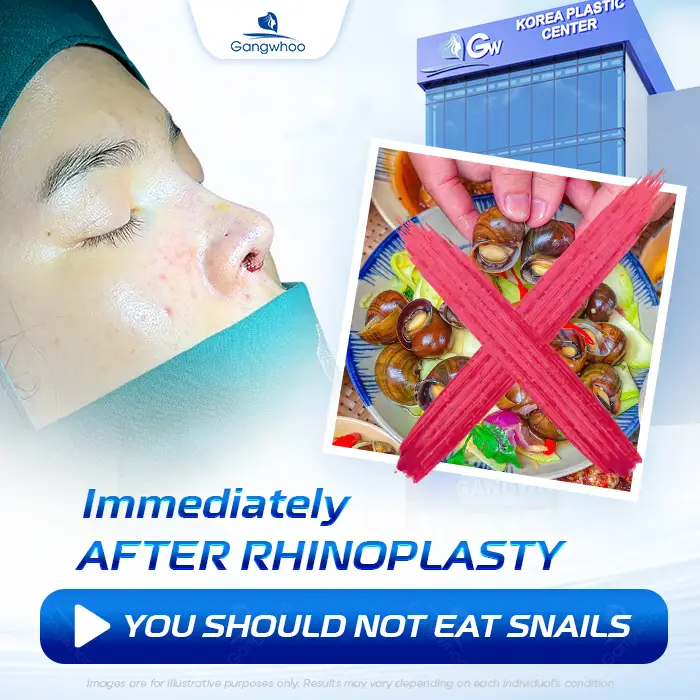
Many patients after rhinoplasty ask: “Can you eat snails after rhinoplasty?” and want a clear, accurate answer from a doctor. Based on clinical experience at Gangwhoo Aesthetic Hospital and reputable postoperative guidelines, the answer is NO – snails should not be consumed during the early recovery phase after rhinoplasty. Snails and certain other seafood can slow wound healing, increase the risk of swelling, infection, and abnormal scarring, directly affecting the aesthetic outcome of the nose.
Risks of Eating Snails Too Soon After Rhinoplasty
After rhinoplasty, the nose and surrounding tissues are in the phase of regeneration and healing. Consuming snails or other seafood during this period may lead to serious risks for recovery and aesthetic results.
1. Allergic Reactions and Body Response to Seafood
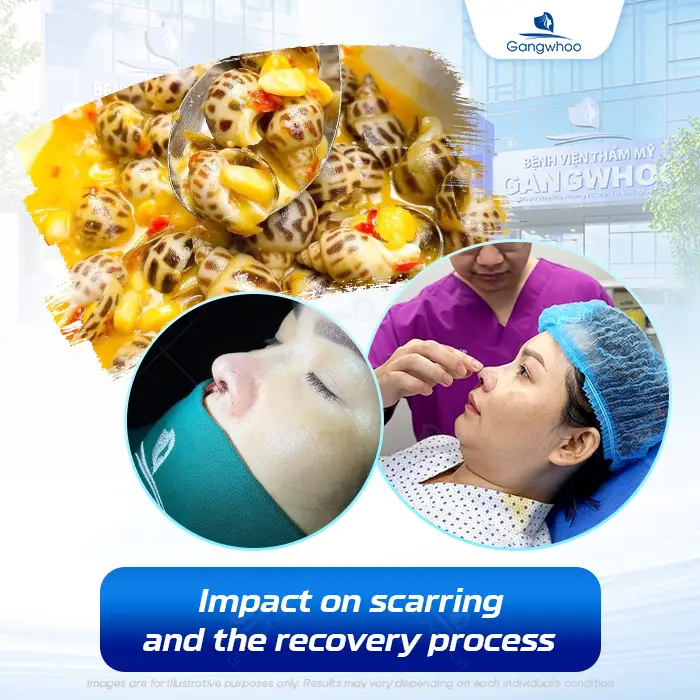
Proteins in snails can trigger an overactive immune response, leading to swelling, itching, redness, or edema around the nose. When nasal tissues are not yet stabilized, these reactions not only slow down healing but also increase the risk of abnormal scarring or nasal shape distortion.
Medical mechanism:
- Histamines and cytokines in allergic reactions cause vasodilation and increased capillary permeability → tissue edema
- Edematous tissue compresses the cartilage structure → affecting cartilage fixation
- Prolonged inflammation → uncontrolled collagen proliferation → risk of hypertrophic or thick scars
2. Risk of Wound Infection
Snails live in muddy or pond water that contains many bacteria, including Vibrio spp., E.coli, Pseudomonas. Eating them before the wound has healed may lead to:
- Cellulitis
- Pus formation at the surgical site
- Prolonged swelling and pain
- Potential deformation of nasal shape
3. Impact on Scarring and Recovery
Certain foods, especially seafood, can stimulate scar tissue overgrowth, leading to:
- Thick or hard scars at the rhinoplasty site.
- Nasal asymmetry, directly affecting aesthetic results.
Cause: Proteins and compounds in seafood can promote inflammation in healing tissue, stimulating excessive collagen production, which causes thick scars.
In summary: Eating snails after rhinoplasty may cause allergic reactions, infections, and abnormal scarring, directly impacting recovery and aesthetic outcomes. Therefore, patients should strictly avoid seafood, especially snails, for at least 2–4 weeks post-surgery, or until the wound is completely stable and deemed safe by a doctor.
How Long After Rhinoplasty Can You Eat Snails?
The timing for reintroducing snails depends on surgical technique, healing speed, and individual physiology:

- 0–7 days: Absolutely avoid seafood, especially snails. Nasal tissue is very sensitive, and incisions are not fully closed.
- 7–30 days: Soft tissue should be checked; once swelling has reduced and the doctor confirms it is safe, you may gradually reintroduce seafood if your body tolerates it.
- 1–3 months: Depending on individual physiology, cartilage-wrapped or structural rhinoplasty usually requires waiting at least 4–6 weeks before eating snails. For patients prone to allergies, this should be extended to 6–8 weeks.
Foods to Avoid and Foods to Eat During Recovery After Rhinoplasty
After rhinoplasty, your body is in the process of tissue regeneration, blood vessel recovery, and cartilage stabilization, so food choices affect both healing speed and the final nasal shape, as well as swelling, infection, and scarring risk. Here are detailed guidelines based on biological mechanisms and clinical experience at Gangwhoo Aesthetic Hospital.
1. Foods to Avoid
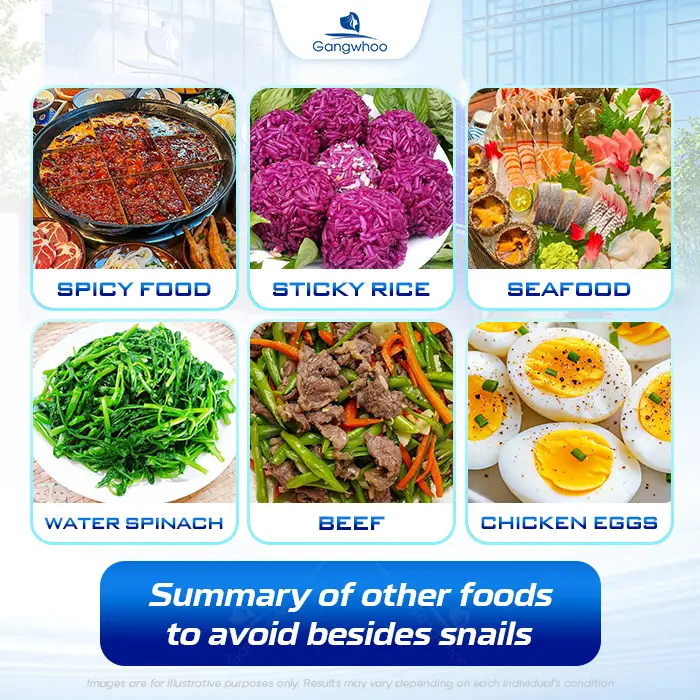
- Shellfish: snails, shrimp, crab, squid, clams, mussels
These contain foreign proteins, histamine, and allergens. Eating them before the wound heals may trigger itching, rashes, redness, causing tissue edema, delayed healing, cartilage displacement, or abnormal scars. Raw or undercooked seafood may carry Vibrio, E.coli, Pseudomonas, increasing the risk of soft tissue infection around the nose.
- Red meat: beef, buffalo
High in hard-to-digest proteins and thermogenic substances, consuming early increases inflammation, prolonging swelling and redness and delaying recovery.
Medical mechanism: Animal proteins stimulate inflammation and uncontrolled collagen growth → risk of thick or hard scars.
- Sticky or spicy foods
Foods like sticky rice, spicy peppers, and garlic may dilate capillaries, increase prolonged edema, and cause nasal tip redness. Spicy foods can also stimulate pain and burning, affecting recovery.
- Alcohol and stimulants
Alcohol dilates blood vessels and suppresses immunity, causing persistent swelling and redness, higher infection risk, and delayed healing. Risks are particularly high for patients prone to hypertrophic scarring or seafood allergies.
2. Foods to Eat

- Vitamin C-rich foods: oranges, kiwi, guava, broccoli
Vitamin C is a powerful antioxidant, boosts immunity, supports controlled collagen synthesis, and accelerates wound healing while reducing swelling. It also helps reduce infection risk during tissue recovery.
- Natural collagen-rich foods: pork leg, bone broth
Collagen helps regenerate tissue, strengthen skin and cartilage, especially important for structural rhinoplasty. It accelerates soft tissue recovery, reduces risk of thick or hypertrophic scarring, and stabilizes nasal shape.
- Green vegetables: centella, broccoli, spinach
Provide fiber, vitamins, and minerals, enhancing immunity, anti-inflammation, and detoxification. They also supply antioxidants, reducing inflammation and edema post-surgery.
- Anti-inflammatory foods: ginger, turmeric, curcumin
Natural anti-inflammatory compounds reduce swelling, pain, and improve blood circulation in nasal tissues. These are particularly useful during the first and second weeks after rhinoplasty when tissues remain sensitive.
- Adequate water intake: 2–2.5 liters/day

Water helps detoxify, reduce edema, deliver nutrients to nasal tissue, and supports faster recovery. It also maintains healthy skin, prevents dryness, and reduces inflammation risk.
Through analysis of medical mechanisms, clinical experience, and postoperative care guidelines, it can be confirmed that can you eat snails after rhinoplasty? – The answer is NO for at least the first 3–4 weeks after surgery. Strict adherence to a seafood-free diet, especially avoiding snails, helps reduce the risk of allergies, swelling, infection, and excessive scar formation and protects a stable and aesthetically pleasing nasal shape.
At Gangwhoo Aesthetic Hospital, we always recommend that patients combine a healthy diet, avoid irritant foods, follow wound care instructions, and attend regular check-ups to ensure a safe, fast recovery and long-lasting rhinoplasty results.
If you are interested in safe rhinoplasty, guidelines for avoiding snails post-surgery, or proper postoperative care, contact Gangwhoo Aesthetic Hospital for direct consultation, close monitoring, and optimal aesthetic results.