
After a brow lift, swelling in the brow area or around the eyes is a concern for many people, especially in the first few days. However, there is no single, absolute timeframe that applies to everyone when it comes to how long swelling lasts after a brow lift. The progression of swelling depends on the technique used, the extent of tissue intervention, individual constitution, and post-operative care.
As a general principle, patients should not judge the aesthetic outcome in the first few days. It’s important to monitor how the swelling progresses over time and follow the treating doctor’s instructions. If swelling does not subside but instead worsens, or if any unusual symptoms appear, an in-person examination is necessary.
How long does swelling last after a brow lift?
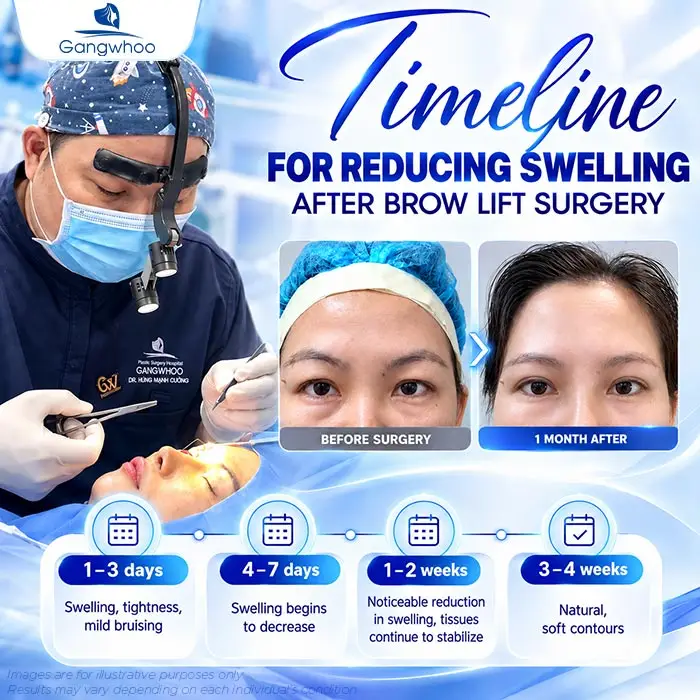
Typically, swelling is more pronounced in the early stage after the procedure and tends to gradually decrease as the soft tissue enters the recovery process. However, the exact time for swelling to fully resolve can vary from person to person.
During the first 1–3 days, the brow area may show swelling, a feeling of tightness, or mild bruising. This is the stage when the post-procedure inflammatory response tends to be most noticeable, so the shape of the brow at this point does not yet reflect the final result.
From around day 4 to day 7, if recovery is progressing well, swelling usually starts to decrease. The treated area may still be somewhat swollen or bruised, but typically to a lesser degree than in the first few days.
Over the following 1–2 weeks, the soft tissue continues to stabilize. Many people notice a significant reduction in swelling in the brow area, though the healing process is not necessarily complete yet.
By around week 3–4, the shape of the brow area tends to look more natural as swelling continues to subside. However, this should not be taken to mean that everyone will be completely free of swelling by exactly this point.
It’s important to distinguish that “swelling gone” and “brow shape settled” are not entirely the same thing. After swelling decreases, the tissue continues to remodel and adapt. Therefore, evaluating the results should be based on the overall recovery process rather than just the first few days.
Why does swelling occur after a brow lift?
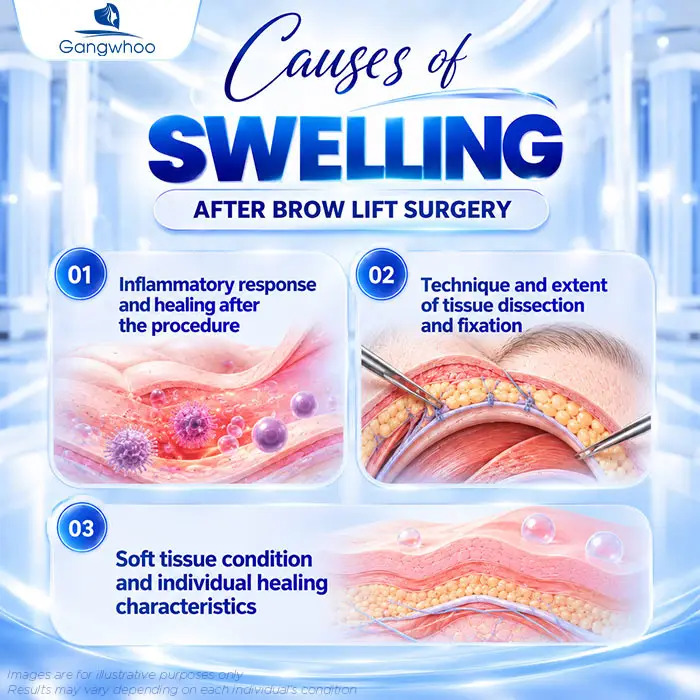
Swelling after a brow lift is mainly related to the tissue’s response to the procedure. When tissue is affected, the body triggers a physiological inflammatory process to repair and heal the injury.
During this stage, the small blood vessels and soft tissue around the treated area may become more permeable, causing fluid to leak into the interstitial tissue and resulting in swelling. This is a normal part of the healing process, but the degree to which it appears varies from person to person.
In addition, the extent of swelling also depends on the brow lift technique used, the extent of tissue dissection or fixation, the condition of the soft tissue before the procedure, and each individual’s constitution.
For instance, endoscopic brow lift is one of the eye-area aesthetic services listed by Gangwhoo Cosmetic Hospital. Which technique to choose should be based on the anatomical condition of the forehead–brow area, the degree of ptosis (sagging), and the specific treatment goals, rather than solely on how long swelling is expected to last.
Factors affecting how long swelling lasts after a brow lift
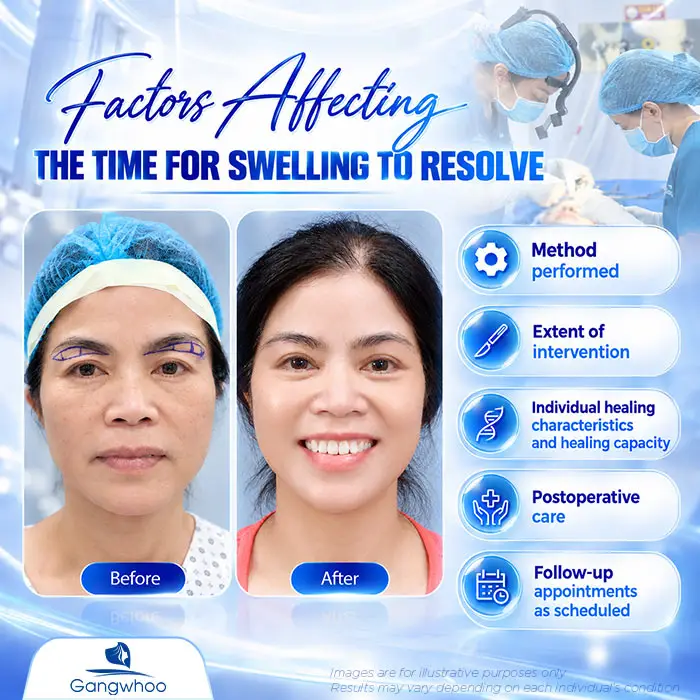
Not everyone who undergoes a brow lift will have the same recovery timeline.
The technique used is the first factor to consider. Different techniques affect the tissue to different degrees, so the resulting swelling response can also differ.
The extent of the intervention also affects recovery. Cases requiring treatment of more tissue or a wider structural adjustment may have a different post-operative course than cases involving a smaller area.
Individual constitution and healing capacity is a factor that cannot be overlooked. Some people see swelling go down relatively quickly, while others need more time for the soft tissue to stabilize.
In addition, post-operative care is also very important. Massaging the area without guidance, applying strong pressure to the brow region, getting it wet, or cleaning the wound incorrectly can all affect the recovery process.
Finally, post-operative follow-up visits allow the doctor to directly assess the condition of the tissue, the wound, and the progression of swelling. This is a more reliable basis than comparing yourself to images of other people who have previously undergone the procedure.
How long should swelling last after a brow lift before you should see a doctor?
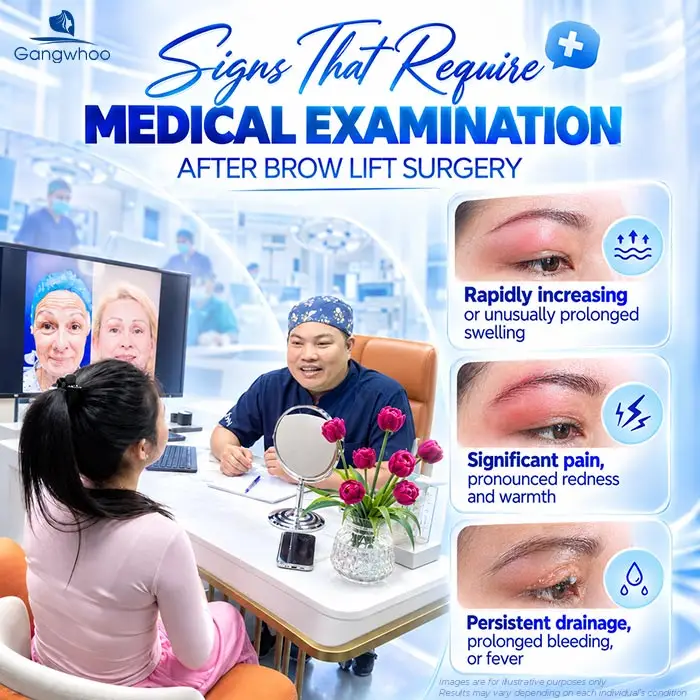
One thing that deserves special attention is how the swelling progresses, not just the number of days since surgery.
If the brow area swells mildly and then gradually subsides, with no additional unusual symptoms and the patient still feels stable, this is generally a course that should simply continue to be monitored according to the post-operative follow-up schedule.
On the other hand, if the swelling increases quickly or keeps increasing instead of going down, especially when accompanied by significant pain, noticeable redness and heat, abnormal discharge, prolonged bleeding, fever, or other unusual symptoms, the patient should contact their treating doctor for evaluation.
One should not automatically assume that all cases of prolonged swelling are complications. However, in eye and brow cosmetic surgery, any sign that develops abnormally should be examined in person rather than self-treated at home.
What can help reduce swelling after a brow lift?

After a brow lift, the most important principle is to follow the care instructions given by the treating doctor. Advice found online should not be applied mechanically to every case.
In the early stage, the doctor may recommend appropriate cool compresses to help control swelling. When doing so, avoid applying direct pressure to the treated area, and do not pull, rub, or massage the brow area on your own.
Cleaning the treated area should also be done exactly as instructed. If there is an incision or wound, patients should not pick at scabs, remove stitches themselves, or use topical products without the doctor’s direction.
During recovery, it’s best to limit activities that risk direct impact to the forehead, eyes, and brow area. Sleeping position, movement, and daily activities should also follow the specific post-operative instructions given.
In particular, do not self-administer antibiotics, anti-inflammatory drugs, or pain relievers beyond what has been prescribed. Each patient’s health condition and procedure differ, so medication use needs to be individualized.
How long until the brow lift looks naturally beautiful?
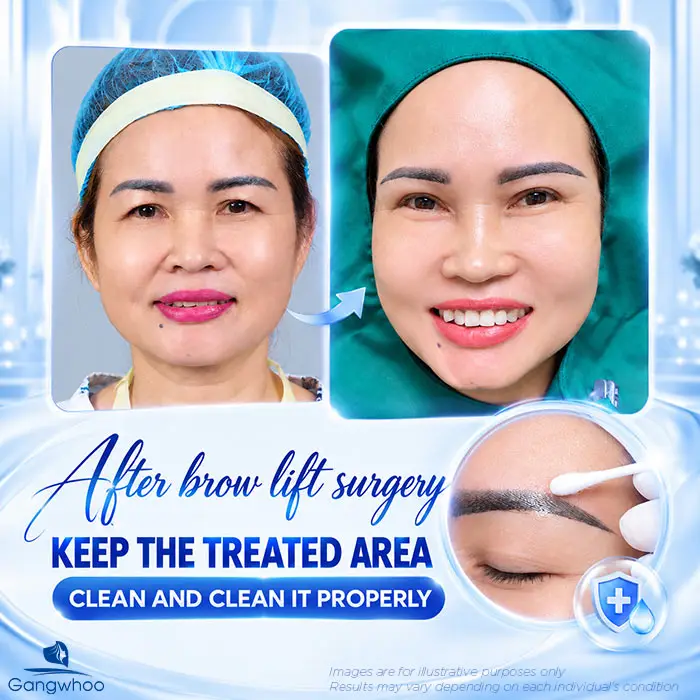
This question often comes up alongside the question of how long swelling lasts after a brow lift.
These two milestones should not be treated as the same thing.
As swelling decreases, the shape of the brow gradually becomes clearer. However, the soft tissue still needs time to stabilize. So a person may have already seen significant swelling reduction but not yet have reached the final, natural-looking appearance.
In the early stage, the brows may sometimes appear higher or different from what was initially expected, due to swelling and tissue tension. This is why results should not be judged too soon after the procedure.
If recovery goes smoothly, the shape of the brows will continue to stabilize over time. The right time to evaluate the results depends on the technique used and each person’s actual condition.
How should you care for the area after a brow lift?
After a brow lift, post-operative care is not only meant to reduce swelling but also to protect the treated area during the healing process.
In the first few days, keep the treated area clean and follow the cleaning instructions given. Avoid touching the wound repeatedly, since hands can carry bacteria and increase the risk of infection.
If the doctor requests a follow-up visit, patients should attend as scheduled. Through direct examination, the doctor can assess the swelling, the wound, the stitches, and other factors related to recovery.
Diet should also follow the doctor’s personalized recommendations. There is no single absolute list of foods to avoid that applies to every patient after every type of brow lift technique.
Another important principle is to avoid self-applying folk remedies or advertised products claiming to “reduce swelling fast” without verified evidence or proper medical guidance.
So, how long does swelling last after a brow lift? There is no single fixed number that applies to everyone. Swelling is usually more noticeable in the early stage after the procedure and then gradually decreases as the tissue moves through recovery. In some cases, swelling may decrease significantly after about 1–2 weeks, while the brow area may still need more time to settle into its natural shape.
The most important thing is to monitor the recovery trend. Gradually decreasing swelling is very different from swelling that keeps increasing or is accompanied by additional pain, redness, heat, discharge, or other unusual signs.
If you are planning to have a brow lift at Gangwhoo Cosmetic Hospital, you should have an in-person consultation with a doctor to assess the condition of your forehead–brow area and choose the appropriate method. You should not rely solely on a timeframe found online to accurately predict your own recovery process.