
Rhinoplasty not only enhances the shape of your nose but also requires proper post–operative care and dietary restrictions to ensure the best healing results. Among the most common questions I receive from patients at Gangwhoo Cosmetic Hospital is: “How long after rhinoplasty can I eat sticky rice?” I am Dr. Tran Kim Thach, Specialist Level I, and this is one of the concerns I’m asked most frequently during follow-up visits.
Sticky rice is a familiar part of Vietnamese cuisine, but does it affect the healing process? And when is it safe to reintroduce it into your diet? In this article, I will explain the answer from a medical perspective, supported by real clinical observations from rhinoplasty patients at Gangwhoo Hospital, helping you understand how to take proper care of your nose after surgery.
Why should you pay attention to sticky rice after rhinoplasty?
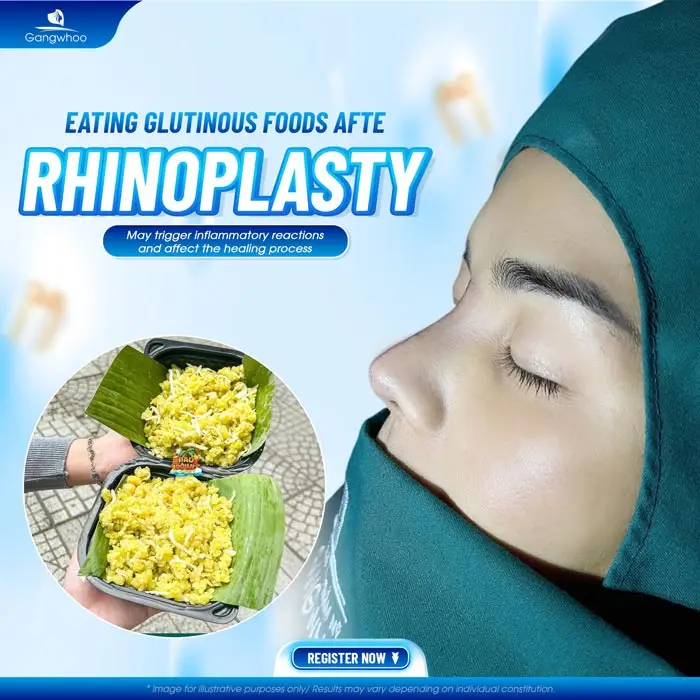
Throughout my 12+ years of performing rhinoplasty procedures, I’ve found that diet plays an extremely important role in post-operative recovery. One of the most frequent questions patients ask after surgery is: “How long after rhinoplasty can I eat sticky rice?”
Sticky rice is a beloved ingredient in Vietnamese meals, but medically, it’s a food group that requires caution after surgery. This is not just a traditional belief—it is related to the body’s natural processes of inflammation – wound healing – tissue regeneration.
To understand why, let’s take a closer look at how sticky rice affects the body after surgery.
How does sticky rice affect the recovery process after rhinoplasty?
Sticky rice (xôi, sweet sticky rice, bánh chưng, bánh tét, sticky rice cakes, etc.) contains a high amount of glutinous starch (glutinous rice gluten), which is known to be sticky – slow to digest – inflammation-triggering. After rhinoplasty, your body is rebuilding tissue and stabilizing the nasal structure, so consuming foods that may stimulate inflammation can directly affect healing.
From a medical standpoint, sticky rice impacts the nose through three main mechanisms:

1. Increased inflammatory response at the surgical site
- The gluten and starch in sticky rice can increase macrophage and white blood cell activity, prolonging inflammation.
- The nose naturally experiences mild swelling after surgery. Sticky rice may cause prolonged swelling or even redness and warmth in individuals prone to inflammation.
2. Higher risk of scar tissue or fibrotic tissue formation
- Prolonged inflammation disrupts collagen production, causing excess fibrotic tissue that may make the nasal tip firm or cause visible implant edges.
- Patients prone to hypertrophic or keloid scars may be more sensitive to sticky rice during early healing.
3. Slower tissue regeneration and cartilage stabilization
- Sticky rice is hard to digest, often causing bloating that reduces the absorption of essential nutrients like protein, vitamin C, and zinc.
- This leads to slower healing of soft tissue and cartilage grafts (especially rib cartilage or synthetic implants).
Sticky rice does not cause immediate complications, but it increases the risk of prolonged inflammation, delayed healing, and fibrotic tissue formation. For this reason, I always advise patients to avoid sticky rice for at least 3–4 weeks after rhinoplasty, or longer if they experience swelling or have an inflammatory-prone skin type.
So, how long after rhinoplasty can you eat sticky rice again?
1. Short answer: Typically 10–14 days.
At Gangwhoo Cosmetic Hospital, we assess this based on each patient’s healing speed and tissue condition:
- Slow healers → avoid for 14–21 days
- Complex rhinoplasty (structural, rib cartilage, septal correction) → avoid for at least 2 weeks
- Minimally invasive rhinoplasty → may reintroduce after 10–12 days, once new skin is stable
2. Signs you can safely eat sticky rice again:

- Incision is fully dry
- No swelling, redness, or heat
- New skin has formed
- No yellow discharge or pus
3. Absolutely avoid sticky rice if:
- You still have swelling or redness
- The incision is moist
- You have irritation or persistent itching
- There is unusual discharge
If uncertain, send photos to your doctor or return for a follow-up check.
List of sticky-rice foods to avoid after rhinoplasty
To minimize irritation, avoid the following foods:
- Sticky rice with beans, sticky rice with gac, savory sticky rice
- Bánh chưng, bánh tét
- Bánh giầy, sticky rice cakes
- Sweet sticky rice, plain sticky rice
- Traditional sticky-rice–based desserts and snacks
These foods are hard to digest and may indirectly impact the healing process.
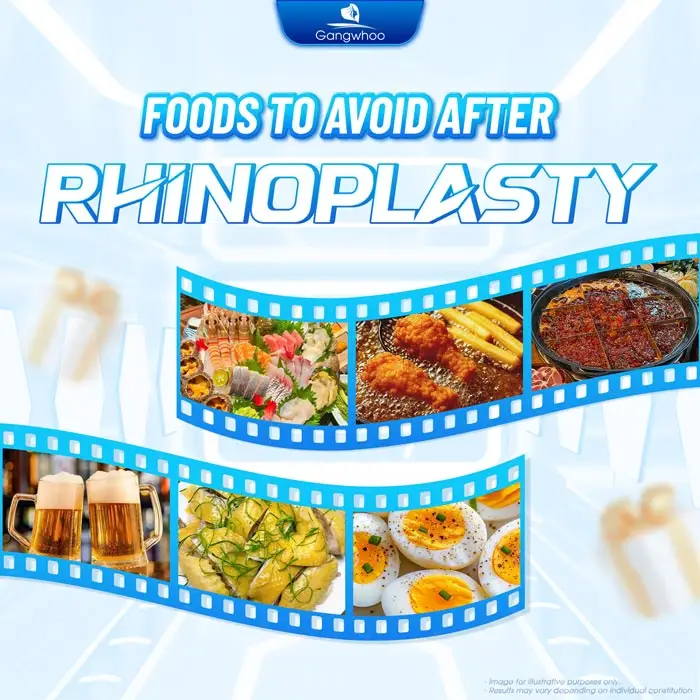
Other foods to avoid after rhinoplasty
In addition to sticky rice, patients should avoid the following to prevent prolonged inflammation or scarring:

- Chicken
May cause itching and irritation.
Avoid: 2 weeks.
- Seafood
High in histamine and may trigger redness and inflammation.
Avoid: 3–4 weeks.
- Beef
May cause pigmentation of healing tissue.
Avoid: 2–3 weeks.
- Water spinach
Can overstimulate collagen formation and cause keloids.
Avoid: 4 weeks.
- Spicy foods
Cause vasodilation and prolonged swelling.
Avoid: 1–2 weeks.
- Alcohol
Thins the blood, increases bruising, and slows healing.
Avoid: 3–4 weeks.
- Coffee, strong tea, energy drinks
Caffeine elevates blood pressure and affects wound stability.
Limit: 1–2 weeks.
- Fermented or salty foods
May cause water retention and swelling.
Limit: 2 weeks.
- Hard or chewy foods
Increase facial muscle movement and may affect nasal stability.
Limit: 2 weeks.
Recommended Foods for the First 7–14 Days After Rhinoplasty
To support faster wound healing and reduce inflammation, you should prioritize the following food groups:
1. Soft and Easy-to-Digest Foods
Porridge, soup, broth
Mashed potatoes
Soft noodles or pasta
Milk and yogurt
2. Foods That Support Tissue Regeneration
Oranges, tangerines, kiwi, strawberries (rich in vitamin C)
Salmon, basa fish, mackerel (rich in omega-3)
Eggs (from day 7 onward, if you do not have a keloid-prone skin type)
Lean pork
Green vegetables, especially broccoli and spinach
3. Adequate Hydration
1.5–2 liters of water per day
You may add light electrolyte drinks if needed
Proper nutrition helps reduce swelling more quickly and shortens the overall recovery period.
I hope these guidelines have helped you better understand How Long After Rhinoplasty Can You Eat Sticky Rice and why certain foods should be avoided to prevent inflammation, abnormal scarring, or fibrotic tissue formation. Although diet may seem like a small aspect, it directly affects your healing speed, tissue softness, and long-term nasal results.
If you still have questions about postoperative dietary restrictions or want to choose the most suitable rhinoplasty method for your body type, feel free to contact Gangwhoo Cosmetic Hospital. My team and I will provide personalized, medically accurate consultation to help you achieve the safest and most natural-looking nose shape.