
After rhinoplasty, besides caring for the wound and keeping the nose area clean, diet is a major concern for many patients. Among the most common questions is whether you can eat bún after a nose job, since people worry that familiar foods might affect healing or the aesthetic result.
In reality, not every dish needs to be strictly avoided after rhinoplasty. What matters is choosing suitable ingredients, ensuring hygiene, and following post-operative instructions. So can someone who has just had a nose job eat bún, and what should they keep in mind? Let’s look at the details from a medical perspective.
Can you eat bún after a nose job?
After rhinoplasty, you can still eat bún if your body tolerates it well, the dish is prepared hygienically, and it contains no ingredients your doctor has told you to avoid. The noodles themselves are made mainly from rice flour and water. They are not a food that inherently causes keloid scars, shifts the nasal bridge, or directly affects the nose implant material.
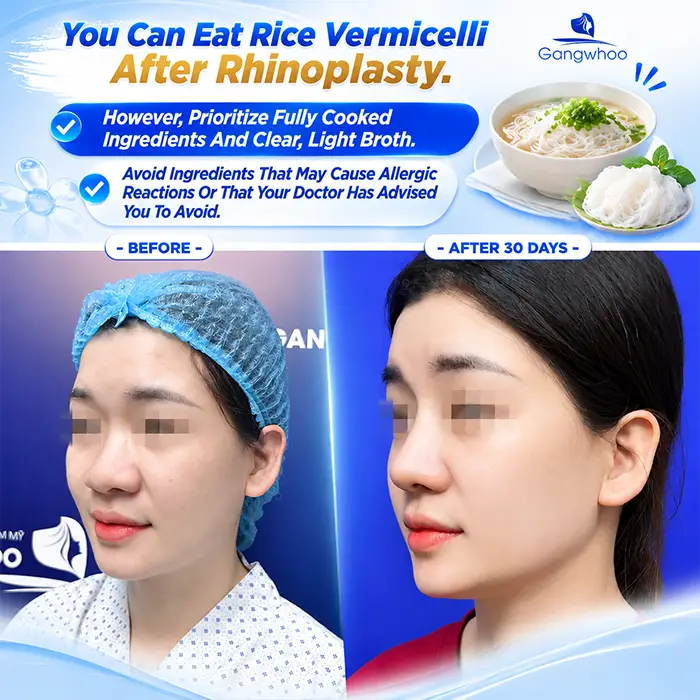
Nutritionally, bún provides carbohydrates, an energy source the body needs during post-surgical recovery. However, the nutritional value of a bowl of bún also depends on the broth, meat, seafood, vegetables, and seasonings that come with it.
From a post-operative care perspective, what matters is not just the noodles but the whole dish. For example, a bowl of bún mọc (pork meatball noodle soup) with thoroughly cooked meat, a light broth, and hygienic ingredients can be an easy option to eat. On the other hand, dishes containing ingredients you are allergic to, or that your doctor has told you to limit, should be considered carefully.
In particular, after rhinoplasty the body is going through an inflammatory response and tissue repair. These are normal physiological stages of wound healing. Your diet should therefore provide enough energy, protein, vitamins, and minerals to support recovery.
At Gangwhoo Cosmetic Hospital, post-operative care is personalized according to the technique used, the patient’s health status, and each person’s recovery progress. Therefore, if your surgeon has given you a specific diet, you should follow those instructions first.
Which types of bún are suitable after a nose job?
Not all bún dishes have the same nutritional makeup or preparation. During the post-operative period, patients should favor dishes with simple ingredients that are low in oil and fat, not too spicy, and easy to chew and swallow.
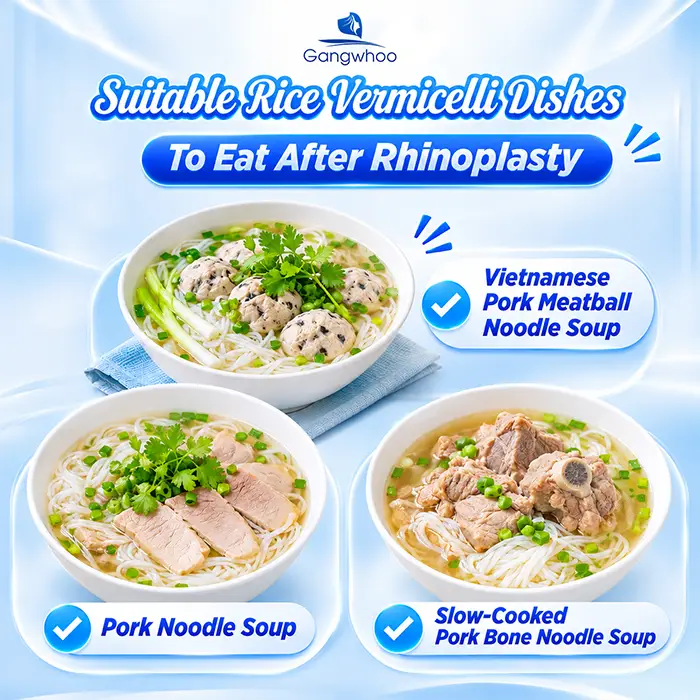
1. Bún mọc – a relatively suitable choice after rhinoplasty
Bún mọc typically consists of rice noodles, mọc (ground pork meatballs), broth, and some fresh vegetables. Its texture is relatively soft, and the ingredients and preparation are easy to adjust.
After rhinoplasty, you can choose bún mọc with a light broth, thoroughly cooked meatballs, and minimal hot or spicy seasonings. It is best eaten once it has cooled down a little, since very hot food can cause discomfort.
Also, choose a vendor that ensures food hygiene and safety to reduce the risk of digestive upset or infection.
2. Bún with pork – adds energy and protein
Lean pork provides protein, an important nutrient for collagen synthesis, cell regeneration, and repair of damaged tissue. Bún with pork can therefore be considered in a post-operative menu if you have no contraindication or allergy to it.
However, favor pork that is boiled or cooked until tender rather than tough, heavily seasoned grilled pork. Chewing very hard food in the first few days may cause discomfort in the face, especially while the nose is still swollen.
3. Bún xương hầm (bone broth noodle soup) – adds nutrition for the body
Bún xương hầm is a broth-based dish that provides energy and some nutrients from its ingredients. Someone who has just had rhinoplasty can choose it if the broth is thoroughly cooked, not too oily, and the meat is soft enough.
One important note: bone broth cannot fully replace high-quality protein sources. Patients still need a varied diet, including lean meat, eggs, milk, or tofu, depending on what they tolerate.
Which types of bún should be limited after a nose job?
Besides the dishes you can choose, some types of bún contain ingredients that need careful consideration in the early post-operative period. Pay particular attention to your allergy history, how the dish is prepared, and any foods your doctor has told you to limit.
1. Bún bò (beef noodle soup) – consider avoiding it in the early stage
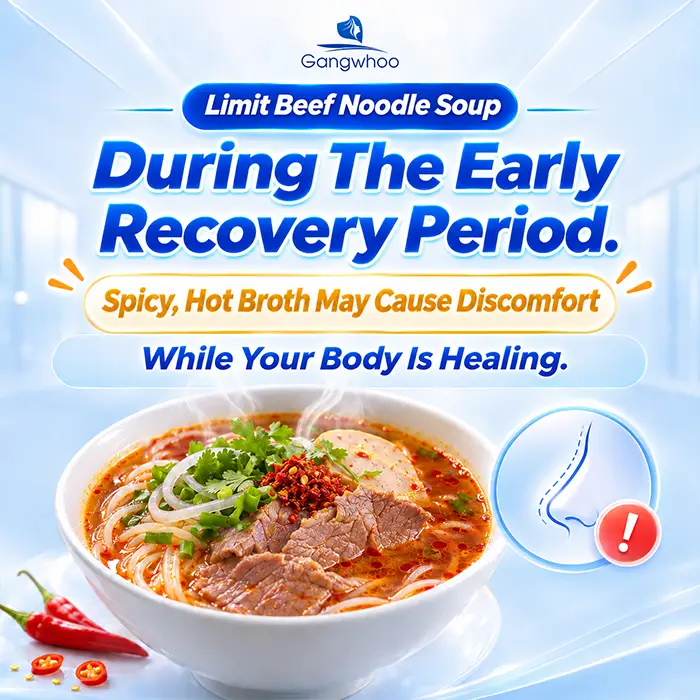
Bún bò is an energy-rich dish, usually made with beef, a strongly flavored broth, lemongrass, chili, and other spices. However, according to the post-operative nutrition guidelines applied at Gangwhoo Cosmetic Hospital, beef is among the foods recommended to be limited in the early period after rhinoplasty.
Therefore, patients should temporarily avoid bún bò if their doctor has asked them to avoid beef. In addition, a very spicy or greasy broth is not ideal while the body is recovering.
It should be understood that limiting beef is a post-operative care guideline based on a facility’s protocol and each patient’s condition. It does not mean beef has been proven to directly cause poor scarring in all patients.
2. Bún riêu – watch out for crab and seafood ingredients
Bún riêu usually contains field crab, tomatoes, tofu, and sometimes shrimp, blood curd, or other seafood. These ingredients need careful consideration if the patient is prone to allergies or is following post-operative dietary restrictions.
In particular, proteins from crab and seafood can cause allergic reactions in sensitive people. Symptoms such as itching, rash, swelling, or discomfort can affect your health and should be treated appropriately.
So in the early period after rhinoplasty, if your doctor has not yet cleared you to eat seafood, it is best to choose another dish with simpler ingredients for now.
3. Bún đậu mắm tôm – not a priority right after surgery
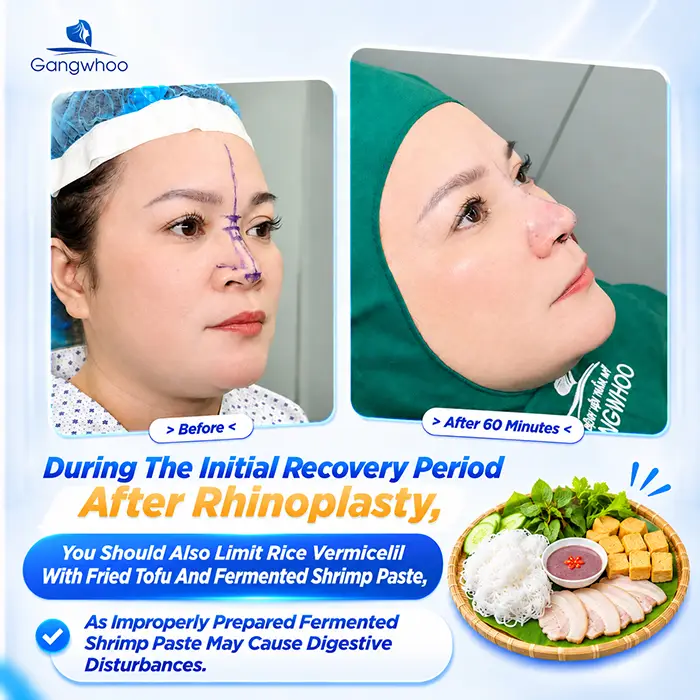
Bún đậu mắm tôm includes many components: rice noodles, fried tofu, boiled pork, chả cốm (young-rice patties), and fermented shrimp paste. Although it is a familiar everyday dish, it is not the most suitable choice in the first days after rhinoplasty.
The main reasons lie in the preparation and accompanying ingredients. Fried tofu and other oily foods can unbalance your diet if eaten often. Fermented shrimp paste must be stored and prepared properly to be safe. In addition, chả cốm may contain glutinous rice, an ingredient to watch if your doctor has asked you to avoid sticky-rice foods.
Those who have just had rhinoplasty should favor thoroughly cooked, low-fat, easily digestible foods.
4. Bún mắm (fermented fish noodle soup) – be cautious with seafood ingredients
Bún mắm usually combines many ingredients such as fish, shrimp, squid, pork, and a broth made from fermented fish. It is richly flavored but contains many components, including foods that commonly cause allergies in some people.
During the early post-operative period, patients should limit bún mắm until their doctor confirms they can eat seafood again. People with a history of shrimp, squid, or fish allergies should especially avoid the corresponding ingredients.
Overall, the key is not to avoid every kind of bún, but to choose ingredients suited to your recovery status and your surgeon’s guidance.
How long after a nose job can you eat bún normally?
The time at which you can return to a normal diet depends on the rhinoplasty technique, the extent of the procedure, your healing ability, and your individual constitution. There is no fixed timeline that applies to all patients.
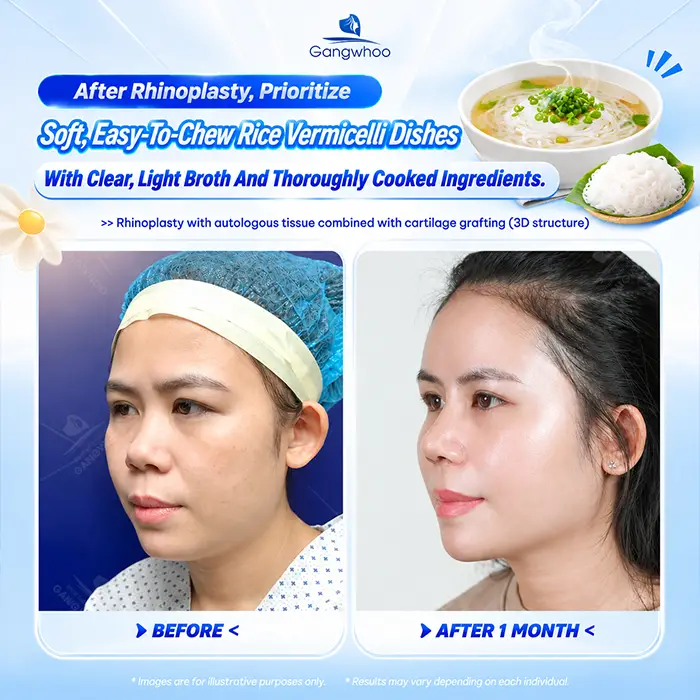
1. The first days after surgery
In the initial period, the nose area typically shows swelling, mild bruising, and a feeling of tightness. These are common reactions after surgery.
Patients should favor soft foods that are easy to chew and swallow and nutritionally sufficient. If you want to eat bún, consider bún mọc or lean pork bún with a light broth and thoroughly cooked ingredients.
In particular, avoid bumping the nose while eating, do not lower your head too far, and do not let chopsticks or spoons touch the surgical area.
2. While the nose is recovering
As swelling gradually subsides and the wound heals well, patients can step by step diversify their menu under their doctor’s guidance.
This is also the time to make sure you get enough protein, vitamins, and minerals. If you have been asked to avoid foods such as beef, seafood, or sticky-rice dishes, wait until your doctor allows you to eat them again.
According to the advice of Dr. Trần Kim Thạch (CKI, Level 1 Specialist) on the Gangwhoo Cosmetic Hospital website regarding eating bún after rhinoplasty, patients can eat bún but should favor low-oil dishes without seafood and limit spicy seasonings during roughly the first 2 weeks. For dishes with ingredients that need to be avoided, the restriction period may extend to about 2–3 weeks depending on the case.
3. Once the nose has stabilized
Once the wound has healed well, swelling is under control, and your doctor assesses that recovery is going smoothly, you can gradually return to a more varied diet.
However, do not stop following dietary restrictions on your own just because your nose feels less swollen. Soft tissue stabilization and the final shaping of the nose still take time after surgery.
Things to keep in mind when eating bún after a nose job
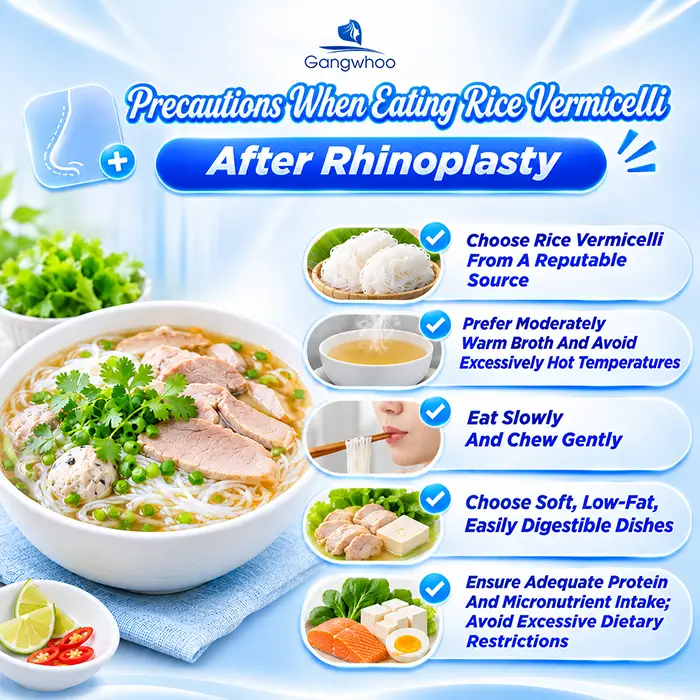
To limit unwanted effects during the post-operative period, pay attention to how you choose and eat your food. Although bún is a relatively soft dish, eating improperly can still cause discomfort while the nose area is not yet stable.
First, choose bún from a clearly sourced vendor, prepared cleanly and cooked thoroughly. Unhygienic food can increase the risk of gastrointestinal infection and affect your overall health during recovery.
Next, avoid eating when the broth is still too hot. Food at a moderate temperature helps reduce discomfort, especially when the face is still sensitive after surgery.
Another concern is chewing. In the first few days, eat slowly, chew gently, and favor soft foods. Limiting strong facial muscle movement helps you feel more comfortable while the nose is still swollen.
In addition, do not adopt overly strict diets on your own that leave your body short of protein and micronutrients. This can affect the formation of new tissue and wound recovery.
What should you eat after a nose job to support recovery?
Besides asking whether you can eat bún after a nose job, patients also need to build a balanced diet to support tissue regeneration and recovery after surgery.
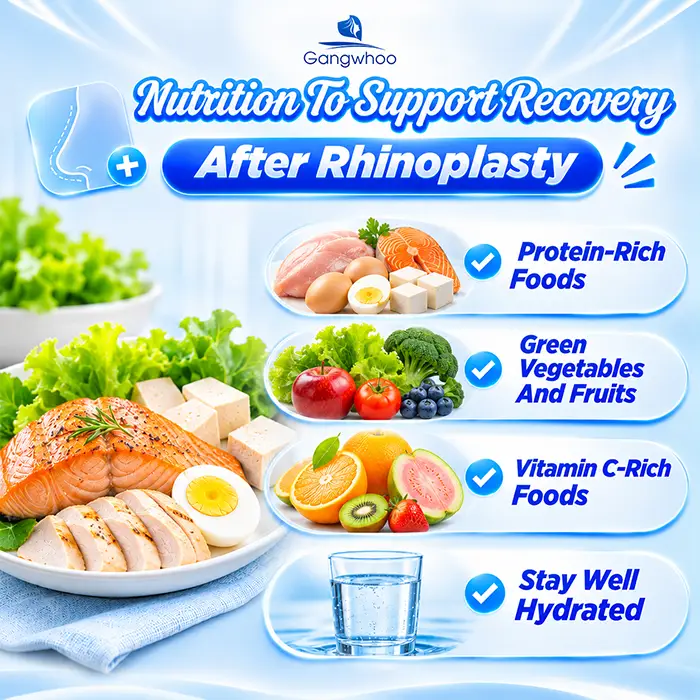
1. Protein-rich foods
Protein is an important component in collagen synthesis, the formation of new cells, and the repair of damaged tissue. After surgery, the body needs enough protein to support wound healing.
Options include lean pork, suitable fish, eggs, milk, and tofu, if your body tolerates them well.
2. Vegetables and fruits
Vegetables and fruits provide fiber, vitamins, and antioxidant compounds. This food group is essential for maintaining overall health and supporting normal immune function.
After rhinoplasty, you can add leafy greens, cauliflower, carrots, oranges, guavas, kiwi, and other suitable fresh fruits.
3. Vitamin C-rich foods
Vitamin C takes part in collagen synthesis, supports immune function, and aids tissue repair. Adding vitamin C-rich foods is therefore a useful part of a post-operative diet.
Suitable choices include oranges, mandarins, guavas, strawberries, kiwi, and leafy greens.
4. Drink enough water
Water plays an important role in metabolism, nutrient transport, and maintaining the body’s physiological functions.
After rhinoplasty, patients should maintain a water intake suited to their individual needs and limit alcohol and other beverages that do not help recovery.
According to the American Society of Plastic Surgeons (ASPS), a balanced diet rich in protein, vitamins, and minerals, combined with adequate hydration, plays an important role in recovery after surgery.
Can you eat bún after a nose job? The answer is yes. Bún made from rice flour is not inherently a food to avoid after rhinoplasty. However, patients should pay attention to the accompanying ingredients, how the dish is prepared, and their body’s recovery status.
In the early period, favor soft, low-fat, not-too-spicy, hygienically prepared bún dishes. For ingredients such as beef, crab, shrimp, or other seafood, follow your treating doctor’s specific instructions rather than applying one generic set of restrictions to everyone.
At Gangwhoo Cosmetic Hospital, customers receive post-operative care tailored to their actual condition and the rhinoplasty method performed. If you still have questions about your diet or notice any abnormal signs during recovery, you should proactively contact your doctor for advice.
Don’t let worries about eating leave your body short of nutrition. A scientific care routine, together with attending follow-up visits on schedule and following professional guidance, will help your recovery go more smoothly.