
After an eyebrow lift (brow lift) surgery, many people want to get eyebrow tattooing or microblading to perfect the shape of their brows and make the face look more harmonious and defined. However, the brow area is also the region directly affected during surgery, so undergoing another cosmetic procedure there should be considered carefully.
One of the questions I encounter most often when advising patients after surgery is how long after a brow lift can you get eyebrow tattooing, and whether it is possible after 1 or 2 months.
In reality, there is no fixed timeline that suits everyone. Around 2 months can be used as a reference point to start assessing whether tattooing is possible, but what matters more is that the incision has healed completely, the soft tissue is stable, and there are no signs of infection. The patient must be examined and cleared by their surgeon before proceeding.
In the article below, I will explain specifically when it is appropriate to get eyebrow tattooing after a brow lift, the factors that affect recovery, and the important precautions to minimize risks.
How long after a brow lift can you get eyebrow tattooing?
Generally, people who have had a brow lift should wait about 2 to 3 months before considering eyebrow tattooing. This is a reference period, not a recommendation that applies to every case.
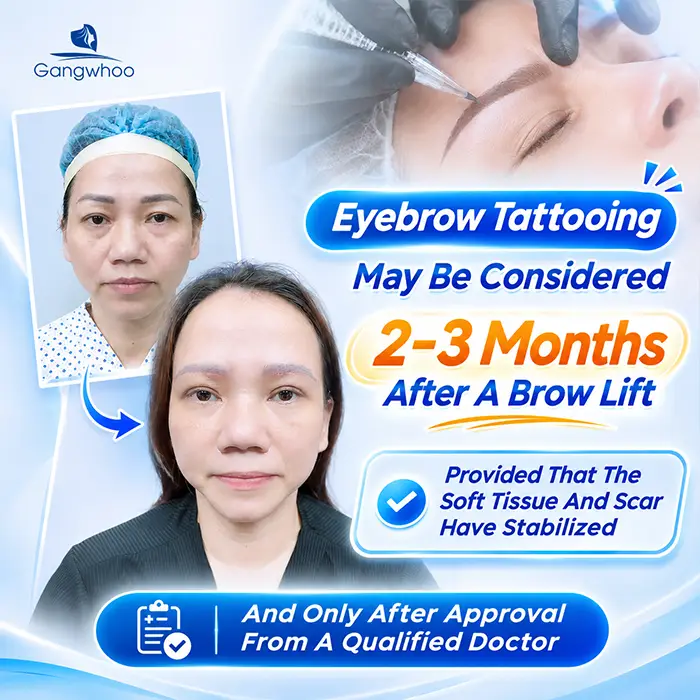
The reason is that after surgery, the skin around the brow needs time to go through wound healing, epithelial regeneration, and tissue remodeling. Even when the incision has closed or the stitches have been removed, the underlying tissues may continue to recover over the following weeks.
According to the American Society of Plastic Surgeons (ASPS), initial wound healing after a brow lift usually takes about 10–14 days. However, swelling can continue to subside over several weeks, and full recovery can take many months.
Therefore, it is important to distinguish three stages:
- Initial wound healing: The incision closes, the skin surface recovers, and the doctor may assess it for stitch removal as indicated.
- Soft tissue recovery: Swelling, bruising, and tightness gradually decrease; the subcutaneous tissue continues to stabilize.
- Scar remodeling: Collagen fibers are rearranged, and the scar gradually softens and changes color over time.
Eyebrow tattooing uses a needle tip to deposit pigment into the superficial layer of the skin. Although it is less invasive than brow lift surgery, this procedure still causes microscopic injuries to the skin.
If performed when the brow area has not fully recovered, the risk of irritation and infection, as well as interference with wound healing, may increase.
Professional advice: Do not decide on eyebrow tattooing based solely on the number of days since surgery. Have your doctor check the incision, skin, soft tissue, and scar formation before proceeding.
Why do you need to wait for recovery before getting eyebrow tattooing after a brow lift?
To understand why tattooing too early is not advisable, it helps to look at the recovery process after a brow lift from the perspective of wound-healing physiology.
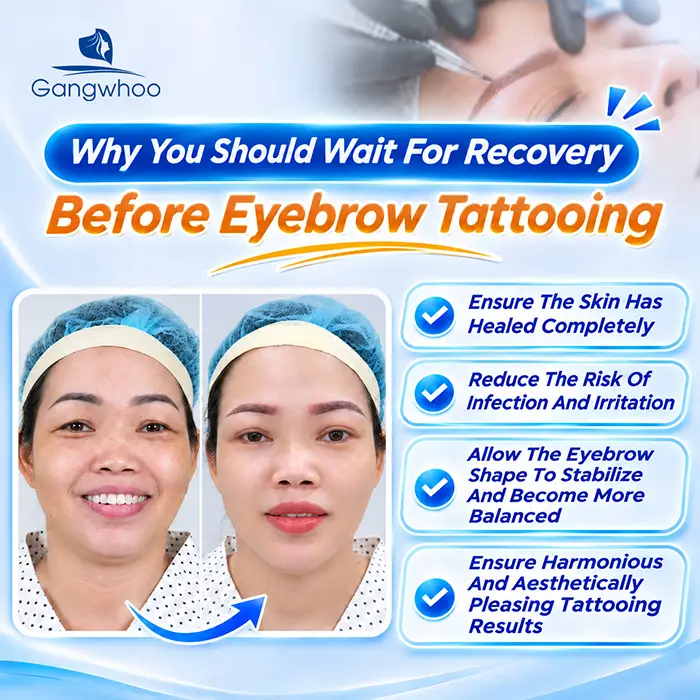
1. The brow skin needs time to heal
A brow lift is a surgery that removes loose, excess skin above the brow or is performed using a technique appropriate to each person’s anatomy. After the intervention, the body starts a physiological inflammatory response to clean the injured area, followed by cell proliferation and tissue regeneration.
The healing process typically goes through the main stages of hemostasis, inflammation, proliferation, and remodeling.
During the proliferation stage, fibroblasts take part in synthesizing collagen to support the formation of new tissue. Collagen is then continuously rearranged during the remodeling stage, helping the tissue gradually stabilize.
If tattoo needles are applied to skin before this process is complete, the new injuries may disrupt the natural recovery process.
2. Avoiding the risk of infection and irritation
During tattooing, the needle tip comes into direct contact with the skin and deposits pigment into the tissue. The procedure therefore requires sterile conditions, properly processed instruments, and ink of clear origin.
For a brow area that has just undergone surgery, if the incision has not healed or the skin’s protective barrier has not recovered well, causing further injury may increase the risk of infection.
In addition, tattoo pigment can cause allergic reactions or local inflammatory reactions in some people. The U.S. Food and Drug Administration (FDA) has recorded risks associated with tattooing, such as infections, allergic reactions, granulomas, and keloids.
3. Helping the tattoo result be more stable
After a brow lift, the position and shape of the brows may change because excess skin is removed, soft tissue is adjusted, and swelling gradually subsides.
If tattooing is done while the brow shape is not yet stable, you may end up choosing a brow shape that does not suit the final aesthetic result.
Waiting for the soft tissue to stabilize allows the technician to assess more accurately the shape of the brow arch, the symmetry between the two sides, and where pigment needs to be added.
Factors affecting the timing of eyebrow tattooing after a brow lift
Not all clients recover at the same pace. In practice, I consider many factors before assessing whether an additional tattooing procedure can be done.
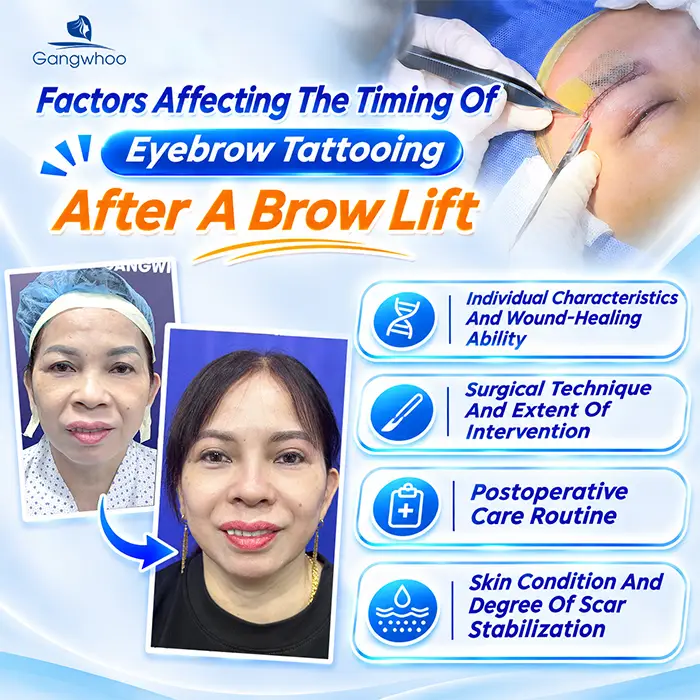
1. Constitution and healing ability
Constitution affects the speed of tissue regeneration, inflammatory response, and scar formation.
Some people recover well, and their incisions close relatively quickly. In contrast, people prone to keloid or hypertrophic scars, or with a history of slow healing, may need a longer follow-up period.
People with conditions that affect wound healing, such as poorly controlled diabetes, also need to be carefully evaluated by a doctor before undergoing additional procedures.
2. The brow lift technique used
The location of the incision, the amount of skin removed, and the degree of soft tissue intervention all affect recovery.
For example, a brow lift technique with an incision above the brow may leave a scar close to the area planned for tattooing. Other techniques place the incision in different locations.
Therefore, the doctor must determine exactly which area of skin was operated on and where the pigment is planned to be placed before giving advice.
4. Post-operative care routine
Proper post-operative care helps limit factors that can slow wound healing.
Cleaning the incision, using medication as prescribed, avoiding strong impact, and attending follow-up appointments on schedule all play important roles.
Conversely, picking at scabs, rubbing the brow area, or using unsuitable products can cause irritation and affect recovery.
4. Scar and skin condition at the time of planned tattooing
This is a factor that requires special attention.
If the brow area still has prolonged redness, hard scarring, pain on touch, unusual sensitivity, or signs of inflammation, tattooing should be postponed.
In particular, cases with keloid or hypertrophic scars need to be evaluated separately by a doctor, because causing additional injury to the skin may make the scar condition more complicated.
Signs that the brow area is ready for tattooing
Recovery time is a reference factor, but the actual condition of the surgical area is the key basis for assessing whether tattooing is possible.
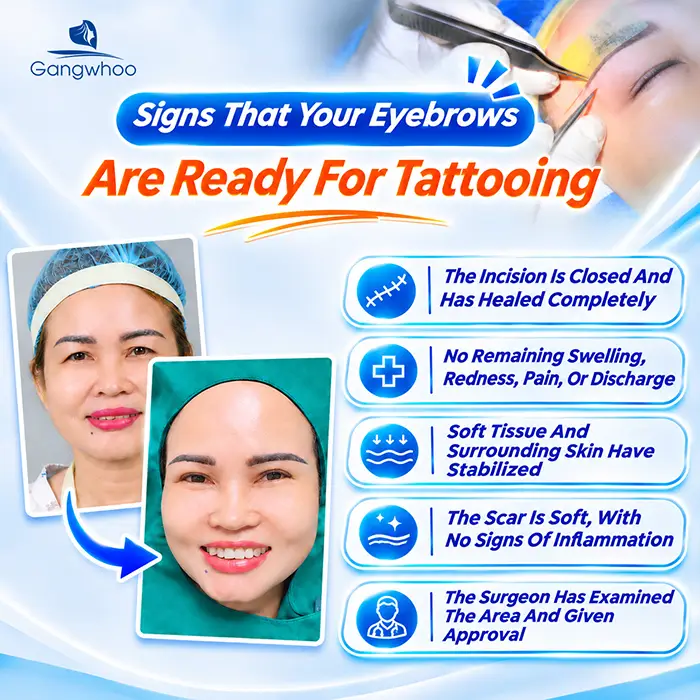
1. The incision has closed and fully healed
The skin at the incision must be fully epithelialized, with no open areas, oozing, or abnormal crusting.
Having the stitches removed does not mean the skin is ready for tattooing.
2. No swelling, redness, pain, or abnormal discharge
The brow area should be free of significant swelling, with no increasing pain, warmth, redness, or discharge.
If any of these signs appear, you should prioritize a medical examination to find the cause instead of continuing with your beauty plans.
3. The soft tissue and skin around the brow are stable
When gently touched, the soft tissue should not have significant pain, abnormal tightness, or marked sensitivity.
The scar should also be assessed for color, thickness, and softness. Tattooing directly on an unstable scar should be avoided without professional approval.
4. Examined and approved by the surgeon
This is the most important condition.
The doctor will check the incision, the degree of healing, the soft tissue condition, and risk factors before confirming that the patient can undergo an additional procedure.
Do not assume you have fully recovered just because you no longer feel pain or swelling.
Is getting eyebrow tattooing too soon after a brow lift dangerous?
Getting tattooed when the brow area has not fully recovered can cause several problems worth noting.
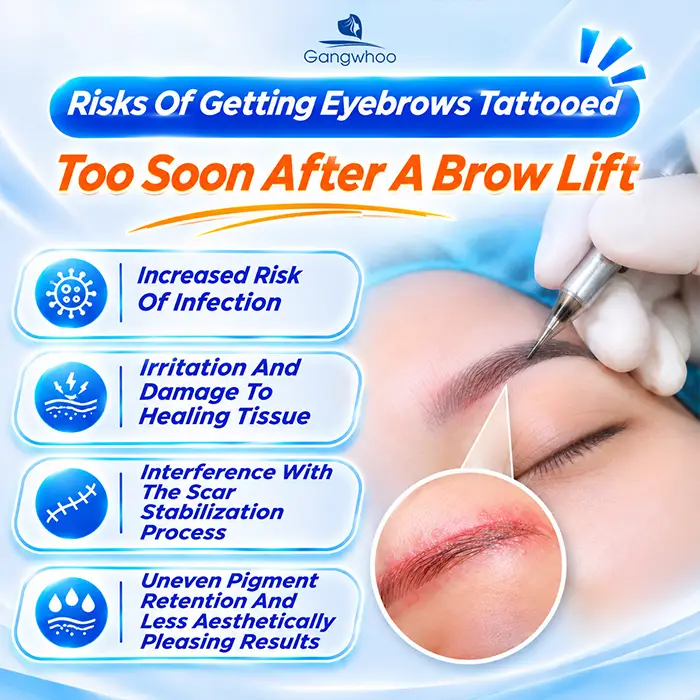
1. Increased risk of infection in the recently operated skin
Tattooing creates many microscopic injuries on the skin’s surface. If the instruments are not sterile or the skin has not completely healed, bacteria can enter and cause infection.
Signs may include increasing redness and swelling, pain, local warmth, and discharge or pus. If you notice any of these, seek medical attention early.
2. Easily causes irritation or damages recovering tissue
Skin after surgery may be more sensitive than usual. Mechanical impact from the needle, skin-stretching maneuvers, or products used during tattooing can cause irritation.
This does not mean every case of early tattooing will lead to complications, but doing it before the area has sufficiently recovered is an unnecessary risk.
3. May affect scar stabilization
During the remodeling stage, scar tissue is still changing in collagen structure, thickness, and softness.
Causing additional injury to skin that is not yet stable can trigger new inflammatory reactions, thereby affecting wound healing and the aesthetic result.
People prone to keloid scars in particular should be more cautious with any procedure that injures the skin.
4. Pigment may take unevenly
When the skin is still inflamed, swollen, or has an unstable tissue structure, pigment uptake may be uneven.
In addition, if the brow shape continues to change after surgery, the initial tattoo result may no longer suit the shape of the brow after recovery.
How to care for your brows after a brow lift for faster recovery
Proper care is an important part of a smooth recovery. After a brow lift, clients should follow the specific instructions of their operating doctor.
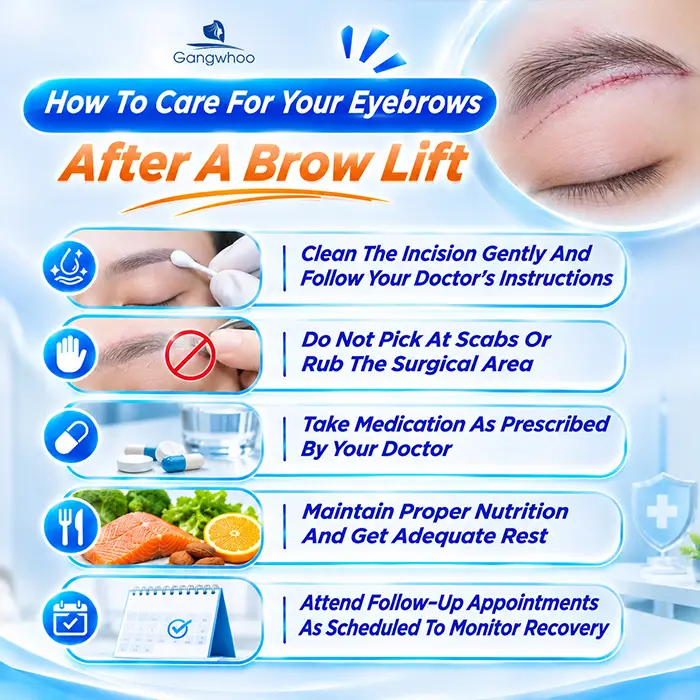
1. Clean the surgical area as instructed
Use the cleaning solution and method as prescribed. Do not use alcohol, hydrogen peroxide, cosmetics, or harsh cleansers on the incision without guidance.
When cleaning, be gentle and avoid rubbing or stretching the skin around the brow.
2. Do not pick scabs or disturb the incision
During healing, a thin crust may appear on the surgical area. This is part of the process of protecting the injured surface.
Do not pick at scabs, scratch, or apply strong force, as this may cause bleeding, damage new tissue, and affect scar formation.
3. Use medication as prescribed by your doctor
Painkillers, antibiotics, or topical medications should only be used as professionally directed.
Do not stop, change, or add scar-treatment products on your own before being evaluated by your doctor.
4. Maintain good nutrition and rest
A balanced diet with enough protein, vitamins, and minerals supports the body’s tissue-regeneration activities.
In addition, get enough sleep, limit strenuous activity in the early period, and protect the surgical area from unnecessary impact.
5. Attend follow-up appointments on schedule to monitor healing
Follow-up visits allow the doctor to assess the incision, swelling, soft tissue, and scar formation.
This is also an appropriate time for clients to discuss their plan for eyebrow tattooing after surgery, rather than deciding on their own based on estimated recovery time.
If you are wondering how long after a brow lift you can get eyebrow tattooing, or you are 1–2 months post-surgery and are unsure whether your brow area is ready for tattooing, please book a consultation and follow-up at Gangwhoo Cosmetic Hospital.
Don’t rush into eyebrow tattooing before your brow area has fully recovered. An examination at the right time will help you make a suitable beauty plan, limit risks, and protect your post-surgical aesthetic result.
Gangwhoo Cosmetic Hospital – Accompanying you on a safe and harmonious journey to beauty.