
After a brow lift, diet is a major concern for many patients, especially how long to avoid seafood so the incision heals well and the risk of poor scarring is reduced. As a cautious recommendation, if the doctor advises avoiding seafood, patients may be instructed to do so for about the first 14 days after surgery. However, this is not a mandatory timeframe for everyone, as recovery time depends on the condition of the incision and each person’s individual constitution. According to Dr. Nguyễn Thị Thanh Vi, CKI, specializing in Eye Aesthetics, patients should follow post-operative instructions, maintain a balanced diet, and proactively return for a check-up if any abnormal signs appear so that recovery proceeds safely.
How long should you avoid seafood after a brow lift?
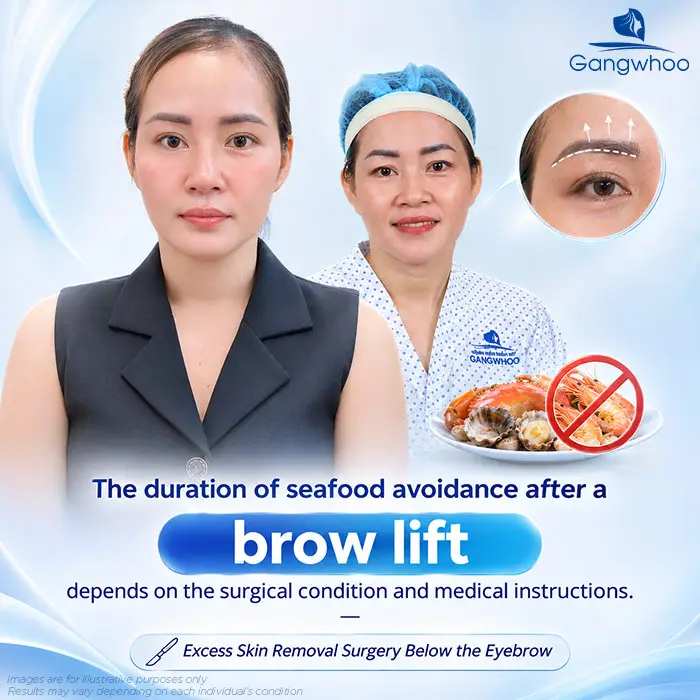
After a brow lift, many people wonder how long they need to avoid seafood so that the incision heals well and the risk of unsightly scarring is minimized. According to post-operative care guidelines, the 14-day mark can be used as a cautious timeframe if the treating doctor requires avoiding seafood, but it is not a mandatory medical rule that applies to everyone.
In reality, post-operative guidelines for brow lifts do not set a single, universal period for avoiding seafood. If you have no allergies and no specific contraindications, you can usually return to a normal diet as tolerated. Conversely, people with a history of seafood allergy should continue to avoid the allergenic foods regardless of whether 14 days have passed. Guidelines also recommend returning to a normal diet depending on tolerance and following the instructions of the treatment team.
Therefore, if you are wondering how long to avoid seafood after a brow lift, you should prioritize direct guidance from the doctor who performed your procedure. At Gangwhoo Cosmetic Hospital, post-operative nutrition should be advised based on the technique used, the condition of the incision, and each person’s allergy history, rather than applying a rigid restriction period.
Why does diet matter after a brow lift?

A brow lift is a cosmetic procedure that adjusts the position of the brows, improves drooping brows, and contributes to a more harmonious appearance around the eyes. Depending on the technique, the doctor may make an incision at an appropriate location to remove excess skin and adjust tissue according to the surgical plan.
After the procedure, the body needs time to go through the stages of wound healing, including physiological inflammation, tissue proliferation, and tissue remodeling. During this time, swelling, mild bruising, or a feeling of tightness around the surgical area may appear to varying degrees.
Adequate nutrition helps the body maintain its metabolic activities and supplies the raw materials for recovery. On the other hand, food allergies can cause systemic reactions or skin symptoms, making it hard for patients to distinguish them from abnormal post-surgical signs.
However, it should be understood that there is no basis to claim that all types of seafood cause keloids, infection, or delayed healing in everyone. Avoiding seafood should be considered case by case, particularly when the patient has an allergic constitution or receives specific instructions from the doctor.
Which types of seafood should be avoided after a brow lift?
1. Shrimp, crab, and swimming crab
Shrimp, crab, and swimming crab belong to the crustacean group, which can trigger allergic reactions in sensitive people. Common symptoms include itching, hives, red skin, swollen lips, or digestive discomfort.
If you have previously had an allergic reaction to this food group, you should avoid it and discuss your post-operative diet with your doctor. Do not try eating it again on your own to test your tolerance without appropriate guidance.
For people with no history of allergy, whether to temporarily limit shrimp, crab, or swimming crab should be based on the guidance of the doctor who performed the brow lift. Do not assume that eating these foods will automatically cause the incision to swell or scar.
2. Squid, octopus, and other mollusks
Squid, octopus, oysters, and some other mollusks can also cause allergies in people with sensitive constitutions. Reactions may appear after eating, ranging from mild to severe.
If you are unsure whether you are allergic to these foods, prioritize familiar, safe dishes that are prepared hygienically during the recovery period. If you have a history of allergy, avoid the food identified as the trigger and do not retry it on your own.
3. Saltwater fish and other seafood
Saltwater fish provides protein and many nutritionally valuable nutrients. However, some people may be allergic to one or more specific types of fish.
Therefore, whether you can eat fish after a brow lift should be considered based on your allergy history and post-operative instructions, rather than avoiding all saltwater fish out of fear of poor scarring. If there are no contraindications, you should maintain a balanced diet with enough protein and energy to support recovery.
An important principle is not to eliminate too many food groups at once without a clear medical reason. An overly restrictive diet can leave the body short of nutrients needed for wound healing.
What if you eat seafood after a brow lift?
If you have eaten seafood after a brow lift, there is no need to panic. Having eaten shrimp, crab, or fish does not mean the incision will definitely develop complications. What matters is monitoring your health and the surgical area while following post-operative care instructions correctly.
1. If no abnormal symptoms appear
If you have no allergic symptoms after eating seafood and your brow area continues to recover as your doctor described, keep caring for the incision as instructed. Do not take anti-allergy medication, antibiotics, or products advertised as preventing scars on your own just because you are worried about having eaten the wrong food.
If your doctor asked you to avoid seafood for a specific period, talk again with the treatment facility for guidance on how to resume an appropriate diet.
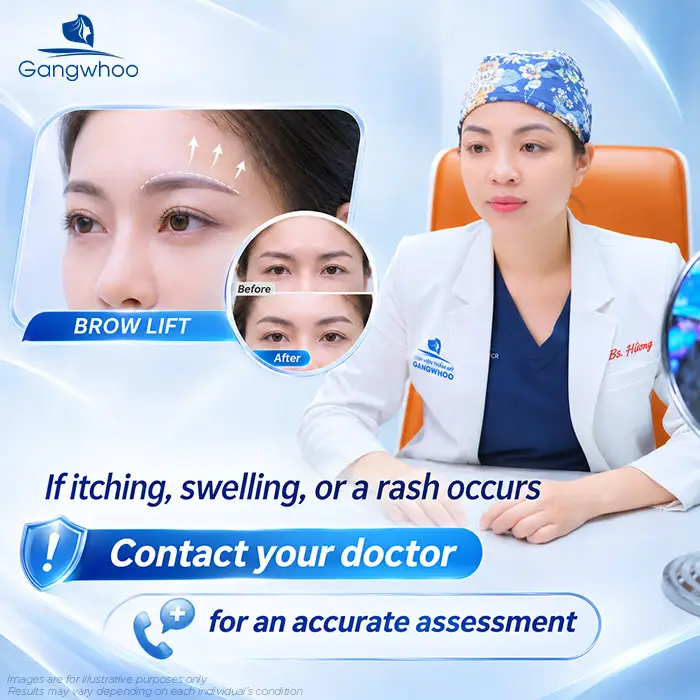
2. If itching, swelling, or a rash appears
If you experience itching all over, hives, red skin, or abnormal swelling after eating, stop eating the suspected food and contact medical staff for evaluation. Do not conclude on your own that every itch or swelling is caused by seafood, as these may also be signs of other problems.
In particular, if you have difficulty breathing, wheezing, swelling of the tongue or throat, dizziness, or fainting, call emergency services immediately, as these may be signs of anaphylaxis. Do not wait until the brow area shows abnormalities before seeking medical help.
In addition, if the incision becomes increasingly painful, red swelling spreads, abnormal discharge appears, or you develop a fever, contact your surgeon for an examination. These are not signs that should be handled simply by changing your diet.
What should you eat after a brow lift to support recovery?
Besides the question of how long to avoid seafood after a brow lift, patients should also pay attention to the overall quality of their diet. A balanced diet helps maintain health and supports tissue repair after surgery.
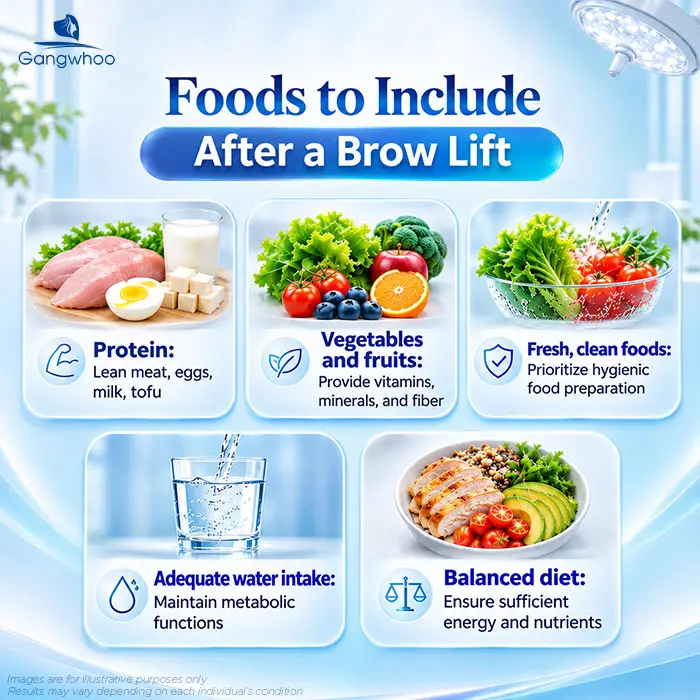
1. Add protein-rich foods
Protein provides the amino acids needed for tissue synthesis and repair of damage. Patients can choose lean meat, eggs, milk, tofu, or other protein sources suited to their own tolerance.
Do not avoid too many protein-rich foods without a medical reason, as this can leave your diet unbalanced. If you have underlying conditions or a special diet, consult medical staff for appropriate advice.
2. Eat more vegetables and fruits
Vegetables and fruits provide vitamins, minerals, fiber, and many compounds beneficial to health. Eating a variety of these foods keeps your diet diverse, rather than focusing on just a few items said to heal wounds.
Patients should choose fresh food that is washed and prepared properly to reduce the risk of foodborne infection.
3. Drink enough water and maintain a balanced diet
Water is involved in many of the body’s physiological processes. During recovery, patients should drink enough water according to their needs and medical guidance, while ensuring adequate energy intake from suitable food groups.
Do not use dietary supplements, high-dose vitamins, or products advertised as speeding up scar healing without a prescription. If you are taking medication or have an underlying condition, inform your doctor so you can receive safe guidance.
Post-brow-lift care tips for good incision healing
Diet is only one part of recovery. To reduce the risk of complications and help the incision heal on schedule, patients need to pay attention to hygiene, protecting the surgical area, and follow-up visits.
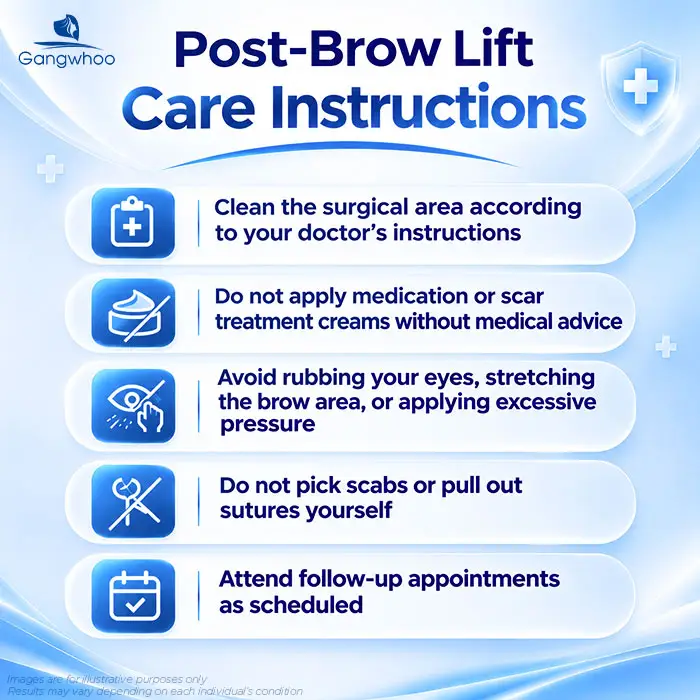
1. Keep the surgical area clean as instructed
The incision should be cared for following the procedure given by the doctor or medical staff. Do not apply cosmetics, scar creams, topical medications, or antiseptic solutions to the incision on your own without a prescription.
If you are instructed to keep the incision dry, change dressings, or clean it with a specific product, follow the instructions exactly. Improper care can cause irritation or interfere with healing.
2. Limit contact with the brow area
During recovery, avoid rubbing your eyes, stretching the brow area, or putting strong pressure on the incision. Physical activity should be adjusted according to post-operative guidance, especially in the first few days when swelling and bruising may still appear.
Patients also should not pick at scabs, pull on stitches, or handle healing skin themselves. If stitches need to be removed, go to a medical facility at your scheduled appointment.
3. Attend follow-up visits on schedule
Follow-up visits allow the doctor to assess healing progress, swelling, and the possibility of complications. Recovery time can vary depending on the technique, individual constitution, and each person’s health condition.
If you notice abnormal signs such as worsening pain, spreading redness and swelling, discharge, or fever, contact the treatment facility early. Do not wait for the next scheduled follow-up if there are worrying signs.
So, how long should you avoid seafood after a brow lift? The answer is not a fixed number for everyone. The period of limiting seafood should be considered based on allergy history, the recovery of the incision, and the instructions of the doctor directly treating you.
Instead of restricting your diet excessively based on word of mouth, patients should maintain a balanced diet, care for the incision as instructed, and attend follow-ups as scheduled. These are important factors for monitoring recovery and detecting abnormal signs early.
If you are in the post-operative period or still have concerns about your diet, you can contact Gangwhoo Cosmetic Hospital for advice based on your actual condition. Talking directly with the doctor who performed your procedure will help you understand the precautions suited to the brow lift method you chose, rather than applying a one-size-fits-all dietary restriction.