
After chin augmentation, many people share the same question: “How long after chin augmentation can I smile?” This is a completely understandable question, since in the first days after surgery, the lower lip and chin area may be swollen, tight, have reduced sensation, or cause the smile to temporarily look different from before.
In my view, the important thing is not to try to pin down a single timeframe that applies to everyone. The ability to smile, talk, and chew again depends on the surgical method, the incision location, the degree of swelling, the condition of the soft tissue, and each individual’s recovery speed.
At Gangwhoo Cosmetic Hospital, facial structure and post-operative condition are assessed on a personalized basis, rather than applying a rigid recovery timeline to every case.
Quick summary: After chin augmentation, you can still smile, but you should limit big smiles, opening your mouth too wide, and movements that strain the lip–chin area in the early stage. Once swelling and pain subside and the doctor confirms the chin has healed well, you can gradually return to normal expressions and activities. If smiling or moving your mouth causes increased pain, unusual swelling, or a change in chin shape, contact your surgeon for an examination.
How long after chin augmentation can you smile?
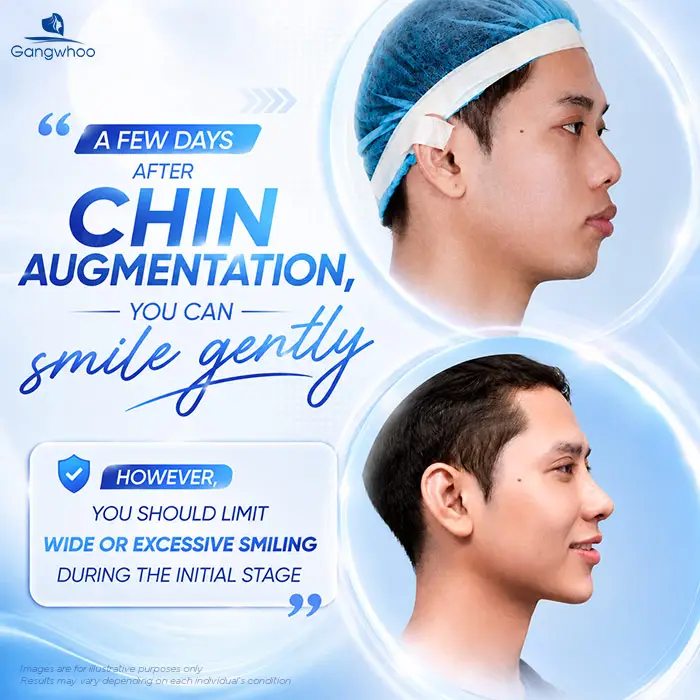
There is no exact figure — such as 3 days, 7 days, or 2 weeks — that applies to everyone. After chin augmentation surgery, the soft tissue around the chin and lower lip usually needs time to reduce swelling, adapt to the structural change, and regain sensation.
In the first few days, smiling widely can create a feeling of tightness or pain in the chin area. Some people also find the lower lip harder to move normally due to temporary swelling or reduced sensation. These effects can make the smile feel unnatural in the early period.
Post-operative guidelines for chin implants also note swelling in the mouth–chin area and temporary changes to the smile after surgery; the degree and duration of recovery are not exactly the same for every patient.
So instead of trying to “test” whether the chin has stabilized by smiling as widely as possible, I advise patients to let the surgical area heal naturally and follow their surgeon’s specific instructions.
1. Can you smile after chin augmentation?
Yes, you can smile, but in the early stage you should smile gently and limit expressions that put a lot of strain on the lip–chin area.
It’s important to distinguish between gentle smiling during everyday activities and big smiles, wide mouth-opening, or continuous mouth movement. If the chin area is still swollen, tight, or painful when moved, forcing a big smile is unnecessary.
In particular, someone who has just had surgery should not test the chin’s stability by repeatedly smiling, opening their mouth, or pressing on the chin with their hand. This period should prioritize protecting the surgical area.
2. When can you smile almost normally?
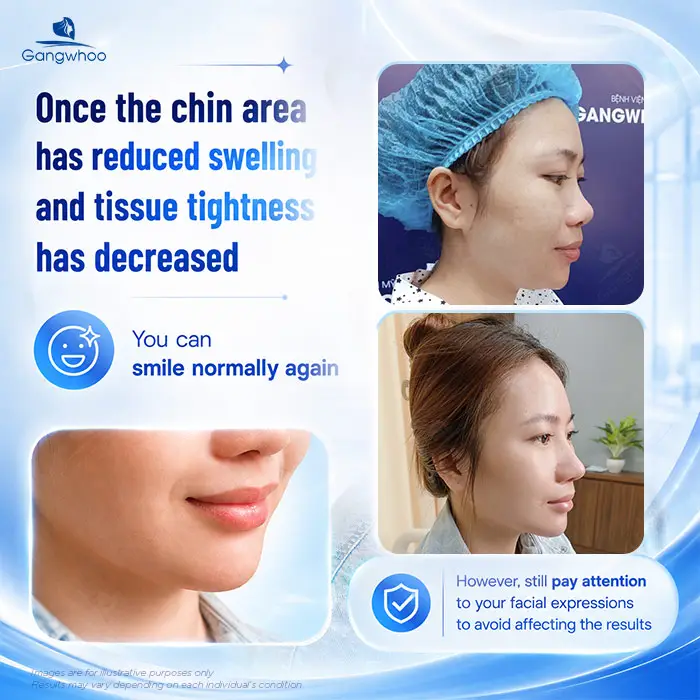
Generally, movement of the muscles around the mouth improves gradually as swelling and tissue tension decrease. However, “being able to smile” and “smiling completely naturally” are two different milestones.
Some people can resume light activities fairly early but still feel their smile is a bit tight. Conversely, someone with more swelling or slower soft-tissue healing may need more time.
Some post-operative guidelines for chin implants note that the lips may swell and temporarily change shape for a few days, affecting the smile; this typically improves as recovery progresses.
So if after some time your smile still doesn’t feel symmetrical, you shouldn’t automatically conclude that the chin is displaced or a nerve has been damaged. The swelling, sensation, and movement of the lower lip and chin need to be directly assessed to determine the cause.
Why should you limit big smiles after chin augmentation?
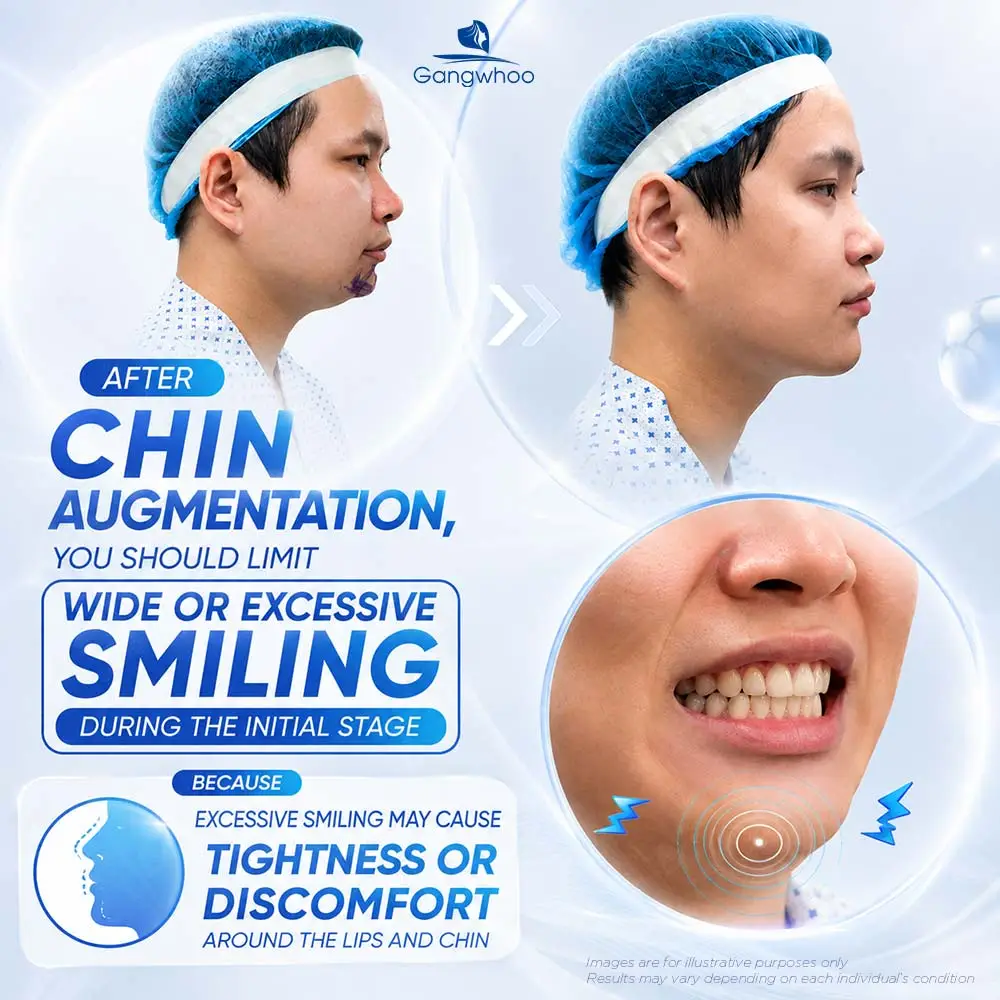
The chin area isn’t a static structure. When we talk, smile, chew, or open our mouths, the lips, muscles around the mouth, and chin muscles are all involved in movement.
After surgery, the tissue in this area is in the process of healing. So movements that strongly engage the lip–chin area can cause a feeling of tightness or discomfort.
Anatomically, the chin is closely connected to lip and mouth movement. Studies on chin implant complications also note that repeated movements from chewing, talking, and smiling are associated with force placed on the implant area, alongside other factors such as implant size and position.
This doesn’t mean a single smile will displace the implant. Patients shouldn’t worry excessively if they smile unintentionally. What should be avoided is deliberately straining the chin area while the tissue is still healing, while also following the surgeon’s instructions closely.
How long after chin augmentation can you talk normally?
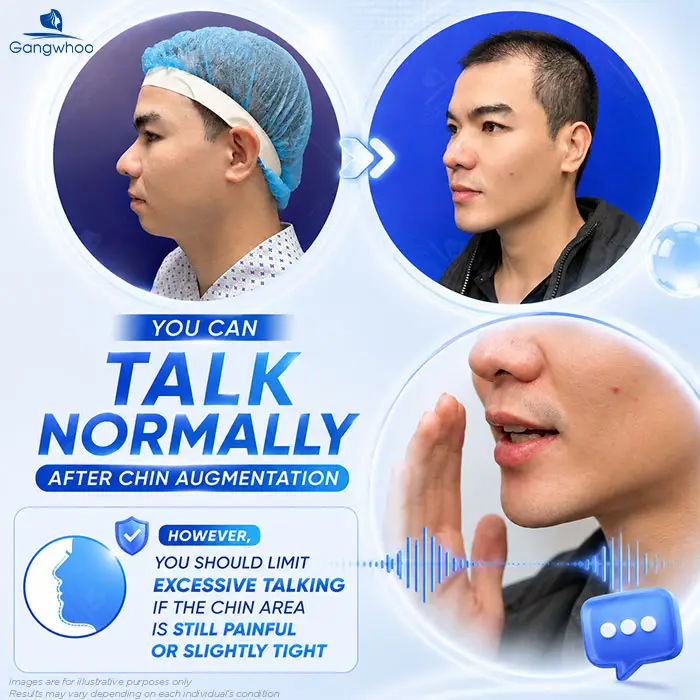
Talking is also a form of movement involving the lips, tongue, and jaw–face area. In the early period after surgery, swelling and tissue tension can make speaking or opening the mouth uncomfortable.
Some post-operative guidelines for chin implants note slightly altered speech or difficulty talking in the early period, especially during the first week after surgery.
So patients can communicate as needed but shouldn’t force themselves to talk too much if the chin area feels painful or tight. As the soft tissue stabilizes, movement ability typically improves accordingly.
If difficulty speaking persists or is accompanied by lip weakness, unusual numbness, increased pain, or other symptoms, a follow-up visit is needed for the doctor to assess.
How long after chin augmentation can you chew normally?
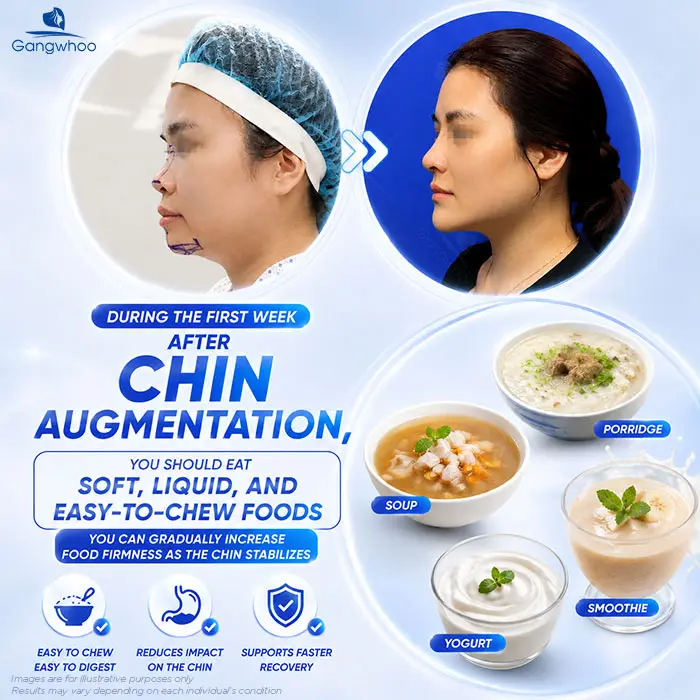
Chewing creates continuous movement in the mouth and lower jaw area. So in the early stage, diet usually needs to be adjusted to reduce discomfort and limit unnecessary force.
According to guidance on Gangwhoo Cosmetic Hospital’s website, in the first week after chin augmentation, priority should be given to liquid, soft foods such as porridge, milk, and soup, along with adequate hydration.
At this stage, patients shouldn’t rush to switch to foods that require biting or heavy chewing just because they feel less pain. Returning to a normal diet should be based on actual condition and the doctor’s guidance.
How long after chin augmentation does swelling go down and look natural?
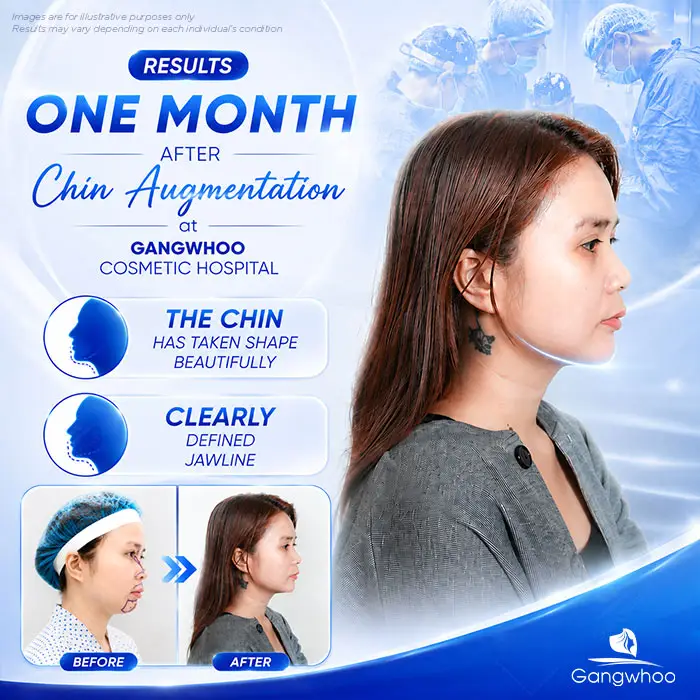
Post-surgical swelling is a common part of the recovery process. While the chin area is still swollen, facial contours may not yet reflect the final result, and the smile may also not look as natural as before.
This process usually happens in stages. In the early stage, patients may notice the chin feeling tight, swollen, and somewhat hard to move. Afterward, swelling gradually decreases, the feeling of tightness improves, and lip–chin expressiveness becomes easier.
Recovery speed depends on many factors such as surgical technique, extent of intervention, soft tissue condition, individual constitution, and post-operative care.
Therefore, I don’t recommend patients judge their chin augmentation results too early based only on images from the first few days.
One image recorded at Gangwhoo Cosmetic Hospital shows V-line chin contouring results assessed at the 15-day mark after surgery, but this shouldn’t be understood as a fixed recovery milestone for all patients.
Is it a problem if you accidentally smile big after chin augmentation?
This is a situation that worries many people.
If you only smiled unintentionally or smiled gently a few times, you shouldn’t immediately assume the implant has shifted. Stop any strong movements, continue following your care instructions, and monitor the chin area.
What matters more are the symptoms that appear afterward. If pain clearly increases, there’s unusual redness and swelling, discharge from the incision, fever, a change in chin shape, or any other unusual signs, you should contact your surgeon for an examination.
Some complications of chin implant surgery may relate to infection, implant displacement, nerve effects, or other issues; therefore, persistent unusual changes shouldn’t be self-diagnosed at home.
How should you take care of yourself after chin augmentation to support recovery?
The outcome of a chin augmentation depends not only on surgical technique but also significantly on post-operative care.
In the early stage, I often specifically advise patients to protect the chin area from unnecessary impact. Don’t massage, manipulate, or press on the implant yourself. At the same time, limit opening the mouth too wide, avoid impact to the face, and follow a diet suited to each stage of recovery.
Professional information from Gangwhoo Cosmetic Hospital also emphasizes that in the first few weeks, the bone and tissue area undergoing healing needs protection; care principles include eating soft food, limiting wide mouth-opening, avoiding strong impacts, taking medication as directed, and attending all follow-up visits.
Equally important is not changing medications or adding supplements on your own for the purpose of “speeding up healing” without consulting your doctor first.
Things to avoid after chin augmentation
In the early period, patients should avoid activities that place force or excessive movement on the chin area. Smiling too hard, opening the mouth wide, biting hard foods, excessive chewing, or directly impacting the chin area are all things that shouldn’t be actively done while the tissue is not yet stable.
In addition, strong impacts to the face and activities that risk injuring the surgical area should be avoided. If the doctor gives specific instructions about compression bandages, medication, incision hygiene, or follow-up schedules, patients should follow them precisely rather than relying on other people’s experiences.
When should you have a follow-up visit after chin augmentation?
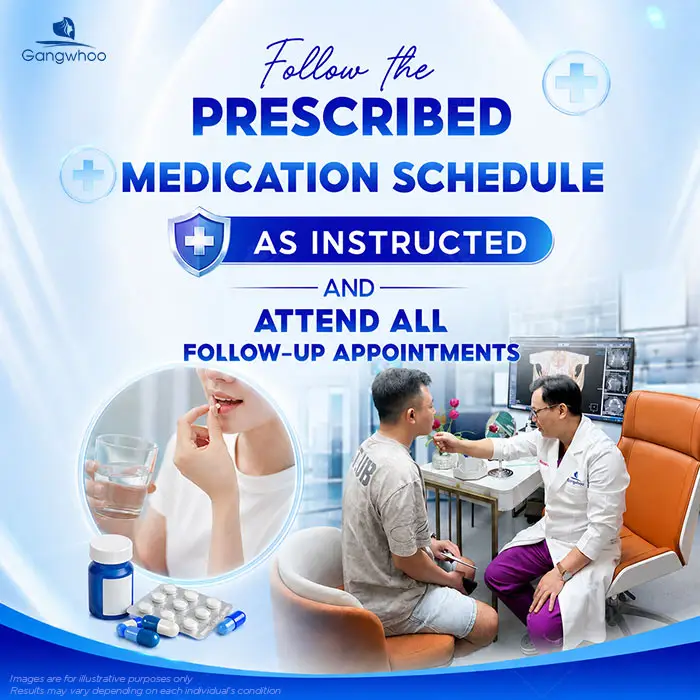
Follow-up visits are an important step for the doctor to assess the condition of the incision, degree of swelling, implant position, sensation, and recovery of the lip–chin area.
You shouldn’t only see the doctor when a complication occurs. Scheduled follow-up visits help the doctor monitor the recovery process and detect any unfavorable signs early, if present.
In particular, proactively contact your doctor if you experience increasing pain, unusual redness and swelling, fever, discharge, a clear change in chin shape, or persistent movement/sensation disturbances.
How long after chin augmentation can you smile shouldn’t be understood as a fixed timeframe for all patients.
After surgery, you can still smile gently, but should limit big smiles, opening the mouth too wide, and movements that strain the lip–chin area in the early stage. As swelling decreases, soft tissue recovers, and mouth movement becomes more comfortable, the ability to express emotion will gradually return to normal.
If you’ve just had chin augmentation and are worried because smiling makes the chin area feel tight, painful, or your smile has changed, the most important thing is not to self-diagnose implant displacement or complications. Contact the surgeon who performed your procedure directly for an examination and assessment based on your actual condition.
At Gangwhoo Cosmetic Hospital, the V-line Chin Augmentation service is part of the hospital’s group of jaw and facial contouring surgical services. The choice of method, materials, and post-operative plan should be personalized after the doctor assesses each individual’s facial structure and health condition.