
“Can I drink ginseng tea after rhinoplasty?” is one of the questions I am asked most frequently by patients during preoperative consultations and postoperative follow-up for rhinoplasty. This concern stems from a common belief that ginseng tea or ginseng products help nourish the body and promote faster recovery. However, from a medical perspective—especially in the context of aesthetic surgery—the use of ginseng requires careful consideration.
With many years of hands-on experience performing and monitoring thousands of rhinoplasty cases at Gangwhoo Aesthetic Hospital, I will provide a clear medical analysis to help you understand whether ginseng tea should be used after rhinoplasty, when it should be avoided, and when it may be safely reintroduced.
Why Do Many People Wonder Whether Ginseng Tea Is Safe After Rhinoplasty?
In East Asian culture, ginseng has long been regarded as a valuable herbal remedy that enhances vitality, reduces fatigue, and supports recovery. As a result, many patients believe that drinking ginseng tea after rhinoplasty may help wounds heal faster and improve overall health.
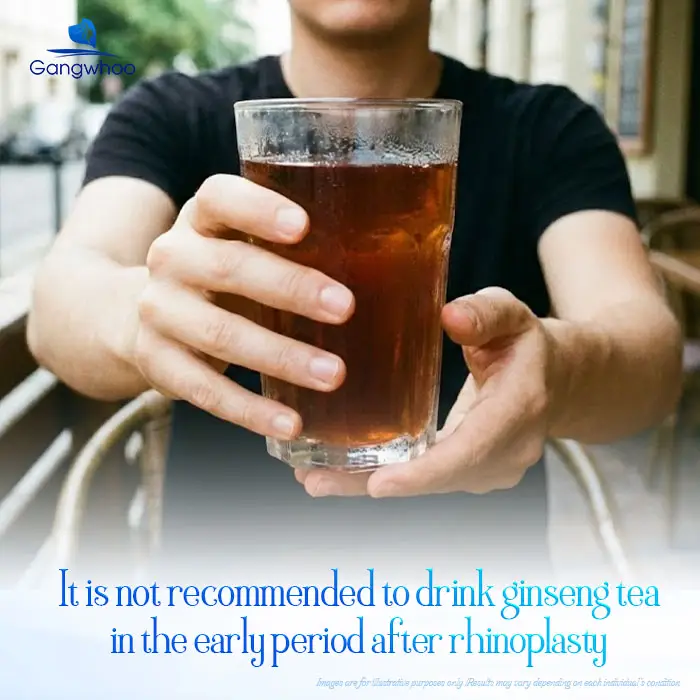
However, it is important to understand that rhinoplasty is a surgical procedure involving soft tissue, blood vessels, and cartilage or bone. Postoperative wound healing depends heavily on vascular stability, normal blood clotting function, and a controlled inflammatory response. These critical factors can be influenced by certain bioactive compounds found in ginseng.
How Do the Components of Ginseng Tea Affect the Body After Rhinoplasty?
From a modern medical standpoint, ginseng (Panax ginseng) contains ginsenosides—bioactive compounds with significant effects on the cardiovascular and circulatory systems. Numerous international studies have shown that ginseng may affect platelet function and the blood coagulation process, thereby increasing the risk of bleeding or prolonging postoperative bruising.
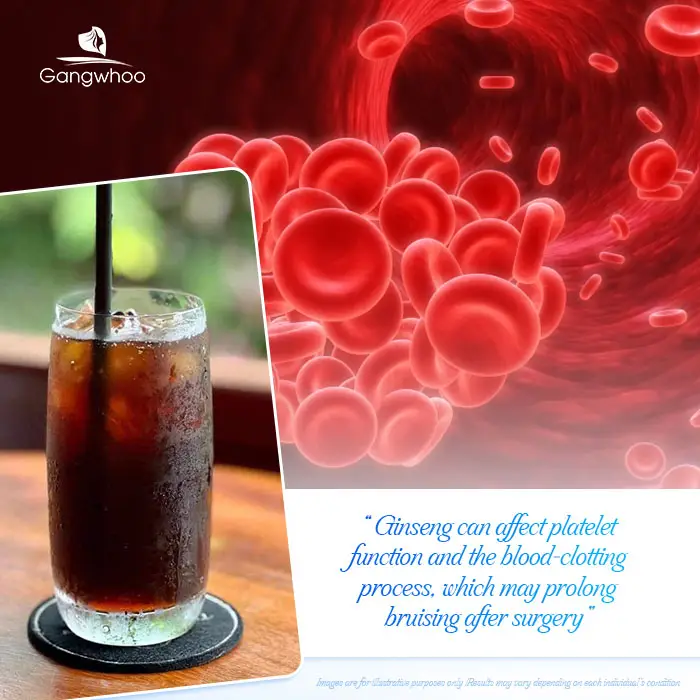
In clinical practice, this issue is particularly important because the nasal area has a rich blood supply. If ginseng is consumed in the early postoperative period, patients may face a higher risk of prolonged swelling, hematoma formation, or bruising that takes longer than usual to resolve.
In addition, ginseng may increase blood circulation, which can prolong the inflammatory response at the surgical site. This is unfavorable during the early postoperative phase, when maintaining tissue stability is essential for proper shaping and healing of the nose.
Is It Harmful to Drink Ginseng Tea After Rhinoplasty?
Regarding the core question, “can you drink ginseng tea after rhinoplasty?” from a professional aesthetic surgery standpoint, my answer is clear: it is not recommended to drink ginseng tea during the early postoperative period. This recommendation is not based on personal opinion but rather on the physiological mechanisms of wound healing and established medical evidence regarding ginseng.
During the first 7–14 days after rhinoplasty, the body undergoes three essential processes: hemostasis, regulation of inflammation, and tissue regeneration. At this stage, vascular stability and normal clotting function play a critical role—especially in the nasal region, which contains dense capillary networks and delicate soft tissue.
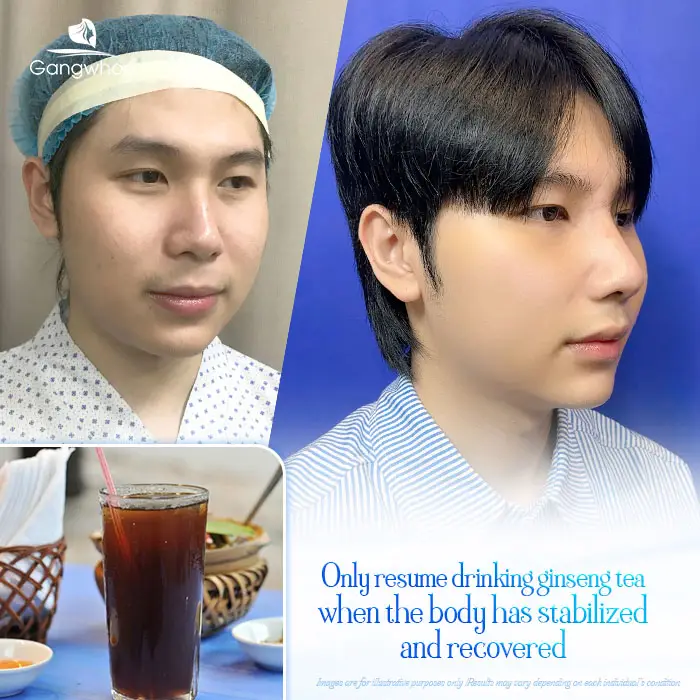
Although ginseng is widely viewed as a health-promoting herb, its bioactive compounds, particularly ginsenosides, have been documented in medical literature to interfere with platelet activity and blood coagulation. When consumed too soon after rhinoplasty, ginseng may increase blood flow to the surgical area, thereby raising the risk of prolonged swelling, persistent bruising, or even subcutaneous bleeding.
Furthermore, ginseng can stimulate inflammatory responses to a certain extent. In the context of recently operated nasal tissue, prolonged inflammation may delay recovery and negatively affect the stability of the nasal shape during the initial healing phase.
Based on extensive postoperative follow-up experience at Gangwhoo Aesthetic Hospital, we have observed that patients who strictly avoid ginseng tea, ginseng products, and other highly bioactive herbal supplements tend to experience faster reduction of swelling, less bruising, and a more stable, predictable recovery compared with those who use such products without medical guidance.
Therefore, during the early period after rhinoplasty, completely avoiding ginseng tea is not an excessive restriction, but rather a necessary measure to protect surgical outcomes and minimize potential complications. If nutritional support is needed, it should be provided through safe methods that align with postoperative physiology and under direct consultation with a qualified specialist.
How Long After Rhinoplasty Can You Safely Drink Ginseng Tea Again?
Many patients also ask, “How long after rhinoplasty can I drink ginseng tea?” The answer varies from person to person.
In principle, ginseng should only be reconsidered once the surgical wound is stable, swelling and inflammation have resolved, and there is no ongoing risk of bleeding. Only then may a physician consider allowing its use again. In most cases, this point is reached after several weeks, depending on individual healing capacity and the extent of surgical intervention.
At Gangwhoo Aesthetic Hospital, we always assess the nasal condition directly during follow-up visits before making personalized recommendations, rather than applying a fixed timeline to all patients.
What Should You Do If You Accidentally Drank Ginseng Tea After Rhinoplasty?
In reality, some patients may accidentally drink ginseng tea after rhinoplasty due to oversight or well-intentioned care from family members. In such cases, there is no need to panic, but it is also important not to be complacent.
Monitor closely for signs such as increased swelling, persistent pain, spreading bruising, or abnormal bleeding. Most importantly, inform your surgeon immediately so that your condition can be properly evaluated and managed. Prompt communication allows the physician to adjust postoperative care as needed.
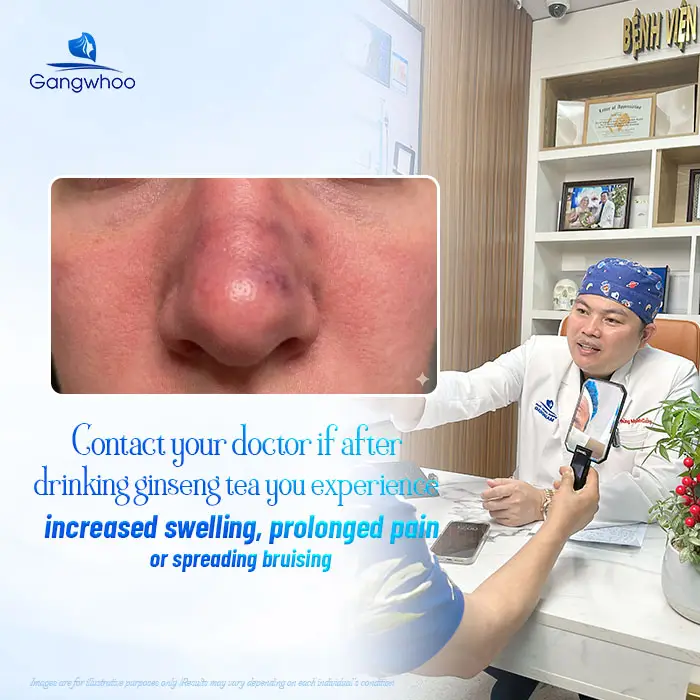
Based on many years of direct experience in postoperative rhinoplasty care, I always emphasize that not all “nutritious” foods or supplements are appropriate after surgery. Specifically, when it comes to the question of whether ginseng tea is safe after rhinoplasty, the safest answer remains to avoid it during the early preoperative and postoperative periods, unless explicitly approved by your doctor.
Each patient’s physiology, surgical technique, and healing process are different. Therefore, the best way to ensure safety and optimal results is to strictly follow your specialist’s instructions and attend scheduled follow-up visits at Gangwhoo Hospital.
We hope this article has provided you with a clear and reliable answer to the question “Can you drink ginseng tea after rhinoplasty?”. Proper postoperative care not only supports faster recovery but also significantly reduces the risk of unwanted complications.
If you are planning to undergo rhinoplasty or need personalized advice regarding postoperative care, we encourage you to schedule a direct consultation so that your condition can be carefully evaluated and guided by a qualified medical professional.